
Home Cook Together. Celebrate Life.

BrazilianAuthentic Cuisine

Acarajé

Serves 4 to 6 Appetizer seafood, Appetizers

Acarajé

Acarajé hails from the northeastern state of Bahia, where it graces street stalls and home kitchens alike. Traditionally enjoyed as a snack or light meal, it is a staple at Bahian festivals and Afro-Brazilian religious gatherings, embodying the unique culinary fusion of African and Brazilian influences. This home version captures the essence of the street-side delicacy, offering a taste of Bahia's vibrant culture.

When prepared, the acarajé should be golden and crisp on the outside, with a tender, savory interior. Each bite offers a delightful interplay of flavors, from the earthiness of black-eyed peas to the richness of dendê oil, complemented by the spiced vatapá and briny dried shrimp. Generous pinches of fine sea salt bring the dish to life, making every mouthful a celebration.
Ingredients

  • 400 gblack-eyed peas — soaked and peeled
  • 1onion
  • for fryingdendê oil
  • vatapáto fill
  • to finishdried shrimp
  • to tastefine sea salt

Method

  1. Start by preparing the black-eyed peas. Rinse 400 g of black-eyed peas under cold water, removing any debris or discolored peas. Soak them in water for at least 4 hours or overnight. After soaking, rub the peas between your hands to remove the skins, which should float to the top. Skim off the skins and drain the peas thoroughly.
  2. Peel and roughly chop 1 onion. In a food processor, combine the drained black-eyed peas and chopped onion. Pulse until you achieve a smooth, thick paste. The mixture should hold together when pressed between your fingers. Season the paste with fine sea salt to taste, ensuring the flavor is balanced but not overpowering.
  3. Prepare the frying setup. In a deep, heavy-bottomed pot or Dutch oven, pour enough dendê oil to reach a depth of about 5 cm. Heat the oil over medium-high heat until it reaches 180°C. If you don't have a thermometer, test the oil by dropping a small amount of the paste into it; it should sizzle and rise to the surface immediately.
  4. Shape the black-eyed pea paste into small balls or patties, about the size of a golf ball. Carefully lower them into the hot oil, being mindful not to overcrowd the pot. Fry in batches if necessary. Cook each acarajé until it turns a deep golden brown, about 4-5 minutes per side, flipping once. The exterior should be crisp while the inside remains soft and tender.
  5. Once fried, remove the acarajé from the oil using a slotted spoon and drain on paper towels to remove excess oil. While still warm, slice each acarajé open without cutting all the way through, creating a pocket.
  6. Fill each acarajé with vatapá, a creamy filling made from bread, shrimp, coconut milk, and spices. Top with a few dried shrimp for added texture and flavor. Adjust the seasoning with a pinch of fine sea salt if needed.
  7. Serve the acarajé immediately while the exterior is still crisp and the filling warm. This dish is best enjoyed fresh, with friends and family gathered around the table.
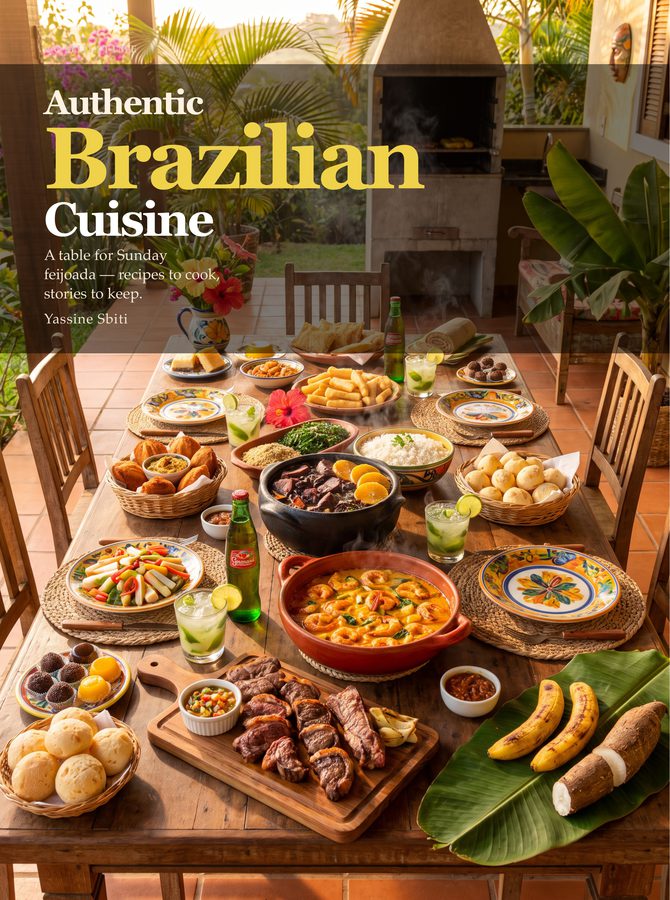
Cover of Authentic Brazilian Cuisine
From the cookbook

Authentic Brazilian Cuisine

This recipe is from Authentic Brazilian Cuisine by Yassine Sbiti — the Brazilian volume in the ComidaTime International Cuisines series.

Available soon on Amazon…

Explore Brazilian cuisine