
Home Cook Together. Celebrate Life.

JapaneseAuthentic Cuisine

Japanese Syrup Cake 2

Serves 4 to 6 Dessert vegetarian, Desserts

Japanese Syrup Cake 2

Japanese Syrup Cake 2 is a cherished staple at home tables, where it is lovingly crafted by cooks who embrace the art of hand-judging salt and freely using butter. This cake represents the essence of everyday Japanese home cooking, where the focus is on comfort and sharing rather than precision and pretense. It is a dish that invites family and friends to gather around, savoring the warmth of a familiar tradition.

A bite of this cake reveals a moist, tender crumb, enriched by the buttery semolina and subtly sweetened by the sugar. The syrup soak imparts a luscious, melt-in-the-mouth texture that lingers, making each slice a delightful indulgence. Enjoy it as a heartwarming treat to accompany afternoon tea, or as a simple dessert that brings a comforting end to any meal.
Ingredients

  • 200 gsemolina
  • 150 gsugar
  • 100 gbutter
  • 3eggs
  • syrupto soak

Method

  1. Begin by bringing 100 g of butter to room temperature. This will ensure it mixes smoothly with the other ingredients, creating a uniform batter. Simultaneously, take 3 eggs out of the refrigerator and allow them to reach room temperature as well, which helps them incorporate better into the batter, resulting in a lighter texture.
  2. In a large mixing bowl, combine 200 g of semolina and 150 g of sugar. Stir these dry ingredients together with a whisk to evenly distribute the sugar throughout the semolina. This step is crucial for ensuring that the cake has a consistent sweetness and texture.
  3. Add the softened butter to the dry mixture. Using a wooden spoon or spatula, cream the butter into the semolina and sugar until the mixture resembles coarse crumbs. This process helps to coat the semolina grains with fat, which will contribute to the cake's tender crumb.
  4. Crack the room-temperature eggs into a separate bowl and beat them lightly with a fork until the yolks and whites are just combined. Gradually add the beaten eggs to the semolina mixture, stirring continuously. The batter should become smooth and slightly thick, indicating that the ingredients are well incorporated.
  5. Transfer the batter into a greased baking pan, spreading it evenly with a spatula. The pan should be around 20 cm in diameter to ensure the cake bakes evenly. Tap the pan gently on the counter to remove any air bubbles trapped in the batter.
  6. Preheat your oven to 180°C (350°F) and bake the cake until the top is golden brown and a skewer inserted into the center comes out clean. The cake should spring back slightly when touched, indicating it is cooked through. Avoid opening the oven door frequently, as this can cause the cake to deflate.
  7. Once baked, remove the cake from the oven and allow it to cool slightly in the pan. While the cake is still warm, pour the syrup generously over the top. The cake will absorb the syrup, becoming moist and flavorful. Allow it to rest until the syrup is fully absorbed and the cake reaches room temperature before serving.
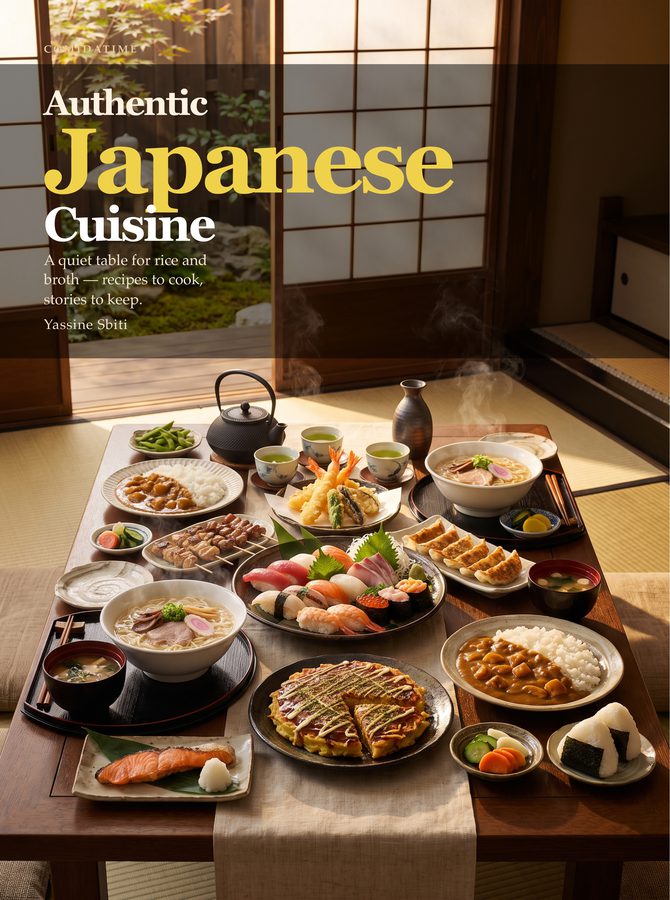
Cover of Authentic Japanese Cuisine
From the cookbook

Authentic Japanese Cuisine

This recipe is from Authentic Japanese Cuisine by Yassine Sbiti — the Japanese volume in the ComidaTime International Cuisines series.

Available soon on Amazon…

Explore Japanese cuisine