
Home Cook Together. Celebrate Life.

IndonesianAuthentic Cuisine

Sambal Terasi

Serves 4 to 6 Dip vegan, Appetizers

Sambal Terasi

Sambal Terasi is an essential Indonesian condiment, embodying the bold flavors of the archipelago. It's traditionally prepared in homes across the country, where each family might tweak it slightly to suit their tastes. This version mirrors the authentic way it's made in countless kitchens, with ingredients measured by instinct and a generous hand. Whether accompanying a simple meal or a celebratory feast, sambal terasi finds its place at any table, ready to enhance the dishes it pairs with.

The first taste is a punch of fiery red chilies, quickly followed by the savory depth of shrimp paste. Garlic weaves through the heat, while palm sugar tempers the spice with its mellow sweetness. A squeeze of lime juice brings everything into balance, creating a complex and invigorating flavor profile. Each element is harmonized by a pinch of fine sea salt, resulting in a sambal that is both potent and delightful, perfect for those who crave a robust kick with their meals.
Ingredients

  • 100 gred chilies
  • 1 tbspshrimp paste
  • 2 clovesgarlic
  • 2 tbsppalm sugar
  • 2 tbsplime juice
  • to tastefine sea salt

Method

  1. Begin by preparing the base for your Sambal Terasi. Take 100 g of red chilies and 2 cloves of garlic, and either pound them in a mortar and pestle or blend them in a food processor. Aim for a coarse paste, not too smooth, as you want to retain some texture for authentic flavor and mouthfeel.
  2. Add 1 tbsp of shrimp paste to the chili-garlic mixture. Continue pounding or blending until the shrimp paste is fully incorporated and the mixture is uniform. The aroma should be pungent and slightly earthy, indicating the shrimp paste is well mixed.
  3. Gradually incorporate 2 tbsp of palm sugar into the mixture. If using a mortar and pestle, work the sugar in slowly, allowing it to dissolve and blend with the other ingredients. The paste should take on a slightly glossy appearance as the sugar melts and integrates.
  4. Slowly add 2 tbsp of lime juice to the mixture. Stir or blend gently to combine, ensuring the acidity balances the heat and sweetness. The paste should have a vibrant, slightly tangy scent, signaling the lime juice is well mixed.
  5. Season the sambal with fine sea salt to taste. Add a small amount, then taste the mixture on a piece of bread to check the balance of flavors. Adjust as needed, ensuring the salt enhances rather than overpowers the other ingredients.
  6. Allow the sambal to rest for a few minutes to let the flavors meld. This brief resting period helps the ingredients harmonize, creating a more cohesive taste. Serve the sambal cool as a condiment, ready to share at the table.
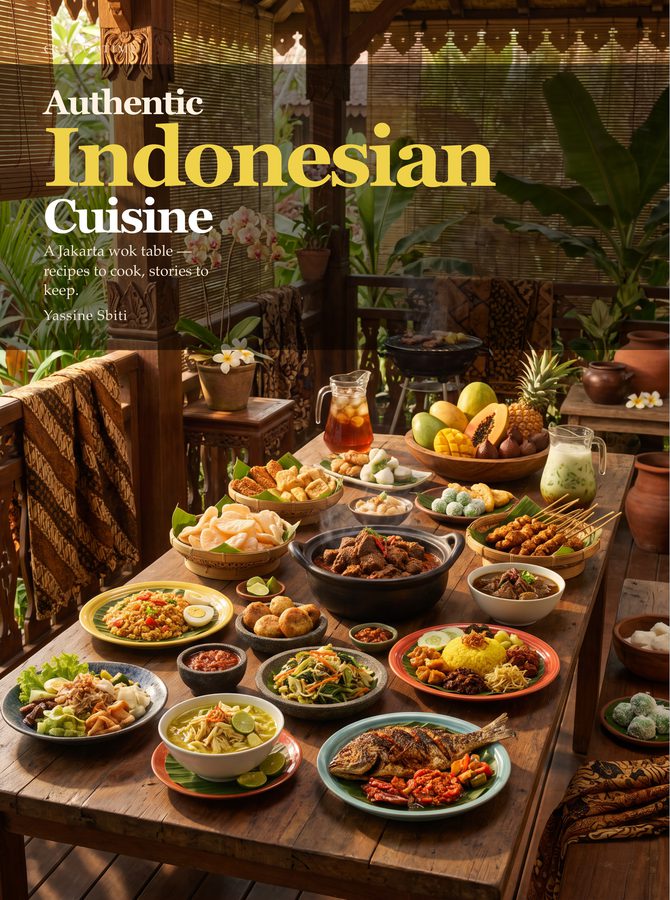
Cover of Authentic Indonesian Cuisine
From the cookbook

Authentic Indonesian Cuisine

This recipe is from Authentic Indonesian Cuisine by Yassine Sbiti — the Indonesian volume in the ComidaTime International Cuisines series.

Available soon on Amazon…

Explore Indonesian cuisine