
Home Cook Together. Celebrate Life.

ItalianAuthentic Cuisine

Cacio e Pepe

Serves 4 to 6 Entree pasta, Pasta & Rice

Cacio e Pepe

In the bustling heart of Rome, Cacio e Pepe is a beloved staple, its simplicity a nod to the unpretentious elegance of Roman cuisine. Traditionally enjoyed as a comforting weeknight dinner, this dish brings the soulful essence of the Eternal City to the table. The ingredients are humble, yet their union in the pan creates something transcendent, an everyday alchemy cherished in homes throughout the city.

The taste is a bold harmony of Pecorino Romano's sharp saltiness and the pepper's gentle heat. The silken strands of tonnarelli capture every bit of the creamy, pepper-flecked sauce, delivering a satisfying bite that is both rich and refreshingly minimalist. It's a reminder that the best dishes need no adornment beyond good ingredients and skilled hands.
Ingredients

  • 400 gtonnarelli
  • 160 gPecorino Romano — finely grated
  • 2 tspblack pepper — coarsely cracked
  • 2 tbspunsalted butter
  • to tastefine sea salt

Method

  1. Begin by placing a dry skillet over medium heat. Add 2 teaspoons of black pepper and toast it gently, stirring often, until it becomes fragrant and slightly smoky, about 1-2 minutes. Remove from heat and coarsely crush the pepper using a mortar and pestle or the back of a spoon. This step enhances the pepper's aroma and removes any bitterness.
  2. Bring a large pot of water to a rolling boil. Add a generous amount of fine sea salt, enough to make the water taste like the sea. Add 400 g of tonnarelli and cook until al dente, stirring occasionally to prevent sticking. Reserve a ladle of the pasta cooking water before draining the pasta.
  3. In a large, warm mixing bowl, place 2 tablespoons of unsalted butter. Add the hot, drained tonnarelli to the bowl. Pour in a small amount of the reserved pasta water, about 1/4 cup, and begin to toss the pasta vigorously with the butter using tongs. This starts the emulsion process, which is crucial for a creamy sauce.
  4. Gradually add 160 g of finely grated Pecorino Romano to the pasta, a little at a time, while continuing to toss. Ensure each addition of cheese melts before adding more. This prevents clumping and helps create a smooth, creamy sauce.
  5. Continue tossing the pasta until the cheese has fully melted and formed a silky sauce that clings to each strand. If the sauce seems too thick, add more reserved pasta water, a tablespoon at a time, until the desired consistency is reached. The sauce should be glossy and coat the pasta evenly.
  6. Serve the Cacio e Pepe immediately, garnishing with additional crushed black pepper and more Pecorino Romano if desired. The dish should be hot, with the cheese sauce perfectly coating the pasta, and the aroma of toasted pepper should be inviting.
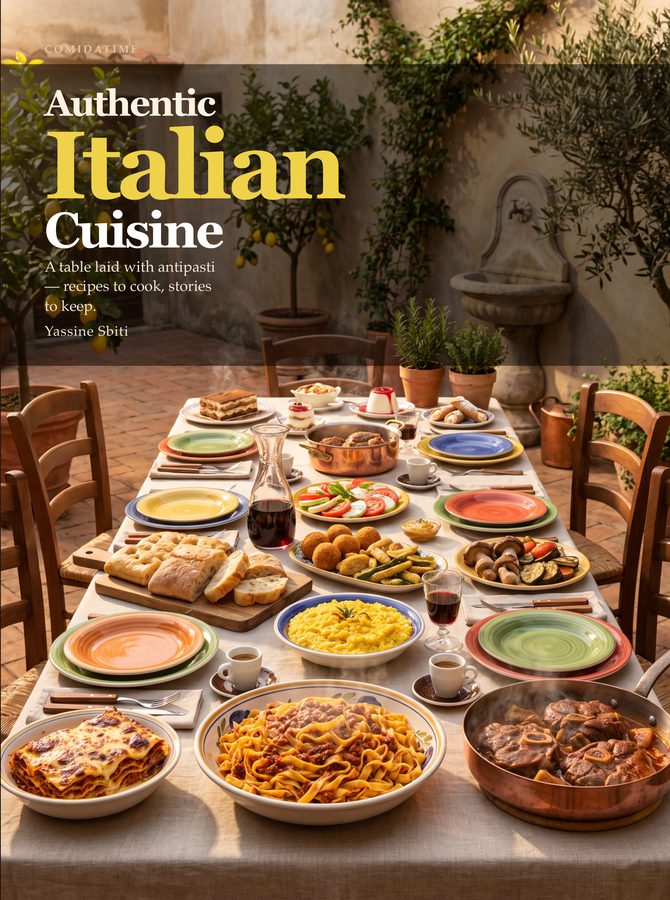
Cover of Authentic Italian Cuisine
From the cookbook

Authentic Italian Cuisine

This recipe is from Authentic Italian Cuisine by Yassine Sbiti — the Italian volume in the ComidaTime International Cuisines series.