Home Cook Together. Celebrate Life.

JapaneseAuthentic Cuisine

Oden

Serves 4 to 6 seafood

Oden

Oden, a warming staple of Japanese winter cuisine, finds its culinary roots in the street stalls that dot the chilly streets of Japan's cities. In these stalls, cooks judge salt by hand and lavishly apply fat, creating a dish meant to be shared among friends and family. This home version captures the essence of those bustling stalls, bringing a piece of that street-side warmth into your kitchen.

The true essence of oden lies in its comforting blend of flavors and textures. The soft daikon rounds absorb the umami-rich dashi, while the fluffy hanpen and tender eggs offer a delightful contrast. Soy sauce ties everything together with its savory depth, and a touch of fine sea salt enhances the dish's complexity. Enjoy it hot, as each bite offers a soul-soothing experience perfect for any winter's day.

Ingredients

  • 1 Ldashi
  • 4daikon rounds
  • 4hanpen
  • 4eggs
  • 3 tbspsoy sauce
  • to tastefine sea salt

Method

  1. Begin by preparing the daikon rounds. Peel the daikon and slice it into thick rounds, about 2 cm each. Place the rounds in a pot of boiling water and blanch them for about 5 minutes until they are slightly tender. This step helps to remove any bitterness and allows the daikon to absorb the flavors of the broth better.
  2. In a separate pot, bring 1 liter of dashi to a gentle simmer over medium heat. Add the blanched daikon rounds to the dashi. Let them simmer gently, allowing the daikon to soak up the dashi's flavors. You will know they are ready when they become translucent and tender to the touch.
  3. While the daikon is simmering, boil the eggs in another pot. Place the eggs in cold water, bring to a boil, and then simmer for 9 minutes. Once done, transfer them to a bowl of cold water to stop the cooking process. Peel the eggs once they are cool enough to handle.
  4. Add the peeled eggs to the simmering pot with the daikon. This will allow the eggs to absorb some of the broth's flavors as well. Maintain a gentle simmer to ensure the eggs remain intact and do not overcook.
  5. Next, add 3 tablespoons of soy sauce to the pot. Stir gently to incorporate the soy sauce into the broth. Taste the broth and adjust with fine sea salt as needed. The broth should be savory and well-balanced, enhancing the natural sweetness of the daikon and eggs.
  6. Finally, add the hanpen to the pot. Let them simmer for a few minutes until they become soft and slightly puffed up. The hanpen should be tender and infused with the flavors of the broth, but not falling apart.
  7. Once all the ingredients are cooked and infused with the broth, taste again for seasoning. Adjust with more sea salt if necessary, ensuring the broth is flavorful and harmonious. Serve the oden immediately, sharing the pot at the table for a warm, communal meal.

You may need

From the ComidaTime pantry and cookware — the jars and hearths this kitchen actually cooks with.

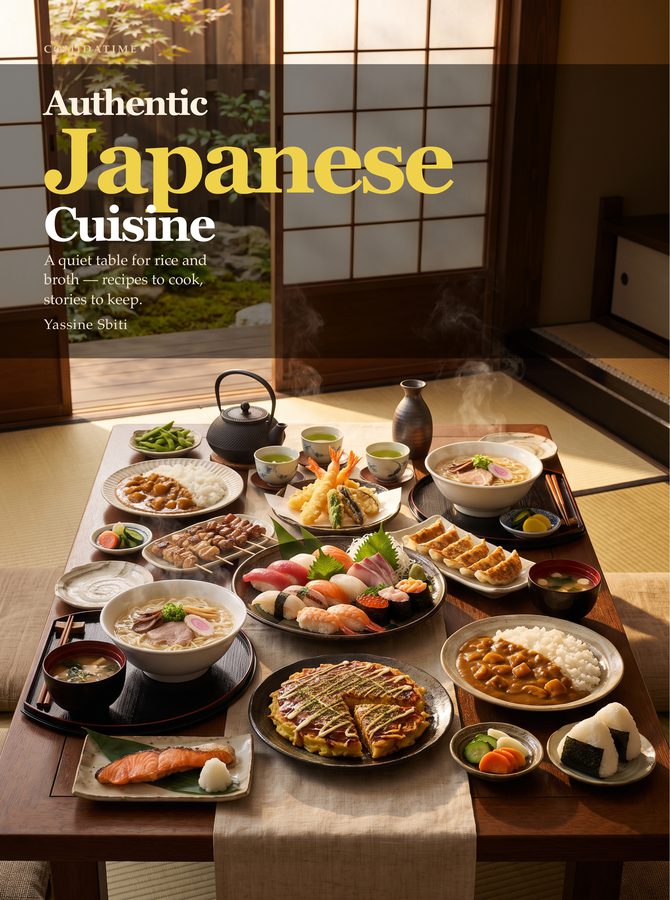
Cover of Authentic Japanese Cuisine Preview the cookbookBrowse the dishes inside
From the cookbook

Authentic Japanese Cuisine

This recipe is from Authentic Japanese Cuisine by Yassine Sbiti — the Japanese volume in the ComidaTime International Cuisines series.