
Home Cook Together. Celebrate Life.

PortugueseAuthentic Cuisine

Pastel de Nata

Serves 4 to 6 Pastry vegetarian, Breads & Pastry

Pastel de Nata

Pastel de Nata hails from the historic Jerónimos Monastery in Belém, Lisbon, where it was first crafted by monks in the 19th century. This creamy custard tart, nestled in a flaky puff pastry shell, has since become a beloved treat throughout Portugal, often enjoyed with a strong espresso at cafés or as a sweet end to a family meal.

The experience of biting into a freshly baked Pastel de Nata is a harmony of textures and flavors: the crisp, buttery layers of the pastry give way to a velvety custard, subtly infused with cinnamon and the zest of lemon. Dusting the top with confectioners' sugar and ground cinnamon is a traditional finishing touch, adding a gentle warmth and sweetness that rounds off each indulgent bite.
Ingredients

  • 500 gpuff pastry — rolled and rolled again into a tight log
  • 500 mlwhole milk
  • 100 mlcream
  • 6egg yolks
  • 400 gsugar
  • 200 mlwater — for the sugar syrup
  • 45 gall-purpose flour
  • 1cinnamon stick
  • 1strip of lemon peel
  • 2 tbspground cinnamon — for dusting
  • 2 tbspconfectioners' sugar — for dusting

Method

  1. Begin by rolling the 500 g of puff pastry into a tight log. Use a sharp knife to cut the log into discs about 1 cm thick. Take each disc and press it into a muffin tin, using a wet thumb to gently push the pastry up the sides. Ensure the walls are thin and even, which will help them become flaky during baking.
  2. In a saucepan, combine 400 g of sugar, 200 ml of water, 1 cinnamon stick, and 1 strip of lemon peel. Bring this mixture to a boil over medium heat, stirring occasionally, until the sugar dissolves completely and forms a light syrup. You will know it's ready when the syrup coats the back of a spoon lightly.
  3. In a separate bowl, whisk 45 g of all-purpose flour into 500 ml of cold whole milk and 100 ml of cream until smooth and free of lumps. Pour this mixture into a clean saucepan and cook over medium heat, stirring constantly, until it thickens to the consistency of a light custard. This will take a few minutes, and you'll see it start to coat the back of a spoon.
  4. Once the milk mixture has thickened, remove it from the heat and slowly pour in the hot syrup in a steady stream, whisking continuously to combine. Allow this mixture to cool slightly, just until it's warm to the touch, which will prevent the egg yolks from cooking too quickly in the next step.
  5. Whisk 6 egg yolks into the cooled custard mixture until fully incorporated. Strain the custard through a fine-mesh sieve into a clean bowl to remove the cinnamon stick, lemon peel, and any lumps, ensuring a smooth filling.
  6. Preheat your oven to its highest setting, ideally around 250°C (482°F) or as hot as it will go. Fill each pastry shell three-quarters full with the custard mixture. Place the filled tins on a baking sheet for stability and bake in the preheated oven until the tops blister and develop black spots, which should take about 8-12 minutes.
  7. Once baked, remove the Pastéis de Nata from the oven and let them cool slightly in the tins. While still warm, dust them generously with 2 tbsp of ground cinnamon and 2 tbsp of confectioners' sugar. Serve them warm for the best flavor and texture, enjoying the contrast between the flaky pastry and creamy custard.
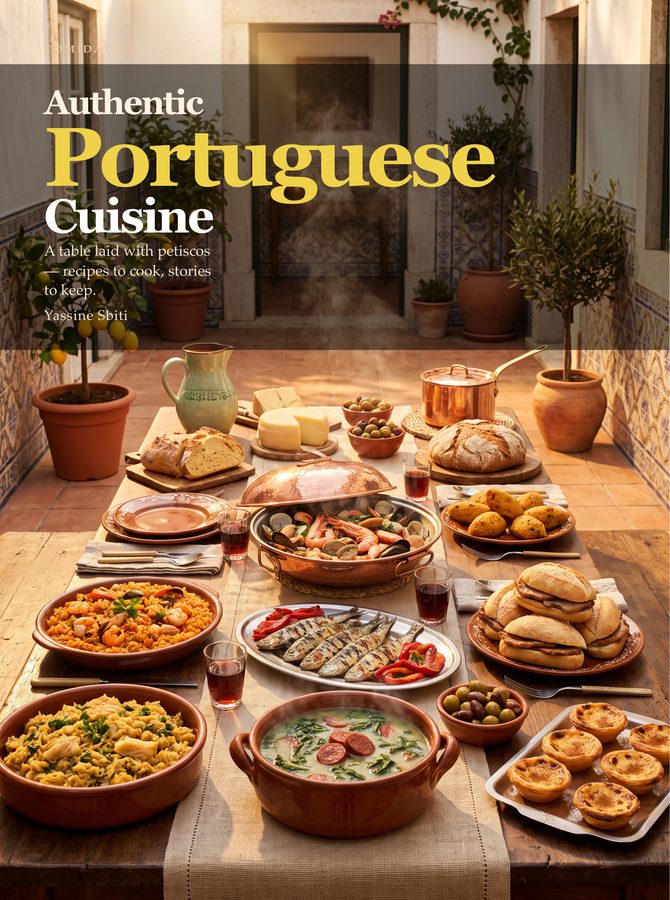
Cover of Authentic Portuguese Cuisine
From the cookbook

Authentic Portuguese Cuisine

This recipe is from Authentic Portuguese Cuisine by Yassine Sbiti — the Portuguese volume in the ComidaTime International Cuisines series.