
Pantry · Chiles
Ají amarillo
The chile that makes Peruvian food taste Peruvian: fruity, floral, and orange even when the rest of the plate is pale.
The journey
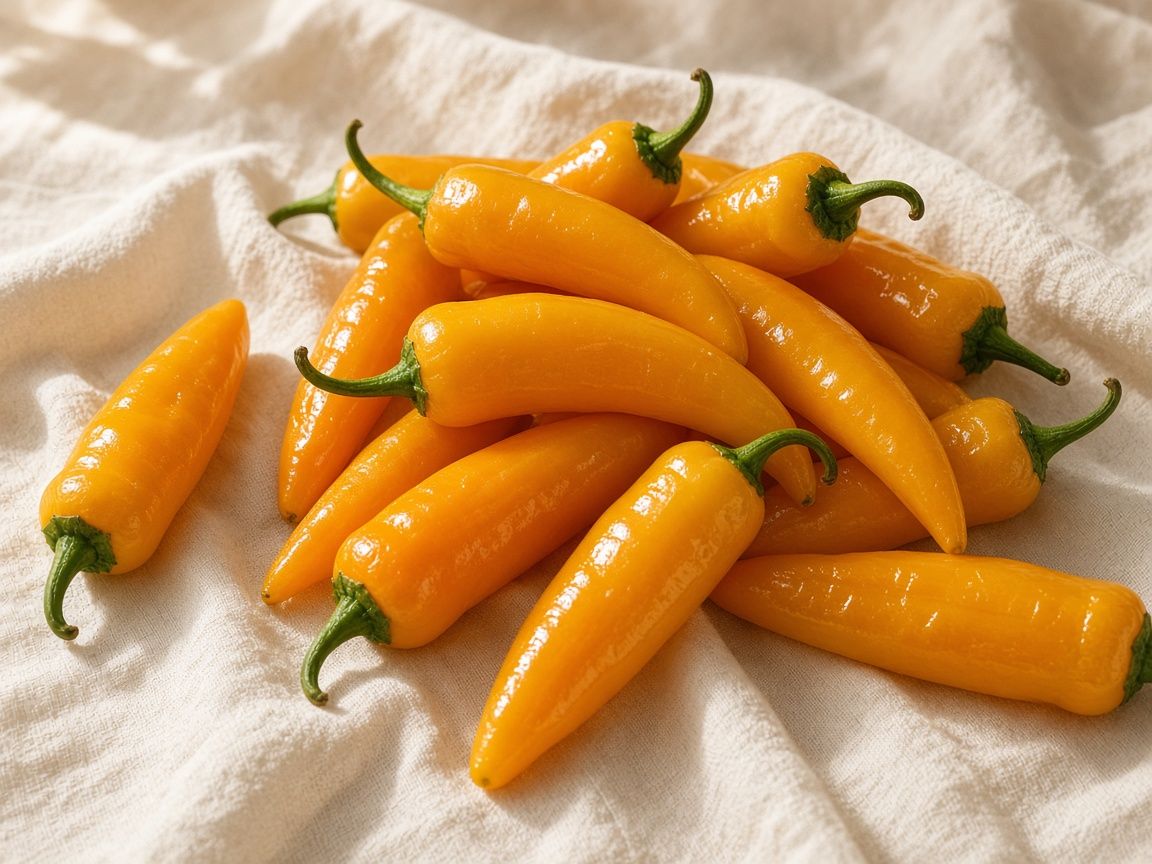
Ají is the Andean word that did not get replaced by 'chile.' Amarillo is the ripe color. Fresh, it is a long, glossy, sunset pepper. Frozen and as a paste, it travels. Ceviche, aji de gallina, causa, and countless sauces assume it the way Mexico assumes serrano.
Three recipes in the Peruvian volume name it. The paste shows up in the atlas as a mix still waiting its own page. No other cuisine in the series uses this pepper. That is a national chile.
In the kitchen
If you find fresh, roast or simmer and peel. If you find paste, taste it — some jars are only color. The flavor should be tropical fruit and a medium heat, not cayenne in disguise.
Olive oil and ají amarillo is already a sauce. Add garlic and you have a marinade. There is no substitute that keeps Peru in the pot. A yellow bell pepper plus a hotter chile is a postcard, not the place.
Healers and the table
Andean kitchens treated ají as daily food, not as a dare — a vegetable heat that went into sauces for children and grandparents alike, in amounts the table could stand.
Ají in a causa is lunch. It is not a treatment.
Traditional uses are part of the story of this spice. They are not medical advice.