
Pantry · Chiles
Ancho
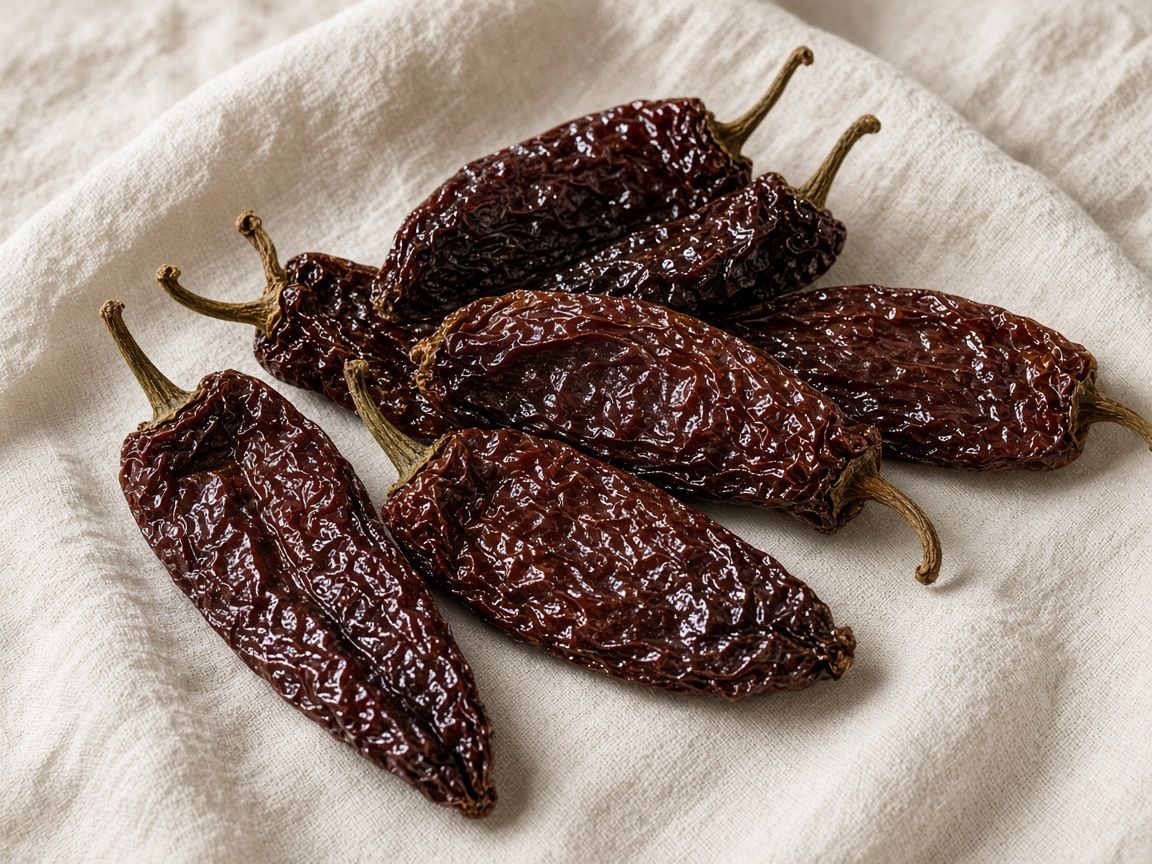
The wide, wrinkled dried chile that smells like raisins and chocolate: the body of many moles before the cacao goes in.
The journey
Ancho means 'wide.' It is a poblano left on the plant until it turns red, then dried. Fresh, that pepper is stuffed. Dried, it becomes a sweet, dark, mild chile that moles and adobos treat as a fruit.
Sixteen recipes in the Mexican book use it. Where guajillo is the everyday red, ancho is the deep one — the chile you add when you want the sauce to taste older than the hour you spent on it.
In the kitchen
Toast lightly. Anchos burn and turn bitter if you show off. Soak, seed if you want less heat, and blend with broth. They thicken a sauce as much as they color it.
A good ancho smells like dried fig and cocoa. A stale one smells like cardboard. Buy them pliable, not brittle as glass.
Healers and the table
Mild red chiles were the household heat — warming food for a weak appetite, not a dare. Ancho is that kind of chile.
Ancho in a mole is cooking. It is not a supplement.
Traditional uses are part of the story of this spice. They are not medical advice.