
Cookware · Hearths
Bräter
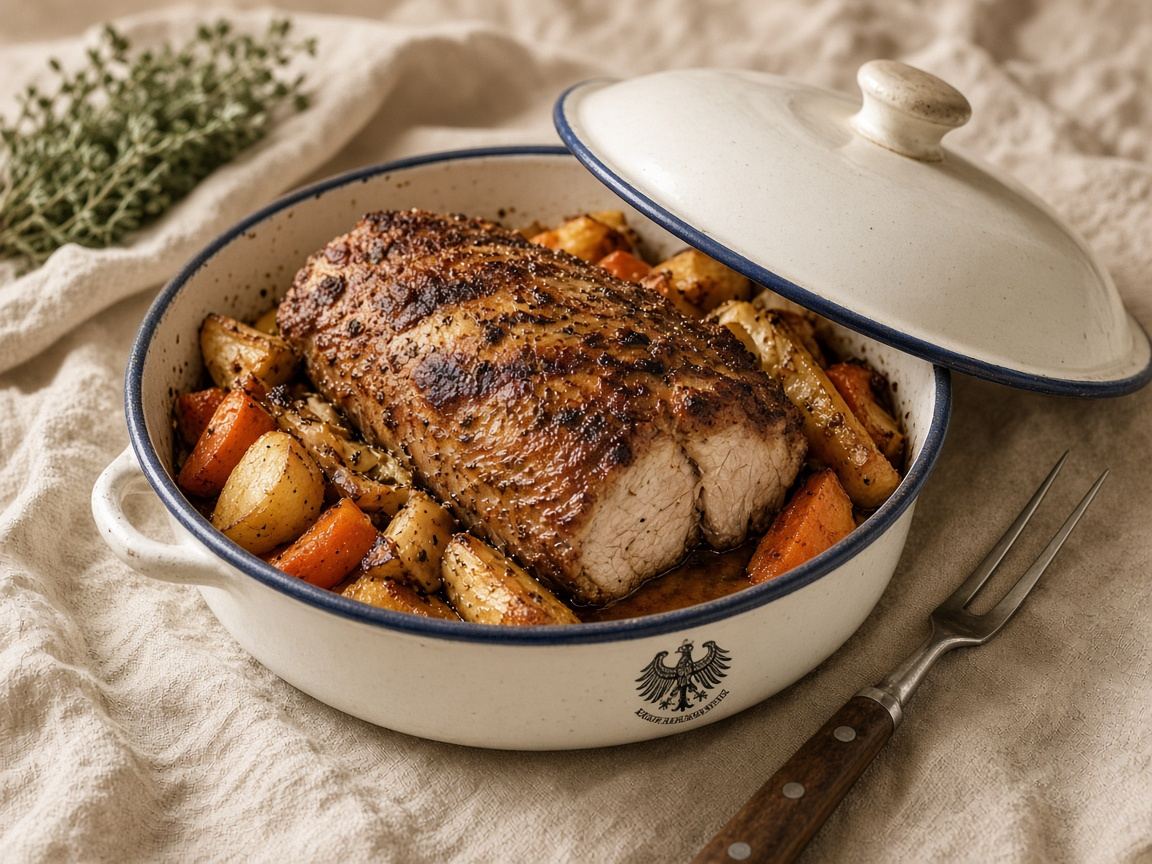
A lidded roasting pot: Sunday pork, sauerbraten, and the oven that does the work while the table is set.
The journey
German home cooking has always trusted the oven more than the toss. A Bräter is the vessel of that trust: a deep, lidded pot of clay or enamel in which a roast, its roots, and a little liquid become a meal. Clay bakers that look like Roman tiles are a later chapter of the same idea — wet clay, sealed lid, patient heat.
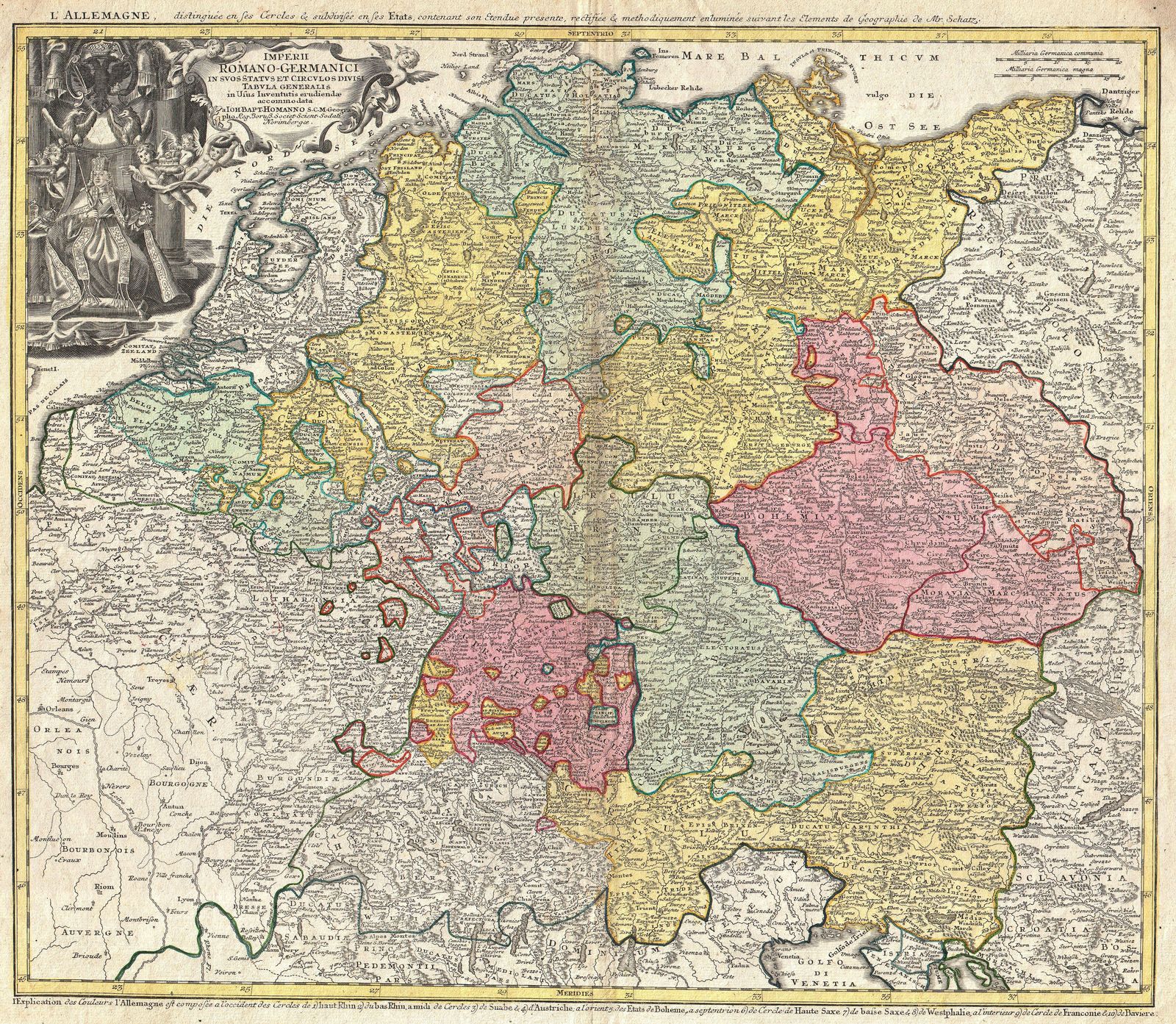
Maps of the German lands in the nineteenth century were still arguing borders. Kitchens were more stable. A pot roast after church, dumplings on the side, gravy that tastes of the pot it was born in: that is the Bräter talking, not a recipe card.
In the kitchen
Season the meat the night before if you can. Sear it if the pot allows, then add onion, a splash of stock or vinegar, and a lid. Low oven. Do not keep opening the door to check. Rest the roast in its juices, then slice across the grain.
The German volume assumes this kind of pot for sauerbraten, a Schweinebraten, a red-cabbage Sunday. A Dutch oven stands in. A thin casserole does not.