
Cookware · Hearths
Couscoussier
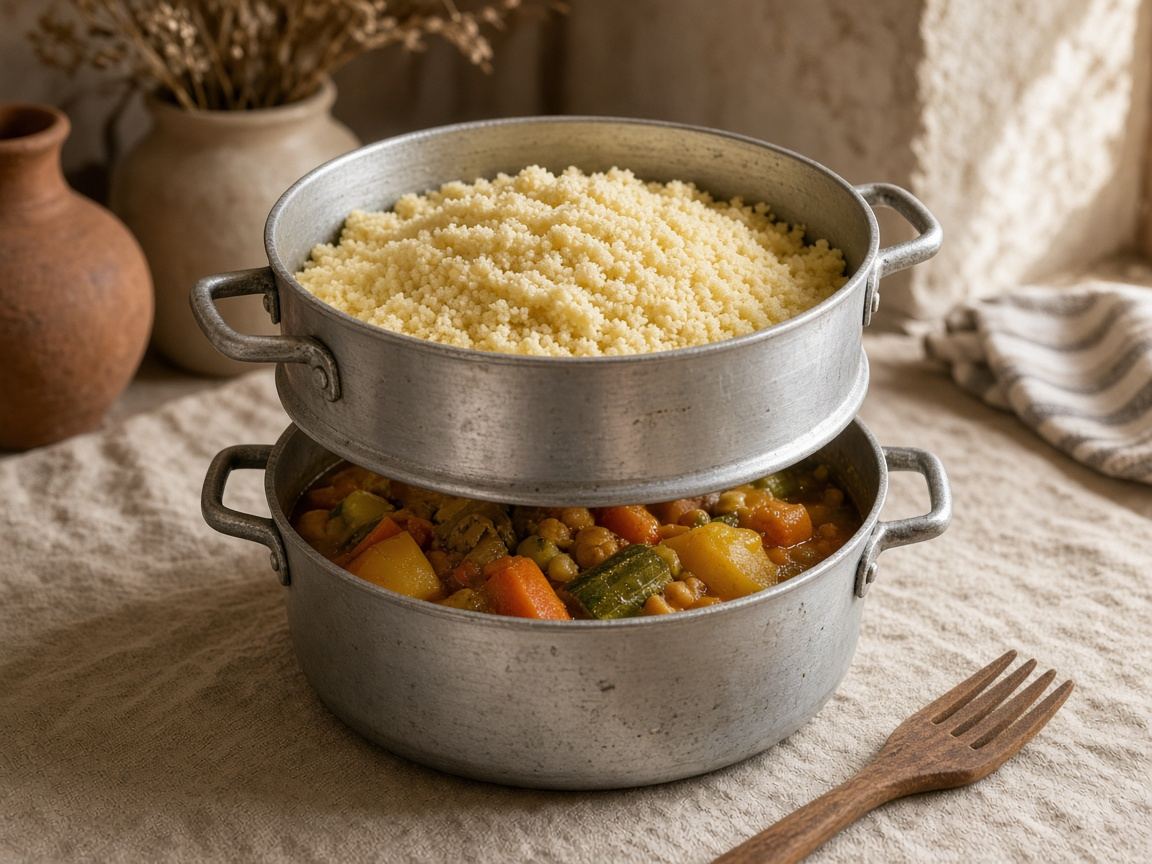
Two pots stacked: a stew below, a rain of steamed semolina above — Friday lunch in a single column of steam.
The journey
Couscous is not a side. In the Maghreb it is the grain you steam, rake, and steam again until each granule is separate and tender. The couscoussier is the tool that made that patience practical: a tall pot for the broth and vegetables, a perforated insert for the semolina, and a lid. The stew seasons the steam; the steam cooks the grain.
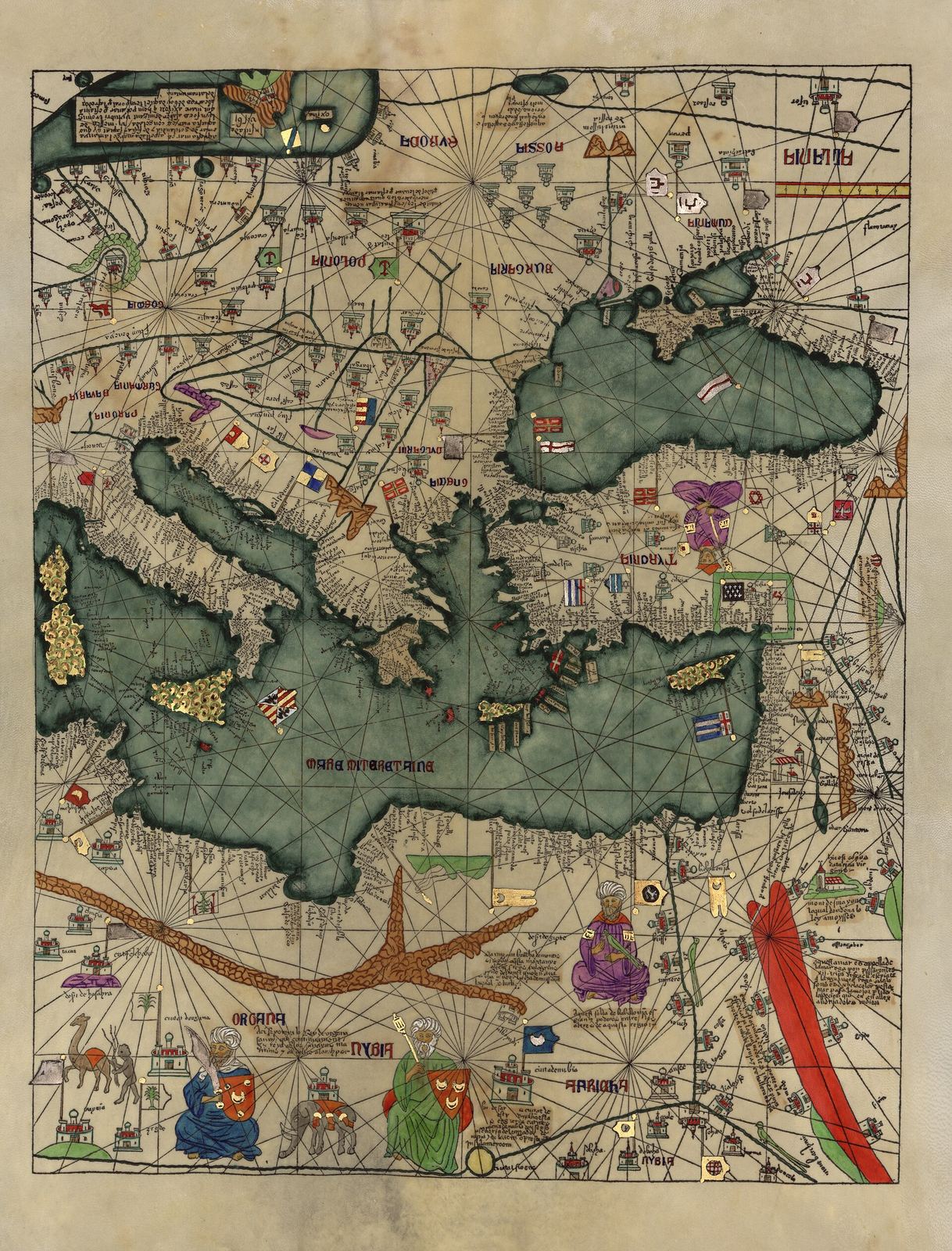
Berber kitchens were steaming durum wheat this way long before the dish became a restaurant word in Paris. The Catalan Atlas already charts the North African coast that fed Mediterranean tables. What moved was not only gold. It was a method of cooking grain over a pot instead of in it.
In the kitchen
Rub the semolina with oil and a little water between your palms. Steam, turn out, rake, rest, steam again. Do not boil couscous like pasta unless you are in a hurry and willing to admit it. The bottom pot should be a real stew — lamb, seven vegetables, chickpeas, a little harissa — so the steam is worth breathing.
Moroccan and, by kinship, Middle Eastern and West African tables in the series still treat couscous as a gathering dish. A pasta insert or a colander over a stockpot is the weekday substitute. Friday still wants the column.