
Cookware · Hearths
Dutch oven
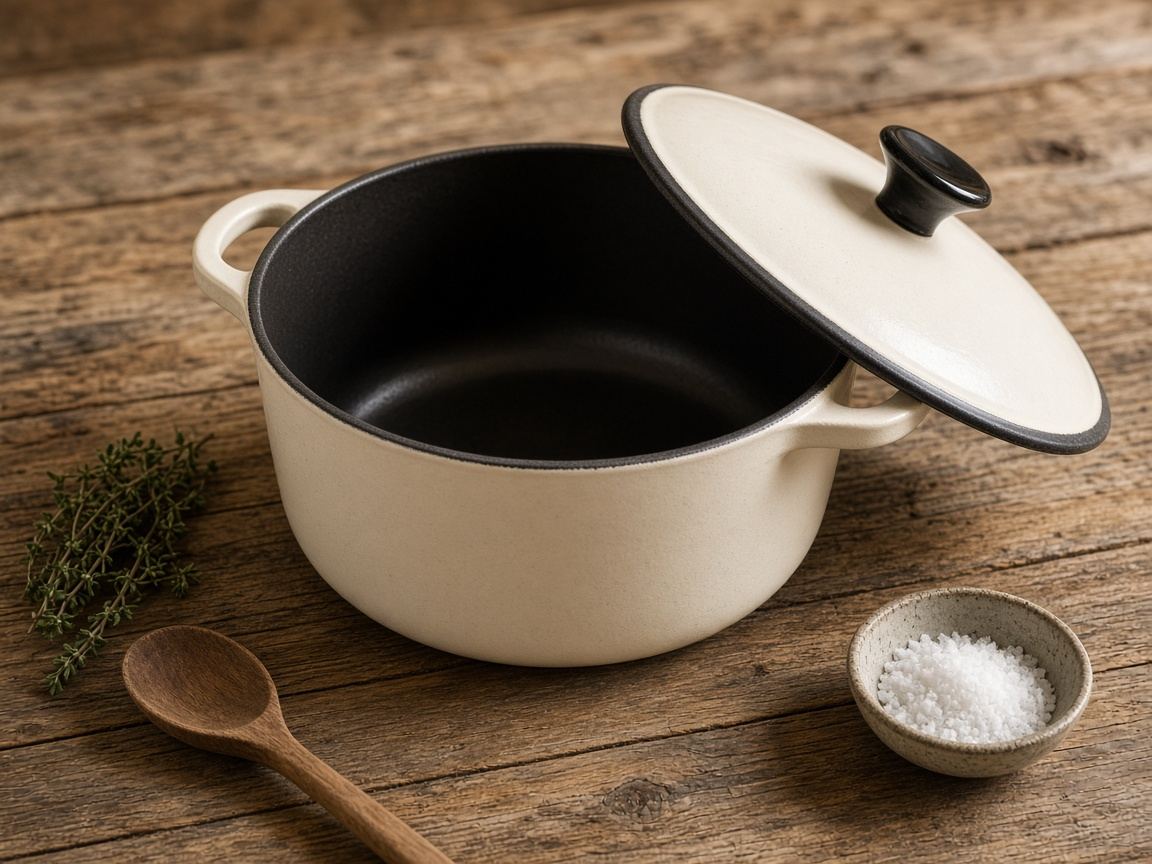
A heavy pot with a tight lid: the one the 30 books reach for when they do not name a country-specific hearth.
The journey
Dutch oven is a translator's word for a pot that already existed: thick iron, a lid that holds steam, enough weight to sit in coals or in a modern oven. The books use it more than any other named vessel — nearly two thousand recipes — because a stew, a pot roast, and a pot of beans all want the same seal.
French cooks call the cousin a cocotte. Caribbean cooks call a tighter, shinier cousin a dutch pot. The geometry is older than the English name. What traveled was the idea that a cheap cut becomes a feast if you do not let the steam escape.
In the kitchen
Brown first, then lid it, then leave it. The pot should feel heavier than the food. A thin casserole makes soup when you wanted a stew.
When a ComidaTime recipe says Dutch oven, it is asking for patience more than a brand. The French volume's cocotte is the same thought in another language.