
Cookware · Hearths
Mitad
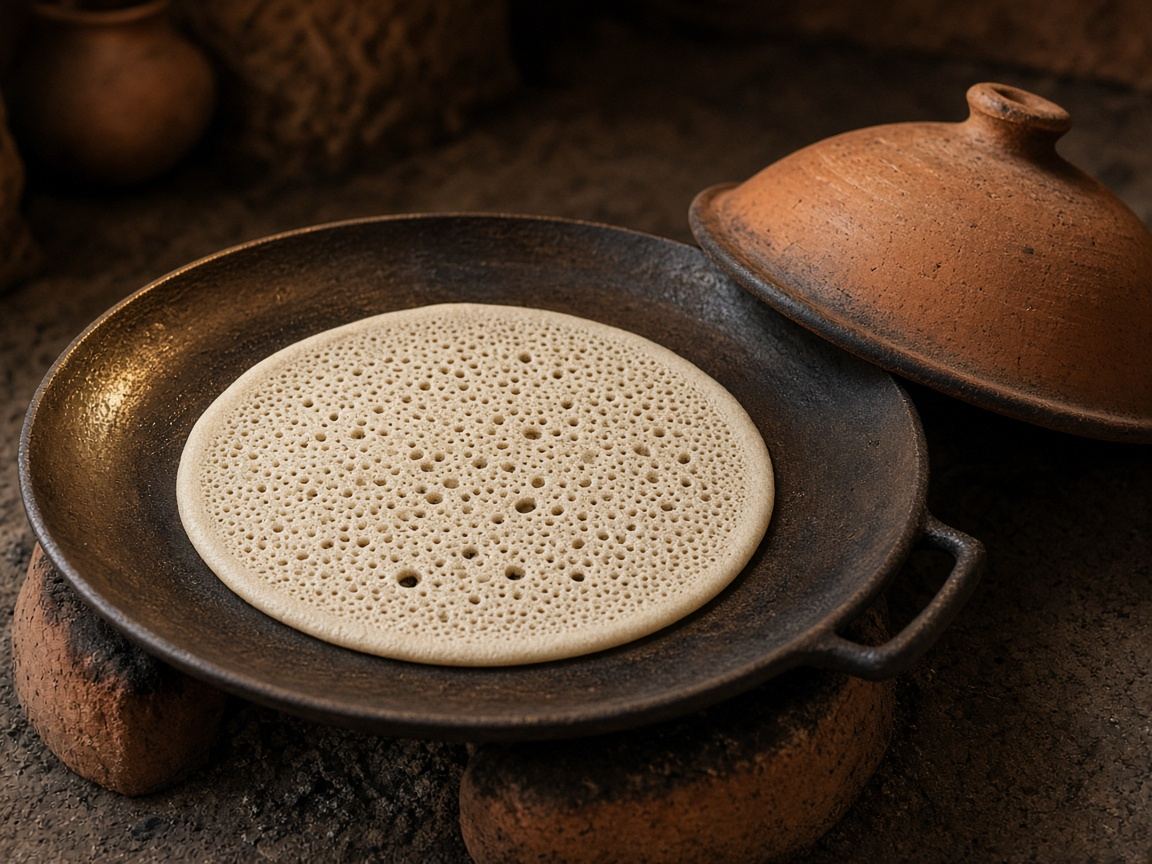
A clay or iron disk over the fire: the only honest way to bake injera until it bubbles like a honeycomb.
The journey
Injera is not a side bread. In Ethiopian and Eritrean houses it is plate, spoon, and the grain of the meal. The mitad — mogogo in Tigrinya — is the griddle that makes it: a wide, slightly concave clay plate, later iron, heated until a fermented teff batter sets into a sour, spongy sheet. Teff is a tiny highland grass. The vessel is how that grass becomes a table.
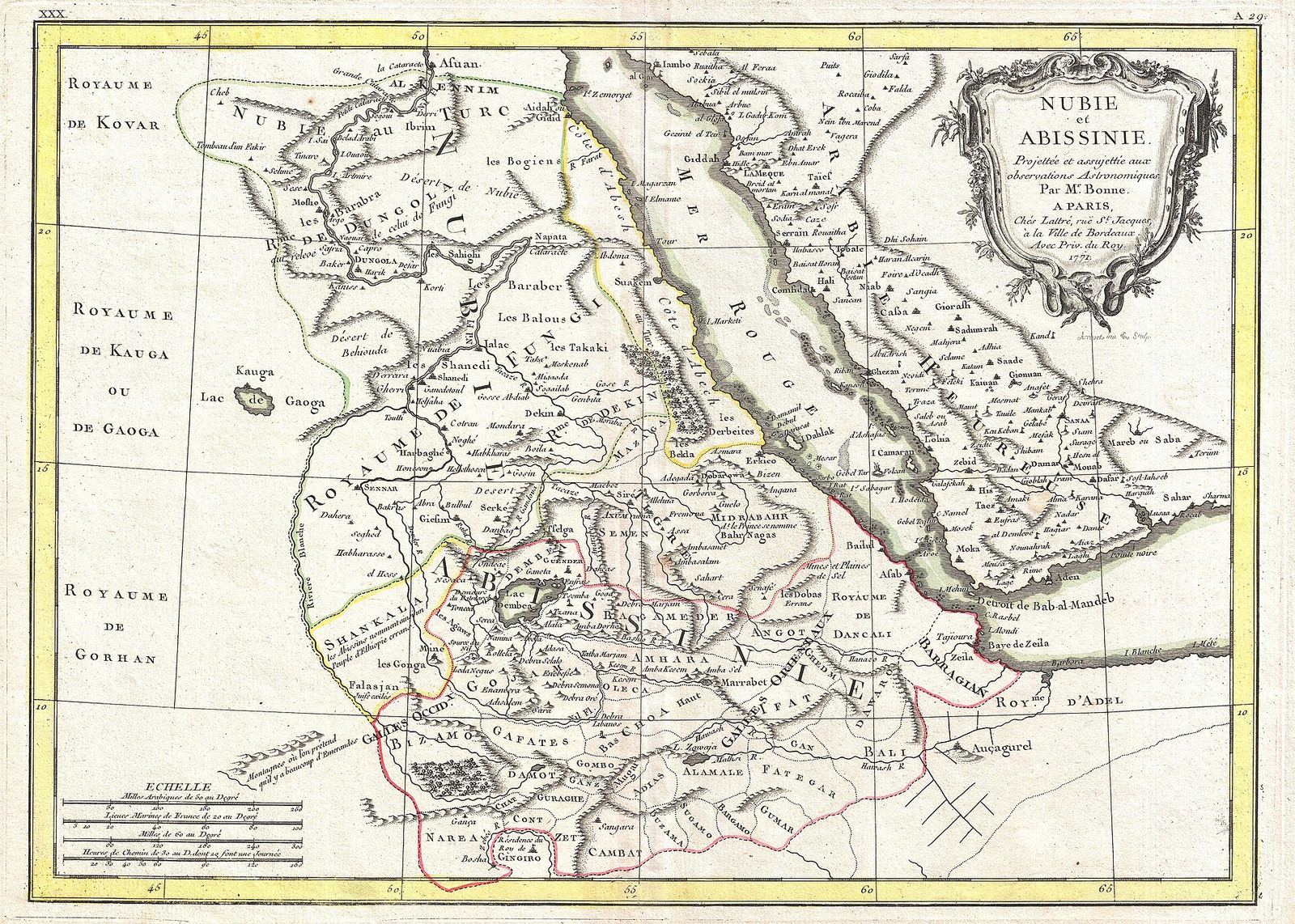
Travelers have been describing this hearth for centuries because they had no other word for a bread that is also a serving dish. The mitad is still the sound of an Ethiopian kitchen: a lid going on, steam trapped, the cook lifting a pale, hole-pocked round with both hands.
In the kitchen
A mitad wants even heat and a well-seasoned surface. Pour the batter in a spiral from the outside in. Cover so the top steams; do not flip like a pancake. The holes should open on their own. Stack the rounds, keep them covered, and serve stews directly on the sheet. A nonstick skillet can make a weekday injera. It will not sound like a mitad.
The Ethiopian volume assumes this bread under every wot. If you are cooking from that book, the mitad is as central as berbere.