
Cookware · Hearths
Tagine
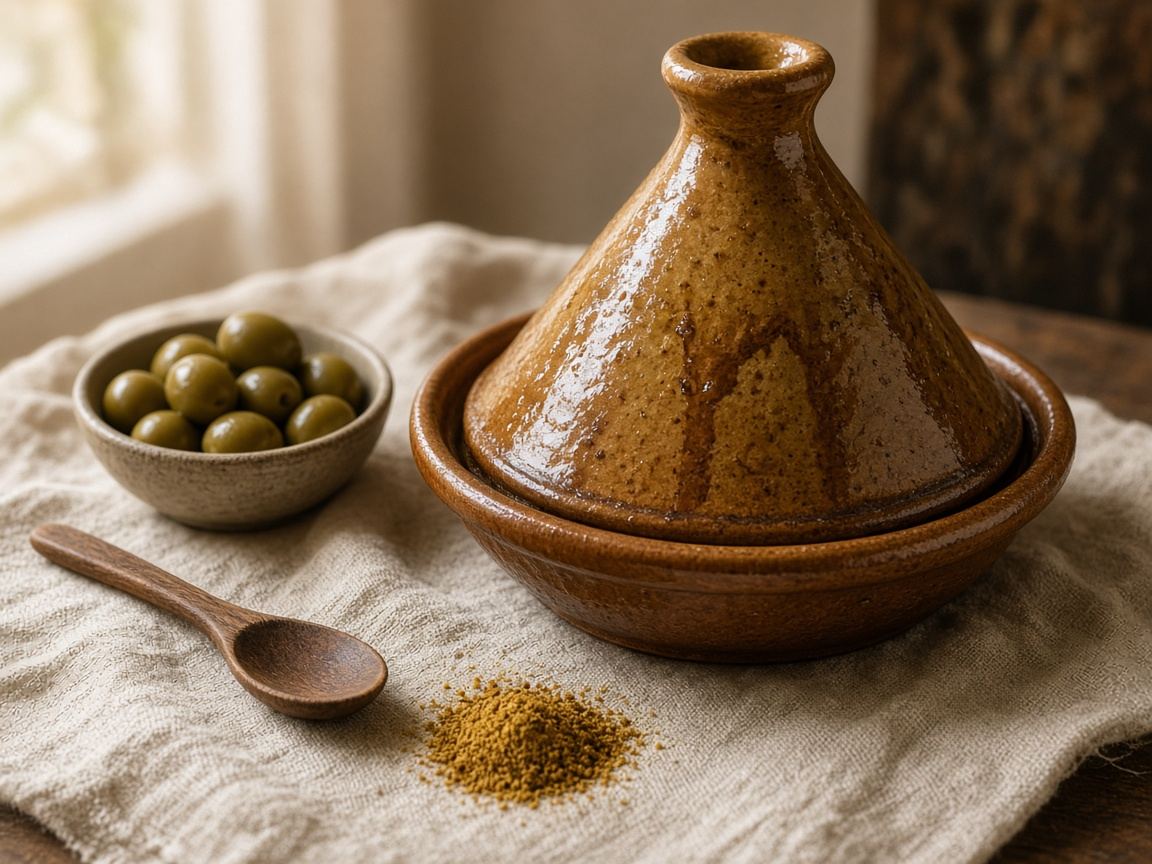
A clay pot with a cone for a lid: steam falls back as dew, and a courtyard meal cooks without wasting a drop.
The journey
The word tagine names both the vessel and the stew. Earthenware with a conical lid has been the slow cooker of the Maghreb for centuries: a wide, shallow base that sits on a charcoal brazier, and a chimney that catches rising steam and returns it to the meat, olives, and fruit below. Before metal pots were cheap, clay was the hearth a family could afford, repair, and pass down.
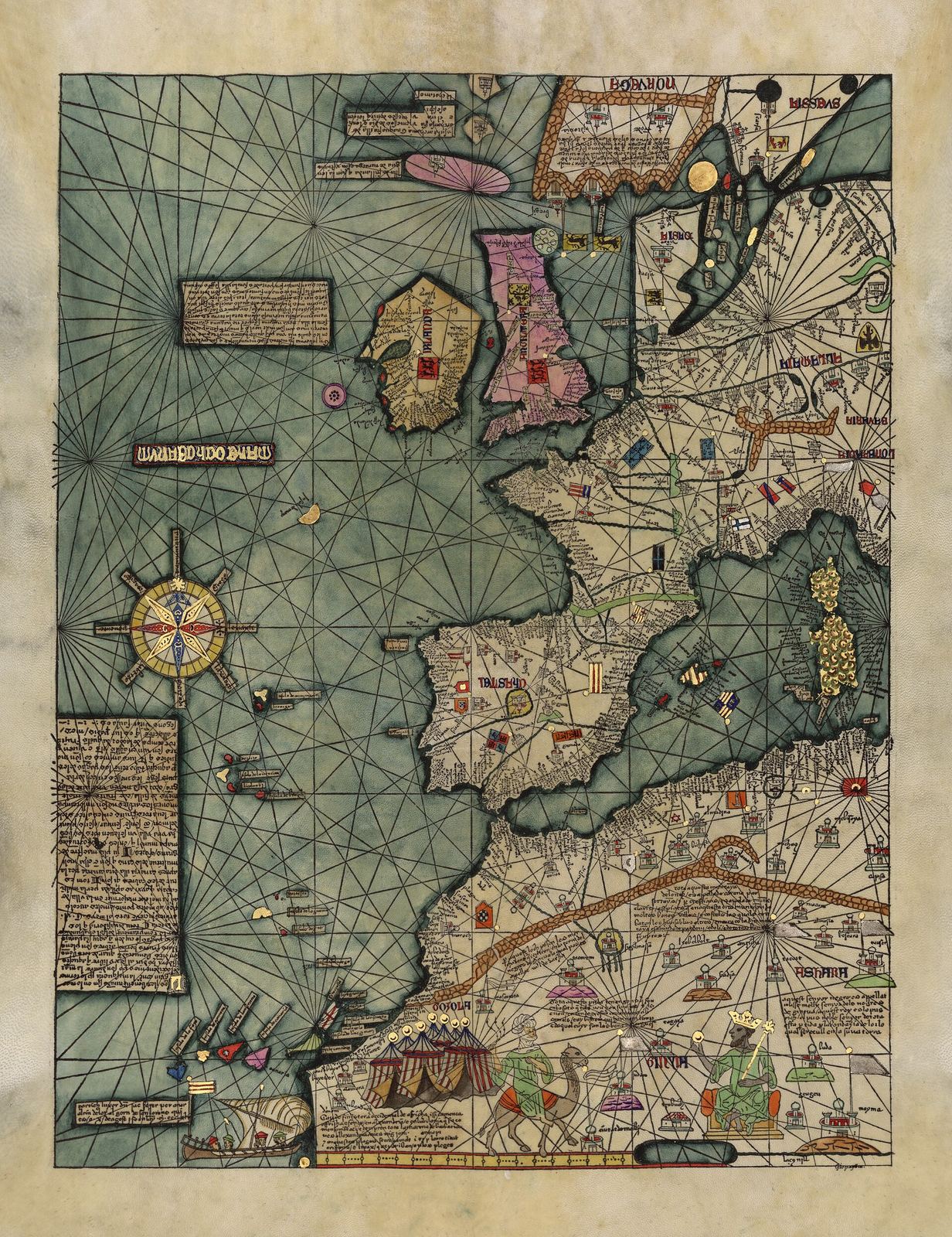
Medieval Mediterranean maps already treated the Maghreb as a kitchen as well as a coast. Grain, saffron, and gold moved along those routes; so did the idea of cooking under a lid that waters its own pot. In Moroccan houses the tagine is still the midday table: one dish, bread to scoop, and time enough to talk while the cone does the work.
In the kitchen
Season a new clay tagine with oil and a gentle heat before the first stew. Keep the flame low. The cone should feel warm, not screaming. Onions, spices, and a little liquid go in first; meat or vegetables rest on top so they steam as much as they braise. Do not lift the lid to peek. The whole point is the rain that falls back.
In the Moroccan volume a chicken tagine with apricots, a lamb tagine with prunes, and vegetable tagines all use the same patience. A cast-iron Dutch oven can stand in, but the clay perfume — and the way the sauce stays thin and glossy — is the vessel talking.