
Cookware · Hearths
Wok
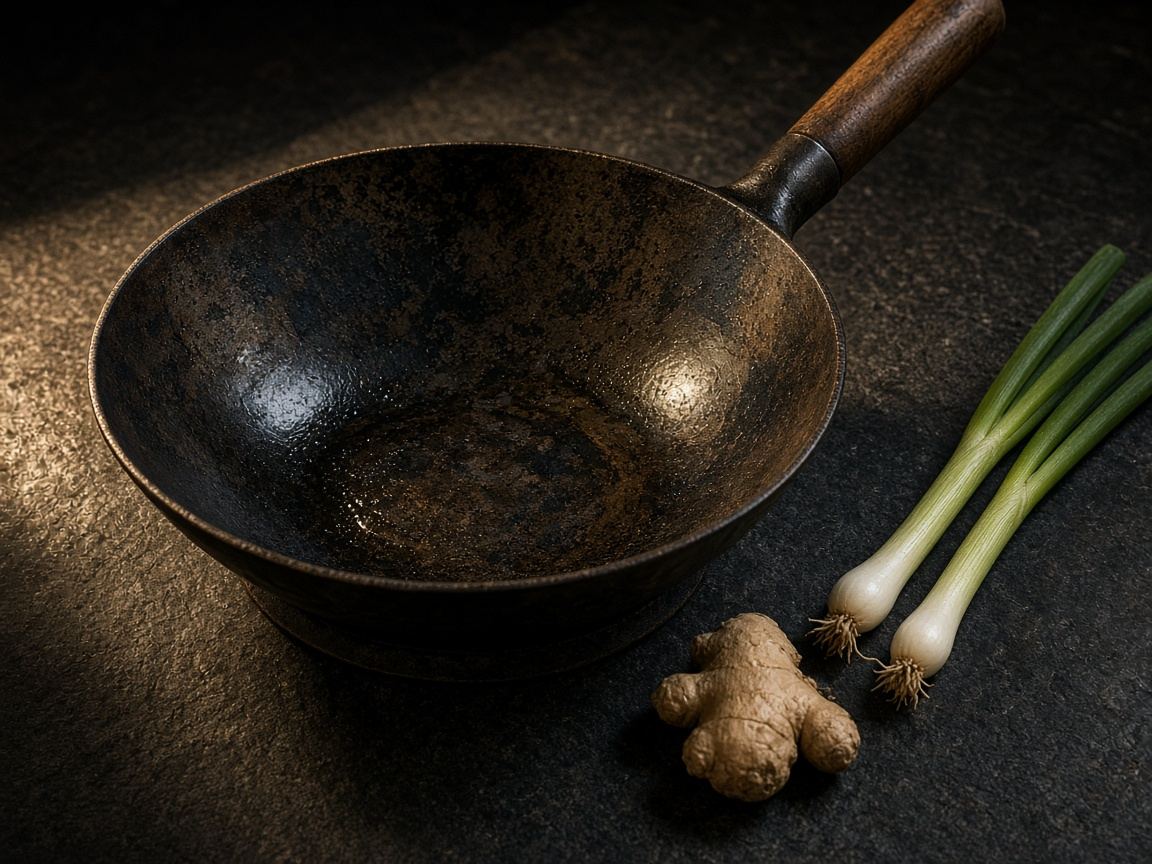
A round bowl of carbon steel: one pan for fire, steam, fry, and the toss that keeps a weeknight honest.
The journey
The wok is a shape, not a brand. In southern China a thin, round-bottomed iron pan sat in a brick stove whose hole was cut to hold it. The sides stayed cooler than the well, so a cook could sear in the center and push food up the wall. That geometry traveled with Cantonese and Fujian kitchens into Southeast Asia, then into every Chinatown that ever rented a flue.
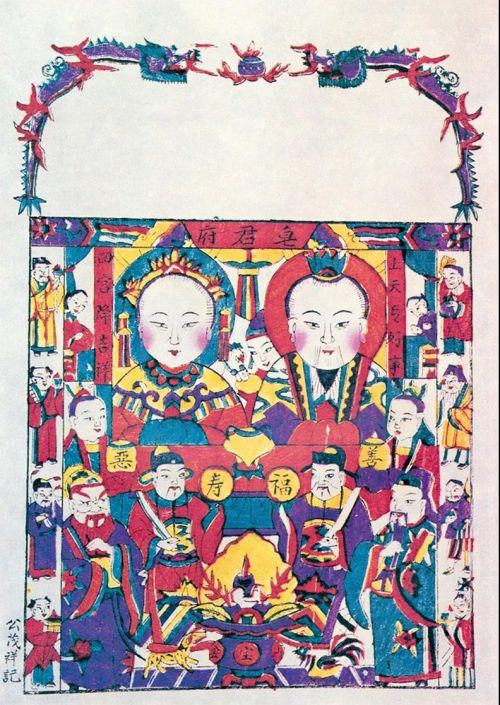
Woodblock New Year prints of the kitchen god show the hearth as a family altar: the stove is where the year is judged. A wok is the tool of that hearth — cheap, repairable, and fast enough for a street stall or a home that cooks rice every night.
In the kitchen
Season carbon steel until it looks like a quiet bronze. Get it smoking before the oil, then the aromatics, then the protein. Work in batches if the pan crowds. The sound should be a hiss, not a stew. Finish with a splash of water and a lid if you want steam, or leave it open if you want char.
Chinese, Thai, Vietnamese, Filipino, and Indonesian pages in the series all assume a wok or its cousin. A wide skillet can copy the recipes. It cannot copy the toss.