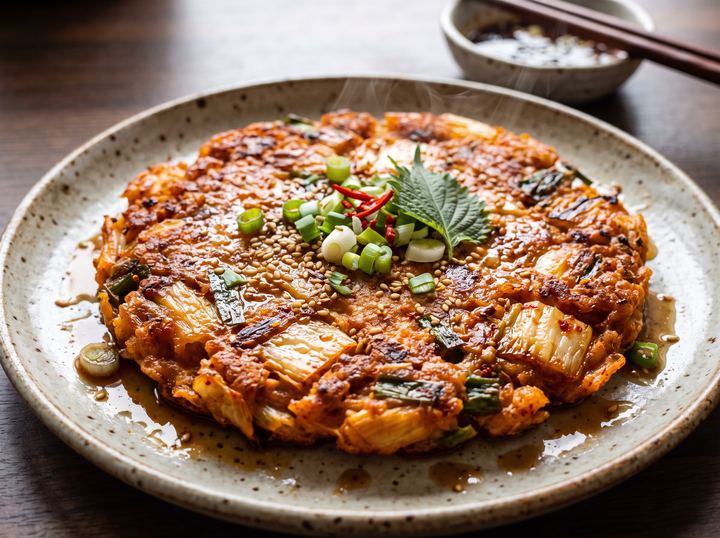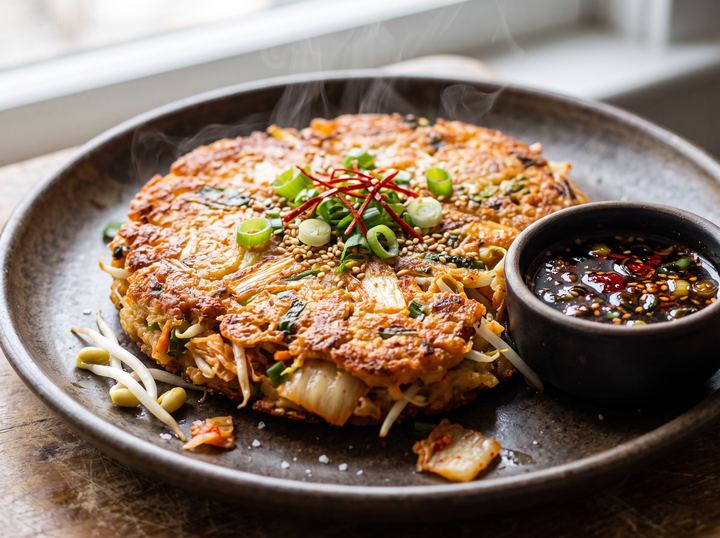
Home Cook Together. Celebrate Life.

KoreanAuthentic Cuisine

Haemul Pajeon

Serves 4 to 6 seafood

Haemul Pajeon

Haemul Pajeon is a beloved Korean pancake that finds its place on the table during rainy days, when the rhythmic sound of raindrops calls for comfort food. Traditionally, it's a dish that brings family and friends together, offering warmth and a shared experience. This version captures the essence of home cooking, where ingredients are measured by intuition and the cook's practiced hand, rather than precise tools.

The pancake itself is a delightful mix of chewy seafood, crisp green scallions, and a savory batter that fries to golden perfection. Each bite offers a satisfying blend of textures and flavors, enhanced by a dipping sauce that complements its savory profile. Generosity with both salt and fat ensures a rich taste that delights the senses, making it a treasured staple for any Korean meal.
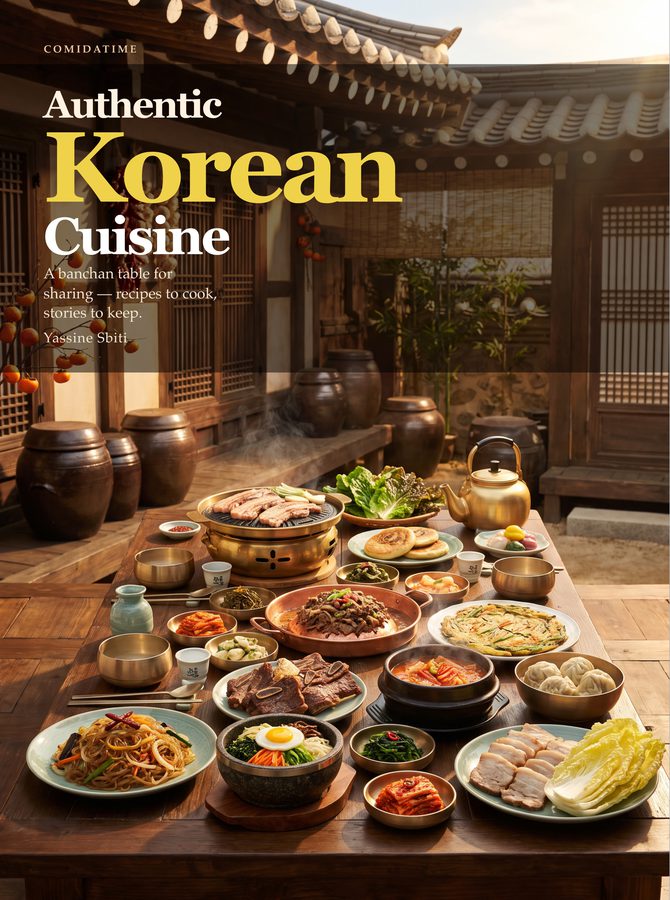
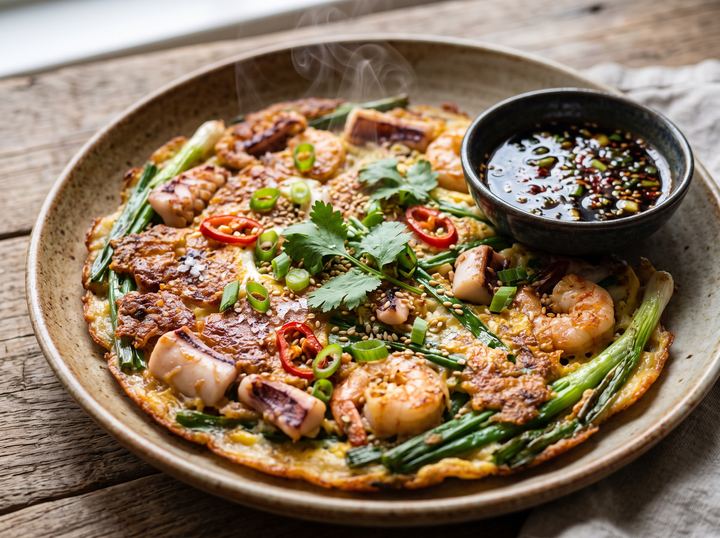
Ingredients

  • 200 gbuchimgae batter
  • 150 gsquid and shrimp
  • 1 bunchscallions
  • 1egg
  • dipping sauce — to serve
  • to tastefine sea salt

Method

  1. Begin by preparing all the components. Clean and slice the squid and shrimp into bite-sized pieces, ensuring they are free of any shells or grit. Trim the scallions and cut them into 2-inch lengths. Crack the egg into a small bowl and beat it lightly with a fork. Have your buchimgae batter ready in a mixing bowl.
  2. Heat a large non-stick skillet over medium-high heat and add a generous amount of vegetable oil, enough to coat the bottom of the pan. This ensures a crispy texture for the pajeon. Once the oil is shimmering, add the scallions, spreading them out evenly across the pan. Allow them to cook for about a minute until they start to soften and release their aroma.
  3. Add the squid and shrimp to the pan, distributing them evenly over the scallions. Cook for about 2 minutes, stirring occasionally, until the seafood begins to turn opaque and releases a fresh, ocean-like aroma. This step builds the foundational flavor of the pajeon.
  4. Pour the buchimgae batter over the seafood and scallions, tilting the pan to ensure it spreads evenly. Drizzle the beaten egg over the top, which will help bind the ingredients together. Let the pajeon cook undisturbed for 3-4 minutes, until the edges start to turn golden brown and the batter is set.
  5. Carefully flip the pajeon using a wide spatula. If needed, add a little more oil around the edges to maintain crispiness. Cook for another 3-4 minutes on the other side until it is golden brown and the seafood is fully cooked. The pajeon should feel firm to the touch and have a crispy exterior.
  6. Once cooked, transfer the pajeon to a cutting board and sprinkle it lightly with fine sea salt to taste. Cut it into wedges and serve immediately with the dipping sauce on the side. The pajeon should be crispy on the outside and tender on the inside, perfect for sharing.

You may need

From the ComidaTime pantry and cookware — the jars and hearths this kitchen actually cooks with.

Cover of Authentic Korean Cuisine Preview the cookbookBrowse the dishes inside
From the cookbook

Authentic Korean Cuisine

This recipe is from Authentic Korean Cuisine by Yassine Sbiti — the Korean volume in the ComidaTime International Cuisines series.