
Pantry · Special mixes
Gochujang
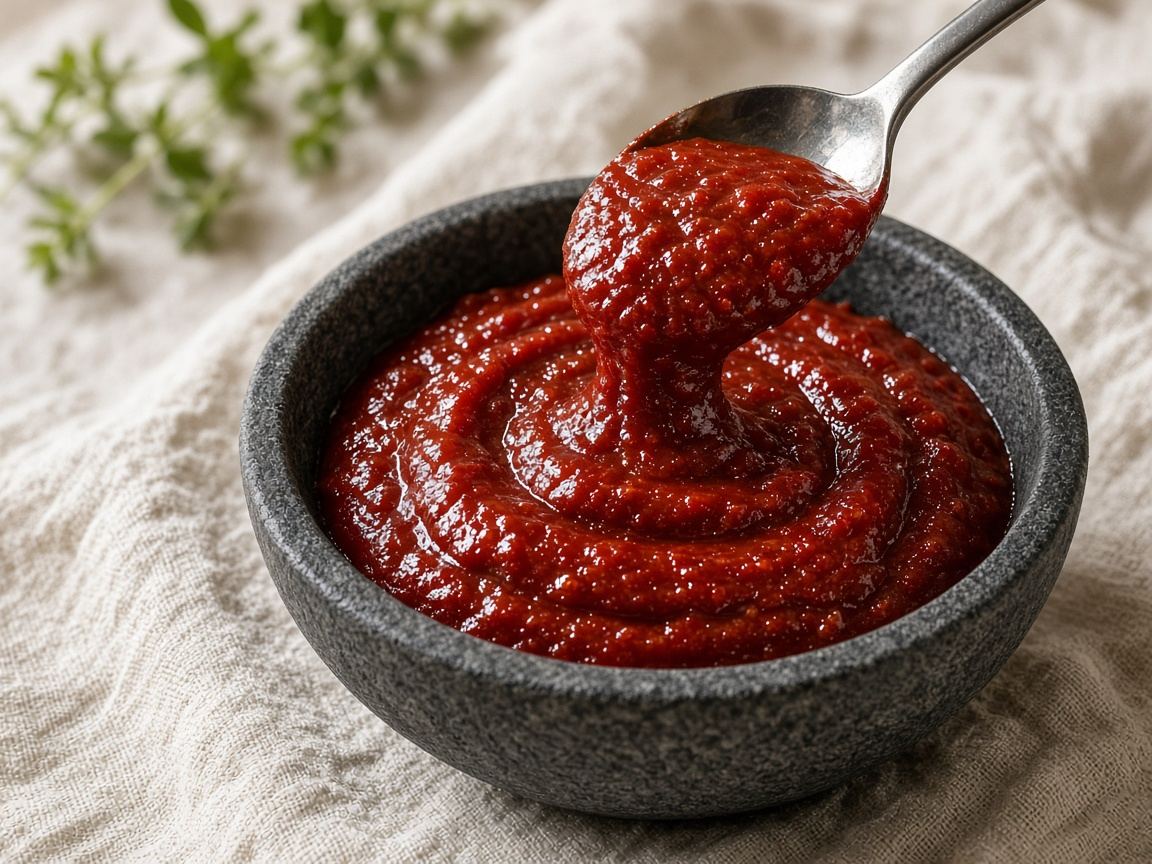
The deep red paste that makes a Korean stew taste aged: sweet, salty, hot, and a little like a cellar.
The journey
Gochujang is fermentation, not a squeeze-bottle sauce. Rice and soy and sun-dried chile sit until the paste tastes older than the afternoon you opened the tub. Bibimbap, tteokbokki, and a hundred home stews assume it the way a Mexican pot assumes a dried chile.
Four recipes in the Korean volume name the paste in so many words. The kitchen still treats it as furniture. This page exists so gochugaru and gochujang are not collapsed into 'Korean red.'
In the kitchen
Stir it into a braise or thin it with vinegar and sesame oil for a sauce. It burns if you fry it dry and hot. A little sugar or honey is traditional because the paste is already salty.
The tub in the fridge lasts. If it is only ketchup-red and sweet, it is not gochujang. Look for fermented soybean in the ingredients.
Healers and the table
Korean home kitchens treated fermented pastes as everyday food that aided a heavy meal. The comfort is the stew.
Gochujang in a jjigae is supper. It is not a probiotic prescription.
Traditional uses are part of the story of this spice. They are not medical advice.