
Home Cook Together. Celebrate Life.

ItalianAuthentic Cuisine

Ciabatta

Serves 4 to 6 Bread vegetarian, Breads & Pastry

Ciabatta

Ciabatta hails from the lush landscapes of the Veneto region, where the sun-kissed fields yield olives and grains that define this beloved bread. It is a staple of Italian households, gracing tables at any meal with its rustic charm. Veneto cooks embrace the simplicity of using olive oil generously, and the salt is a matter of instinct rather than measurement, ensuring each loaf carries the signature touch of the cook.

A perfect ciabatta should have a thin, crisp crust that crackles under the slightest pressure, revealing a light and airy crumb. The flavor is subtly tangy with a whisper of earthiness from the olive oil, while the sea salt whispers its presence without overwhelming. This bread begs to be torn with hands, the irregular holes capturing hints of oil and salt, making each bite a celebration of texture and taste.
Ingredients

  • 500 gbread flour
  • 400 mlwarm water
  • 3 ginstant yeast
  • 2 tspfine sea salt
  • 2 tbspextra virgin olive oil

Method

  1. In a large mixing bowl, combine 500 g bread flour and 3 g instant yeast. Gradually add 400 ml warm water while stirring with a wooden spoon until a wet, slack dough forms. The dough should be sticky and shaggy, not smooth.
  2. Sprinkle 2 tsp fine sea salt over the dough and gently fold it in using a dough scraper or your hands. Cover the bowl with a damp cloth and let it rest for 30 minutes. This rest allows the flour to hydrate and the gluten to begin developing.
  3. After the initial rest, perform a series of folds to build structure. With wet hands, gently lift one side of the dough and fold it over itself. Rotate the bowl 90 degrees and repeat three more times. Cover again and let it rise at room temperature for about 2 hours, folding every 30 minutes. The dough should become smoother and more elastic with each fold.
  4. Once the dough has doubled in size and is jiggly, lightly flour a work surface and gently turn the dough out onto it. Divide the dough into two equal pieces, being careful not to deflate it. Shape each piece into a rough rectangle by gently stretching and folding the edges under.
  5. Line a baking sheet with parchment paper and dust it generously with flour. Transfer the shaped loaves onto the prepared sheet, leaving space between them. Cover with a damp cloth and let them proof for about 45 minutes, until they are visibly puffed and jiggly when gently shaken.
  6. Preheat your oven to 240°C (465°F) with a baking stone on the middle rack. Place a small oven-safe dish with water on the bottom of the oven to create steam. This steam will help develop a crisp crust.
  7. Carefully slide the parchment with the loaves onto the hot baking stone. Bake for 20-25 minutes, or until the crust is a deep golden brown and sounds hollow when tapped. The interior should have a holey crumb structure.
  8. Remove the ciabatta from the oven and let it cool completely on a wire rack. Cooling allows the interior to set properly, ensuring a perfect texture when sliced. Serve with extra virgin olive oil for dipping.
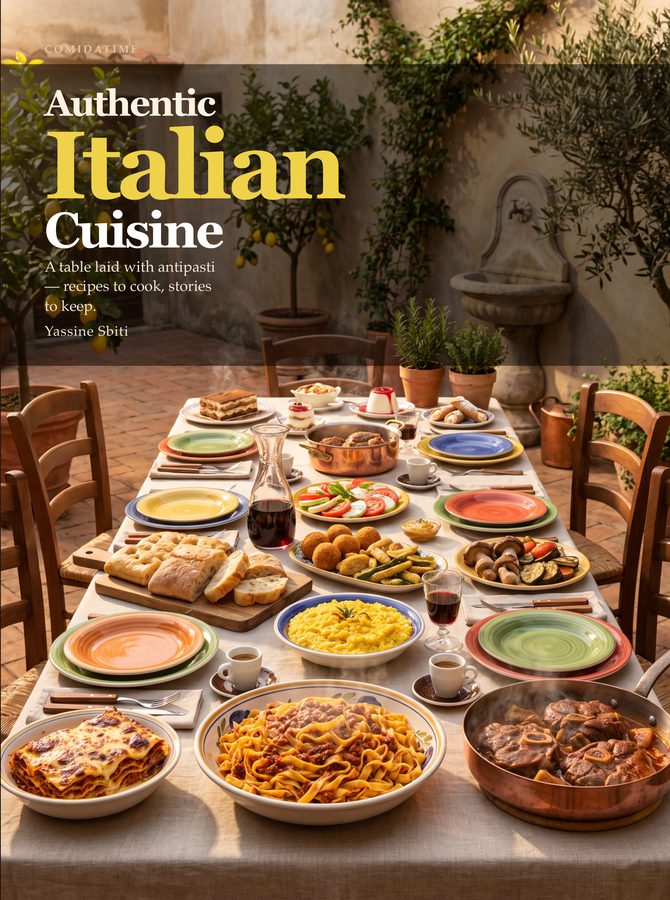
Cover of Authentic Italian Cuisine
From the cookbook

Authentic Italian Cuisine

This recipe is from Authentic Italian Cuisine by Yassine Sbiti — the Italian volume in the ComidaTime International Cuisines series.