Home Cook Together. Celebrate Life.

VietnameseAuthentic Cuisine

Banh Chung

Serves 4 to 6 meat, Lunar New Year

Banh Chung

Banh Chung is an iconic dish deeply rooted in the traditions of Northern Vietnam, especially prepared during Tet, the Vietnamese Lunar New Year. This square-shaped cake is a symbol of the earth, reflecting the agrarian roots of Vietnamese culture. Each family has its own version, but the essence remains the same: a hearty, nourishing meal that brings warmth to the holiday table.

When unwrapped, Banh Chung reveals a mosaic of glutinous rice, mung beans, and succulent pork belly, all seasoned with a hint of black pepper and fine sea salt. The banana leaves impart a subtle, earthy aroma, while the rice provides a chewy texture, balancing the rich, fatty pork. A slice of Banh Chung offers a delightful interplay of flavors and textures, making it a cherished part of the Tet celebration.
Ingredients

  • 400 gglutinous rice
  • 150 gmung beans
  • 200 gpork belly
  • banana leavesfor wrapping
  • 1 tspblack pepper
  • to tastefine sea salt

Method

  1. Begin by rinsing 400 g of glutinous rice under cold water until the water runs clear. This removes excess starch and prevents the rice from becoming too sticky. Once rinsed, soak the rice in a bowl of water for at least 4 hours or overnight to ensure it becomes tender when cooked.
  2. While the rice is soaking, rinse 150 g of mung beans and soak them in a separate bowl of water for at least 2 hours. This will soften the beans, making them easier to cook and mash later.
  3. Prepare the pork belly by cutting 200 g into bite-sized pieces. Season the pork with 1 tsp black pepper and a generous amount of fine sea salt, ensuring each piece is well coated. This step infuses the meat with flavor, which is crucial for the overall taste of Banh Chung.
  4. In a large skillet, heat a small amount of oil over medium-high heat. Add the seasoned pork belly pieces and brown them on all sides until they develop a deep, golden color. This caramelization adds a rich flavor to the pork, which will enhance the dish.
  5. Once browned, reduce the heat to low and cover the skillet. Allow the pork to braise gently in its own fat until it becomes tender, about 20-30 minutes. The pork is ready when it is tender and succulent, with a slight sheen from the rendered fat.
  6. Drain the soaked mung beans and place them in a pot with just enough water to cover them. Cook over medium heat until the beans are soft and can be easily mashed with a spoon, about 20 minutes. Once cooked, mash the beans into a smooth paste and season with salt to taste.
  7. Drain the soaked glutinous rice and season it lightly with salt. Lay out the banana leaves, ensuring they are clean and pliable. Place a layer of rice on the leaves, followed by a layer of mung bean paste, and then a layer of the cooked pork. Top with another layer of rice.
  8. Fold the banana leaves tightly around the filling to form a square package, ensuring it is secure. Use string to tie the package tightly, preventing any filling from escaping during cooking.
  9. Place the wrapped Banh Chung in a large pot and cover with water. Bring to a boil over high heat, then reduce to a simmer. Cook for about 6-8 hours, ensuring the package remains submerged. The Banh Chung is ready when the rice is tender and the flavors have melded together.
  10. Remove the Banh Chung from the pot and allow it to cool slightly before unwrapping. Slice and serve as is, or with a side of pickled vegetables for a traditional Tet meal.

You may need

From the ComidaTime pantry and cookware — the jars and hearths this kitchen actually cooks with.

Cover of Authentic Vietnamese Cuisine Preview the cookbookBrowse the dishes inside
From the cookbook

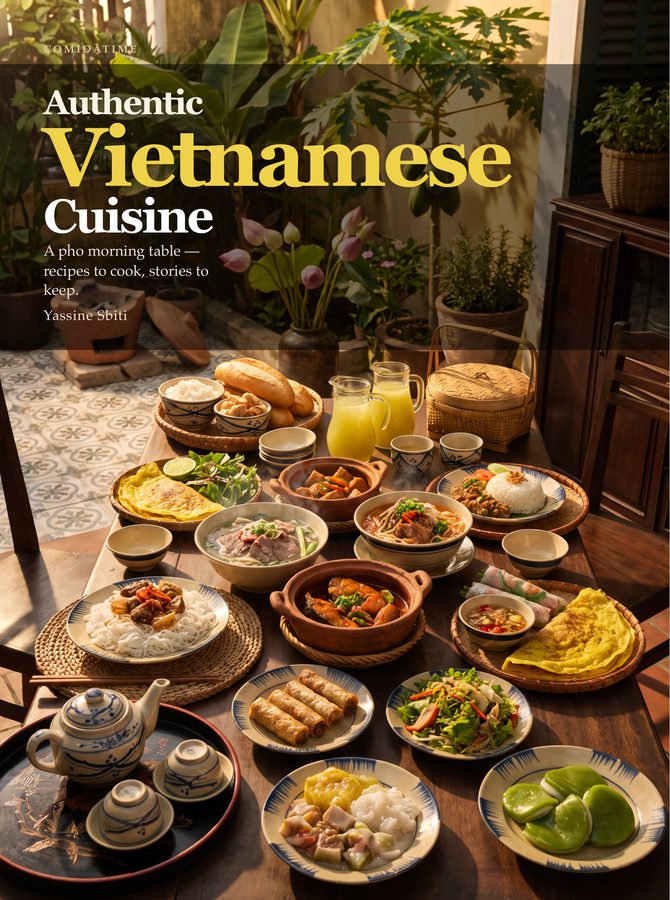
Authentic Vietnamese Cuisine

This recipe is from Authentic Vietnamese Cuisine by Yassine Sbiti — the Vietnamese volume in the ComidaTime International Cuisines series.