
Pantry · Herbs
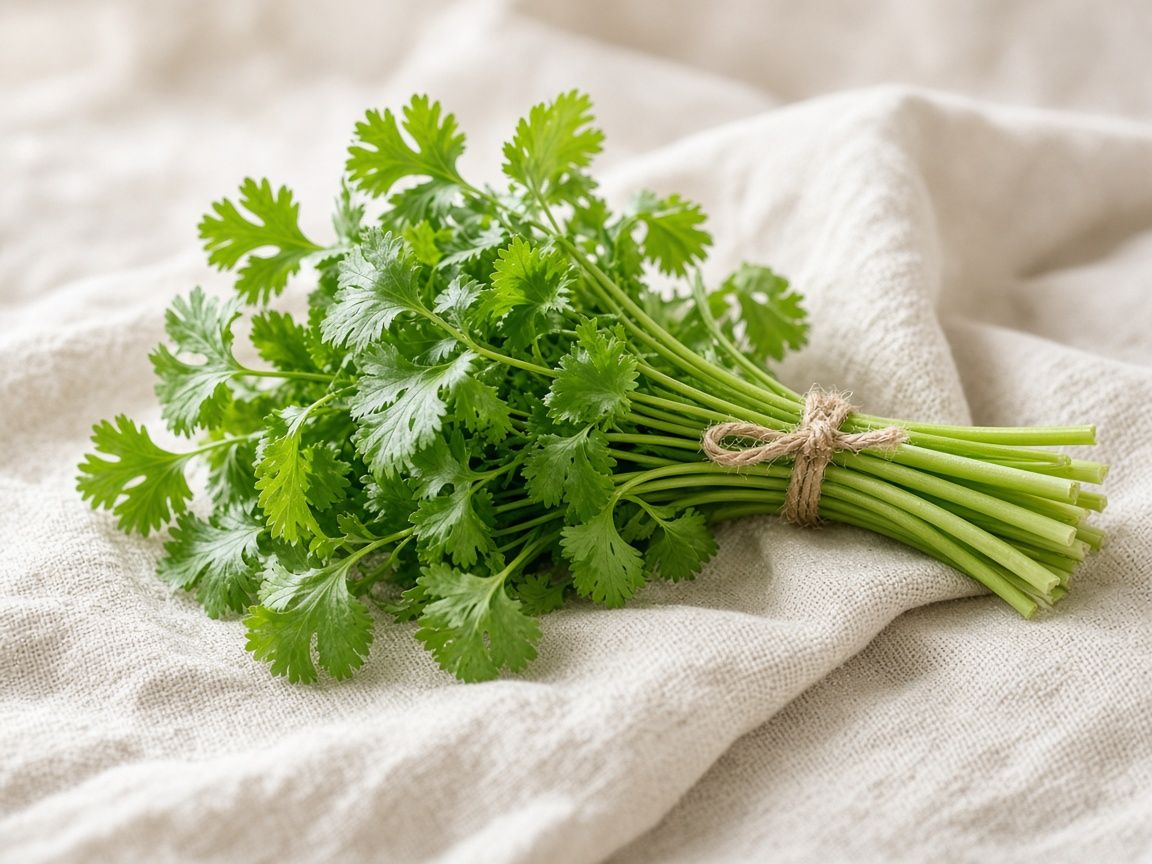
Cilantro
The leaf that divides a table and defines a salsa: bright, soapy to some, indispensable to many of the 30 kitchens.
The journey
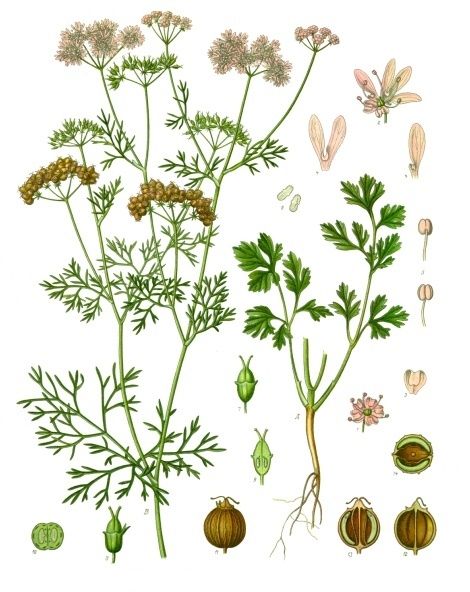
Cilantro is coriander before it dries. The plant is old enough to appear in Sanskrit, Greek, and biblical kitchens. What changed across oceans was the part people loved. Mediterranean and Indian cooks prized the seed. Mexican, Thai, and Andean cooks made the leaf a daily green.
Spanish ships carried the plant to Mexico and Peru, where it met chile and lime and never left. In the books the fresh leaf appears in nine kitchens, from chermoula to salsa to chutney. The seed has its own page. This one is for the bunch you buy with the roots still on.
In the kitchen
Add it at the end. Heat turns the perfume into a memory. Stems are stronger than leaves and belong in a marinade or a pot of beans. Roots, if you can find them, are the secret of many Thai pastes.
Wash it like a salad green. Dry it. Chop it at the last minute. If someone at the table tastes soap, offer parsley and keep cooking — the gene is real, the herb is still worth growing.
Healers and the table
Ayurvedic and Unani kitchens used the leaf as a cooling herb after hot food, and the seed as a digestif. Mexican home medicine steeped it for a heavy stomach.
A handful on tacos is lunch. It is not a detox.
Traditional uses are part of the story of this spice. They are not medical advice.