
Pantry · Spices
Clove
A flower bud that once belonged to a handful of islands — and to every power that wanted those islands.
The journey
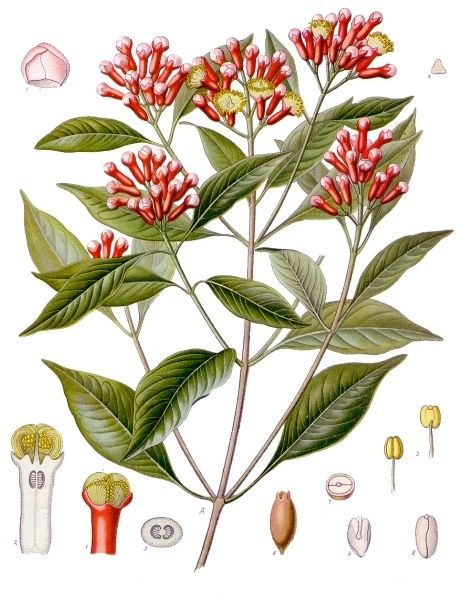
Cloves grew, for a long time, only in the Moluccas. Chinese courtiers chewed them to sweeten the breath before speaking to an emperor. Arab and later European merchants treated the islands as a vault. The Dutch East India Company went as far as burning trees on neighboring islands so the price would hold.
When French and British planters smuggled seedlings to Zanzibar, Madagascar, and the Caribbean, the monopoly broke. The bud itself did not change: still a nail-shaped flower, still a smell that fills a cupboard. In the books it studs onions for French stock, perfumes Mexican mole, warms Chinese braises, and keeps company with cinnamon in 25 of the 30 kitchens.
In the kitchen
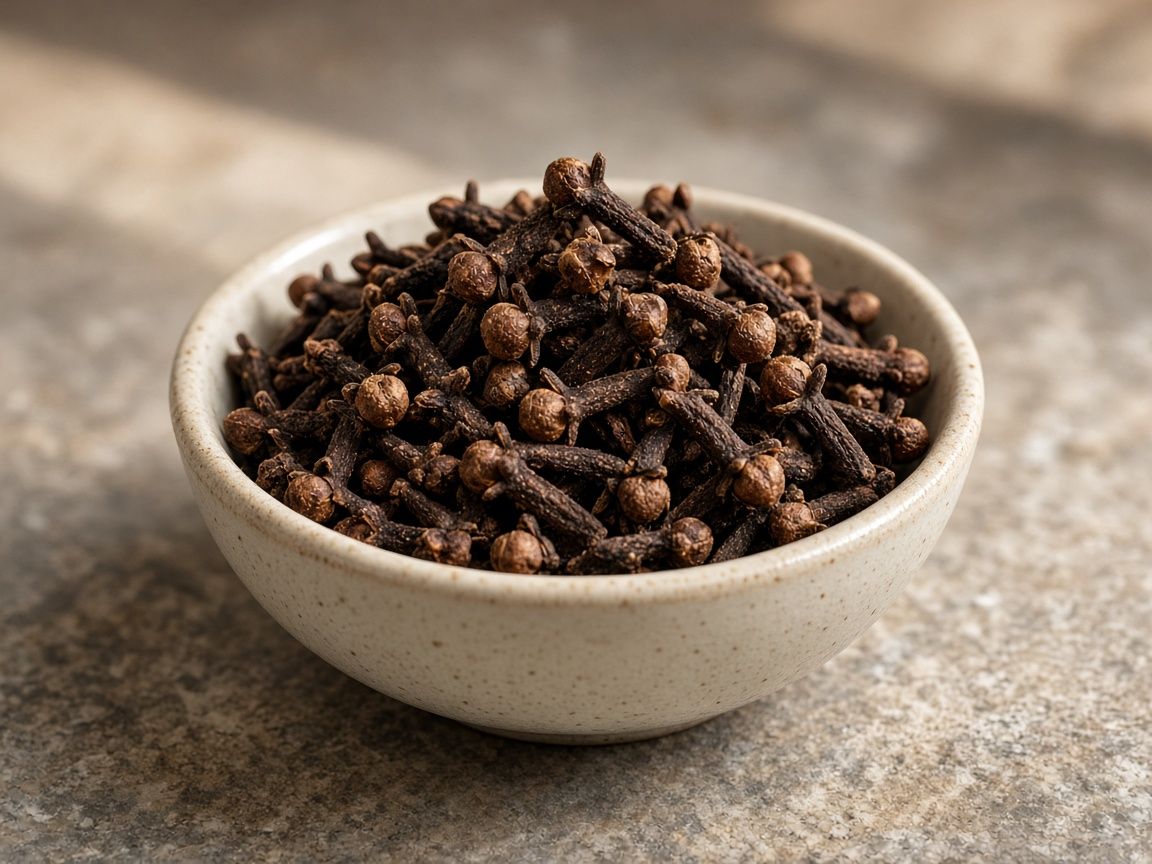
One clove can perfume a liter of liquid. Two can take over. Press them into an onion for broth, or grind a pinch into a rub. In sweets they want sugar and citrus as neighbors. In savory pots they want cinnamon, bay, and time.
Pull whole cloves before serving. Nobody wants to bite a bud that still thinks it is a nail.
Healers and the table
Dentists and grandmothers share a memory: clove oil on a sore tooth. Eugenol, the warm compound in the bud, is why. Traditional Chinese and Islamic medicine also used clove for colds and for a sluggish stomach.
A studded ham or a biryani is plenty. Do not put essential oil in a child's mouth and call it a recipe.
Traditional uses are part of the story of this spice. They are not medical advice.