
Pantry · Spices
Ginger
A knobby root that travels better than most kings did — fresh in the wok, dried in the cake, pickled beside sushi.
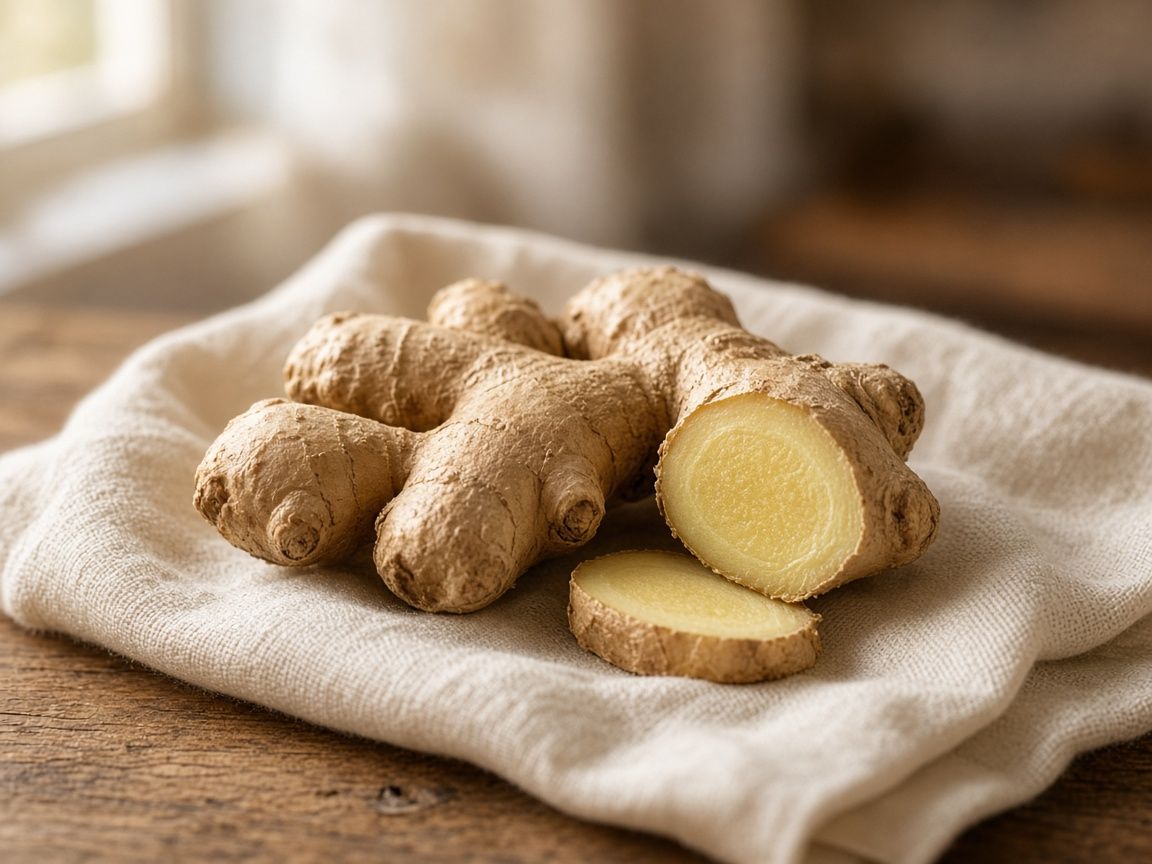
The journey
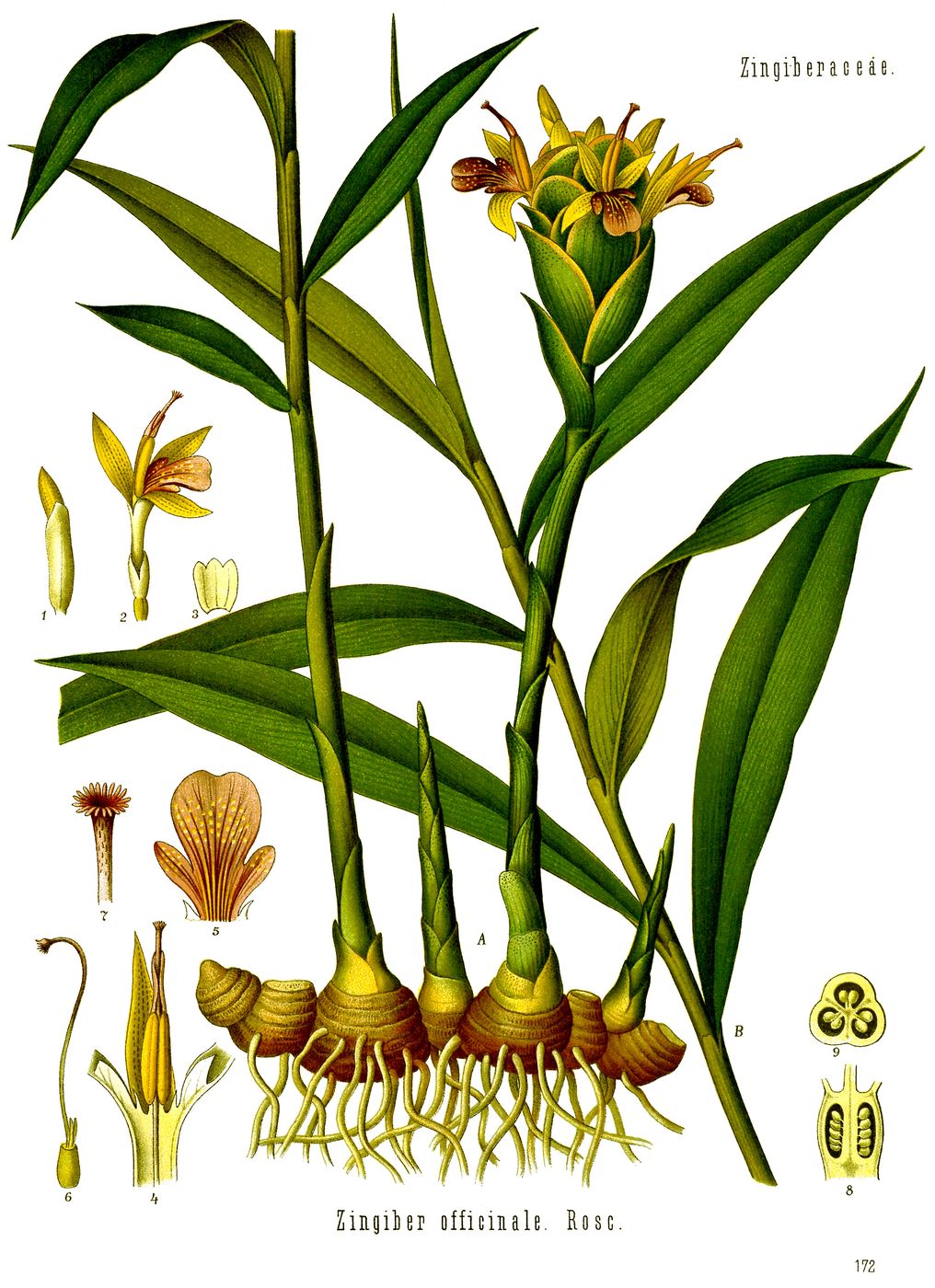
Ginger is one of the oldest passengers on the spice routes. It does not wait for fruit. The rhizome itself is the harvest, and it stores well enough to survive a monsoon hold. Austronesian and Indian Ocean traders moved it into China, India, the Swahili coast, and finally into medieval Europe, where it became a winter luxury in breads and meats.
Fresh ginger and dried ginger were once sold as different spices. They still behave that way. The books use fresh root in Chinese, Japanese, Korean, Indian, Pakistani, Thai, Moroccan, Mexican, Ethiopian, Peruvian, French, and West African kitchens — wherever a dish needs heat that is bright instead of dry.
In the kitchen
Slice it for broth, grate it for marinade, smash it for oil. Young ginger is juicy and mild; older hands are fibrous and fierce. Dried ginger belongs to baking, to French quatre épices, and to spice pastes that must last.
Do not substitute the powder for the fresh root and expect the same dish. The living rhizome tastes like citrus and fire. The jar tastes like a memory of that fire.
Healers and the table
Nearly every coastal medicine cabinet agrees on ginger for a turning stomach: sea voyages, morning sickness, a heavy feast. Chinese, Ayurvedic, and European herbals all warm it into teas. The kitchen dose — a few slices in water or a stir-fry — is the one families actually keep.
Ginger tea can soothe. It does not replace a doctor. Peel what you cook; the rest is compost, not a cure.
Traditional uses are part of the story of this spice. They are not medical advice.