
Pantry · Special mixes
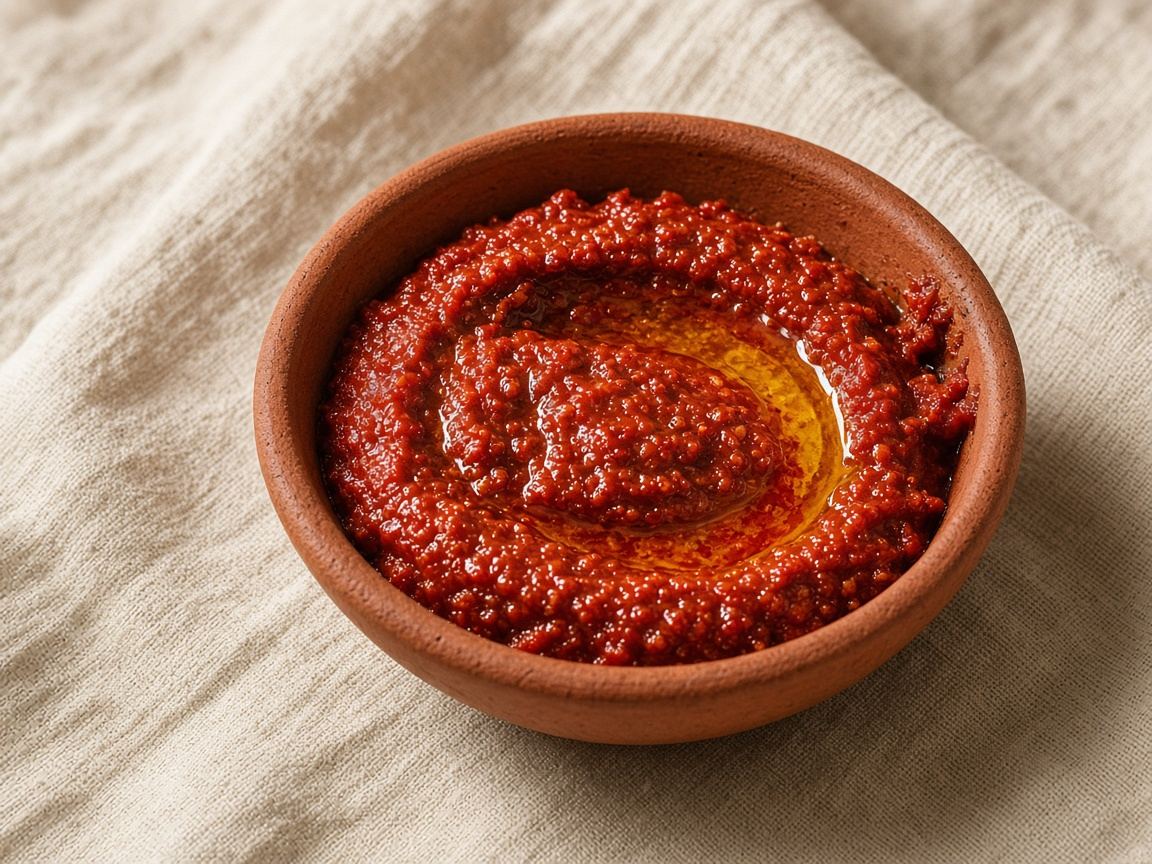
Harissa
A brick-red paste that turns couscous, eggs, and a sandwich into a North African table.
The journey
Harissa is pounded chile, not a hot sauce from a plastic bottle. Tunisian kitchens made the name famous. Moroccan pages in the series still reach for it when a stew or a sandwich wants heat with garlic and spice, not just burn.
Three recipes name it. Chermoula is the herb paste next door. Harissa is the fire. They can share a table. They are not the same jar.
In the kitchen
Bloom a spoon in oil, or stir into yogurt so the heat has somewhere to sit. Taste before you empty the jar — some are gentle, some are a dare.
If you only have dried chiles, garlic, cumin, and oil, you can make a weekday version. It will still be more honest than a bottle that lists sugar first.
Healers and the table
Maghrebi home tables used chile paste as warming food. The runny nose is the chile, not a cure.
Harissa on eggs is breakfast. It is not medical advice.
Traditional uses are part of the story of this spice. They are not medical advice.