
Pantry · Herbs
Makrut lime leaf
The double leaf that makes a Thai pot smell like itself: citrus oil without the juice, perfume without the pith.
The journey
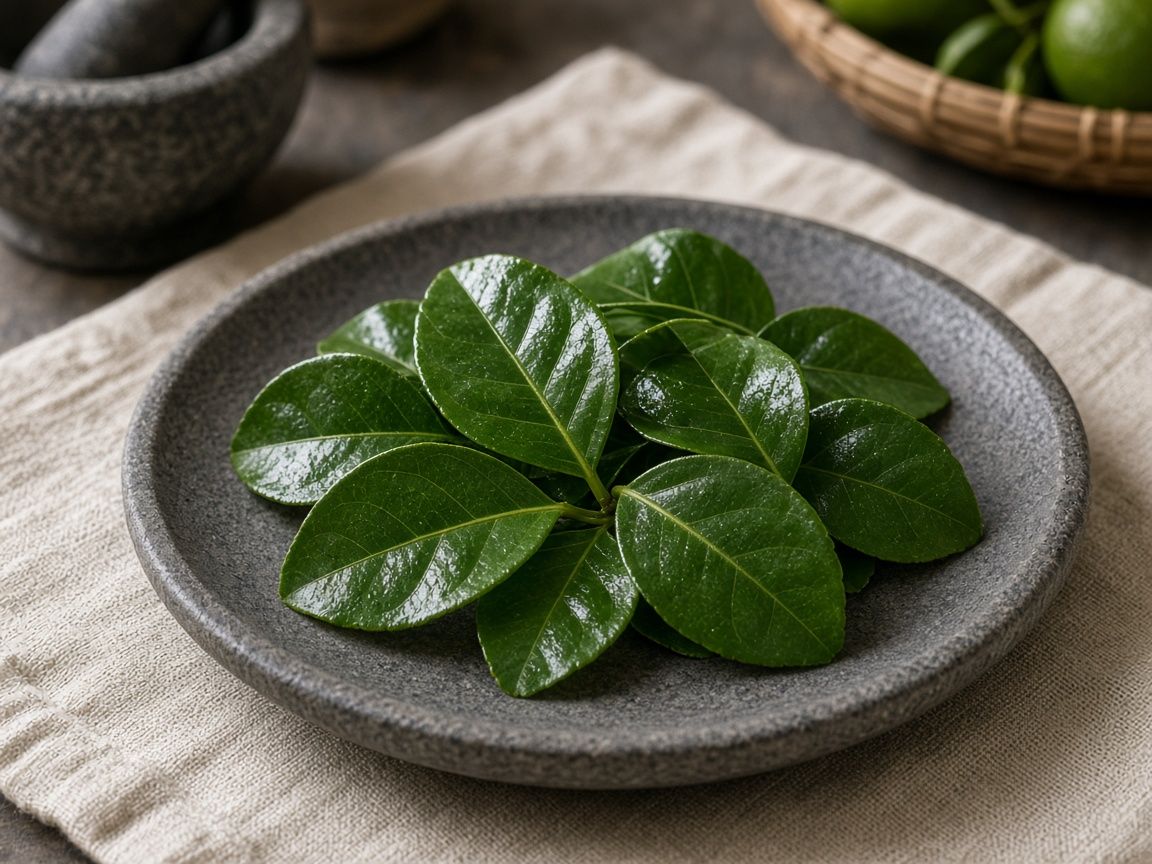
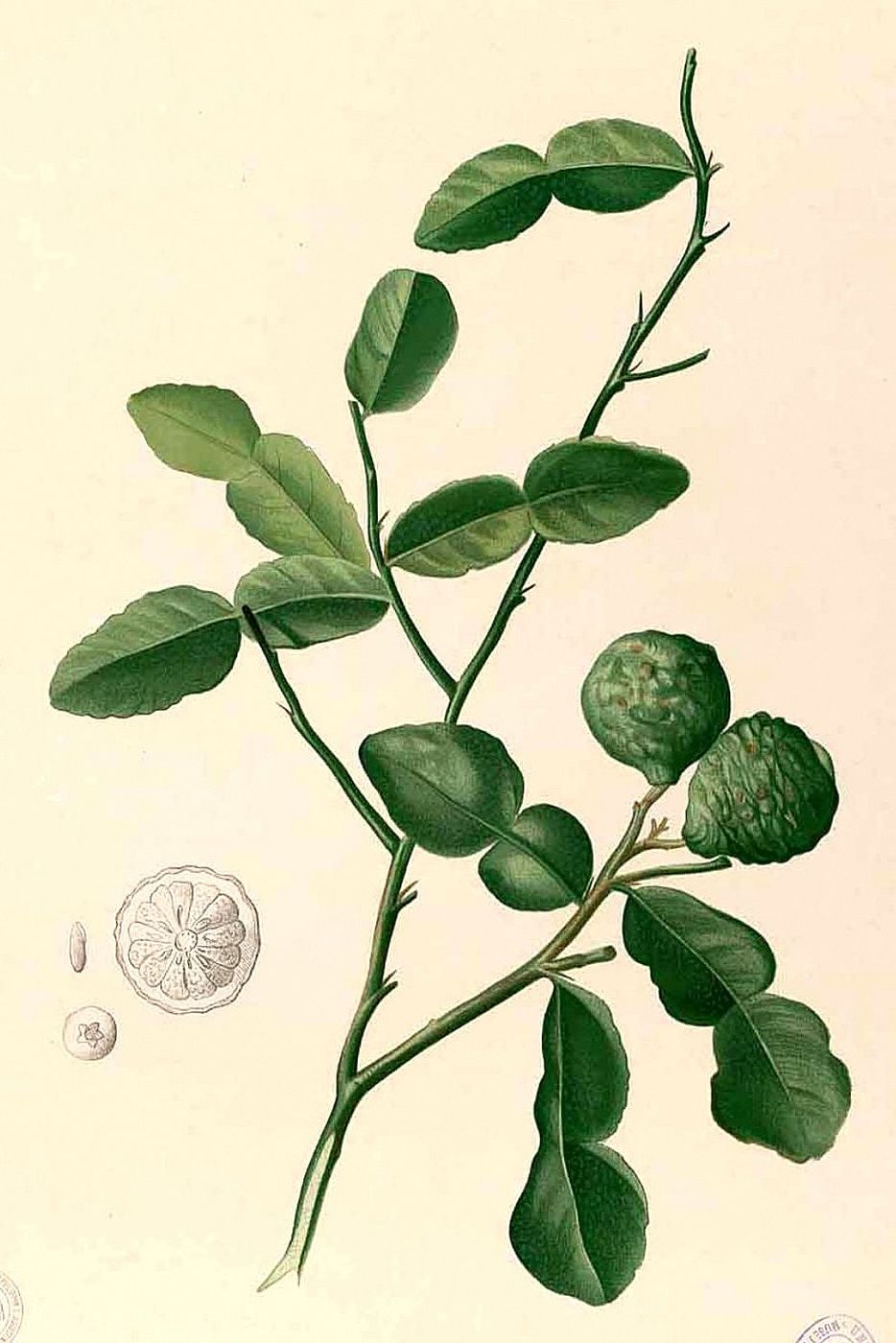
The makrut lime is grown as much for its leaves as for its knobby fruit. Thai, Lao, Cambodian, and Indonesian kitchens bruise the leaves into curries, soups, and stir-fries. The older English name is now set aside in many kitchens; makrut is the name the plant carries at home.
In the books the leaf is Thai and Indonesian — eight recipes that would taste unfinished without that specific citrus. Lemon zest is not a substitute. Lime zest is closer and still wrong.
In the kitchen
Tear or chiffonade the leaf so the oil wakes. Whole leaves can perfume a pot and be pulled out. The thick midrib is bitter; you can strip it.
Frozen leaves keep their perfume better than dried ones. If you find fresh, use them the same week. The fruit's rind belongs in some curry pastes; the leaf belongs in almost all of them.
Healers and the table
Southeast Asian home medicine uses the fruit and leaf in hair rinses and in steam for a cold. The kitchen use is the everyday one: a leaf in tom yum.
A torn leaf in soup is cooking. It is not a treatment.
Traditional uses are part of the story of this spice. They are not medical advice.