
Pantry · Oils and fats
Palm oil
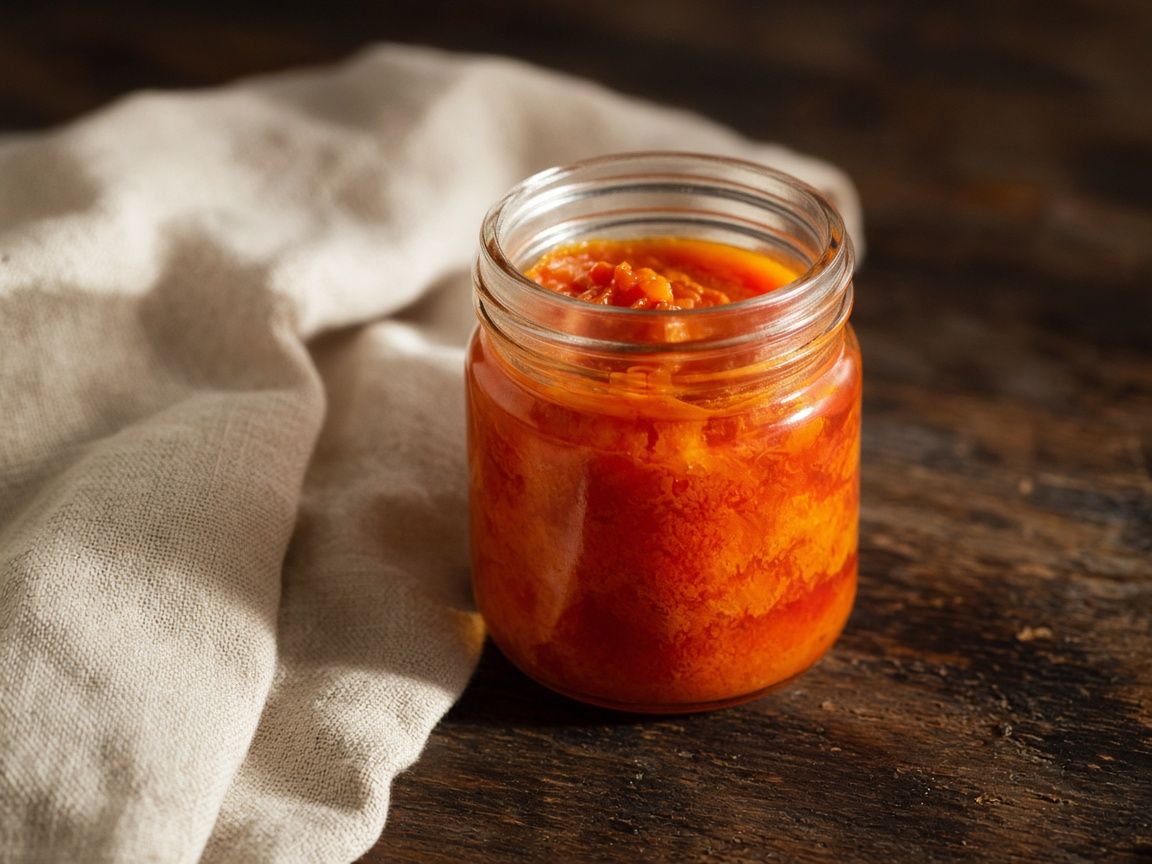
The red oil of West African stews: a palm fruit, a color, and a taste that canned tomato cannot fake.
The journey
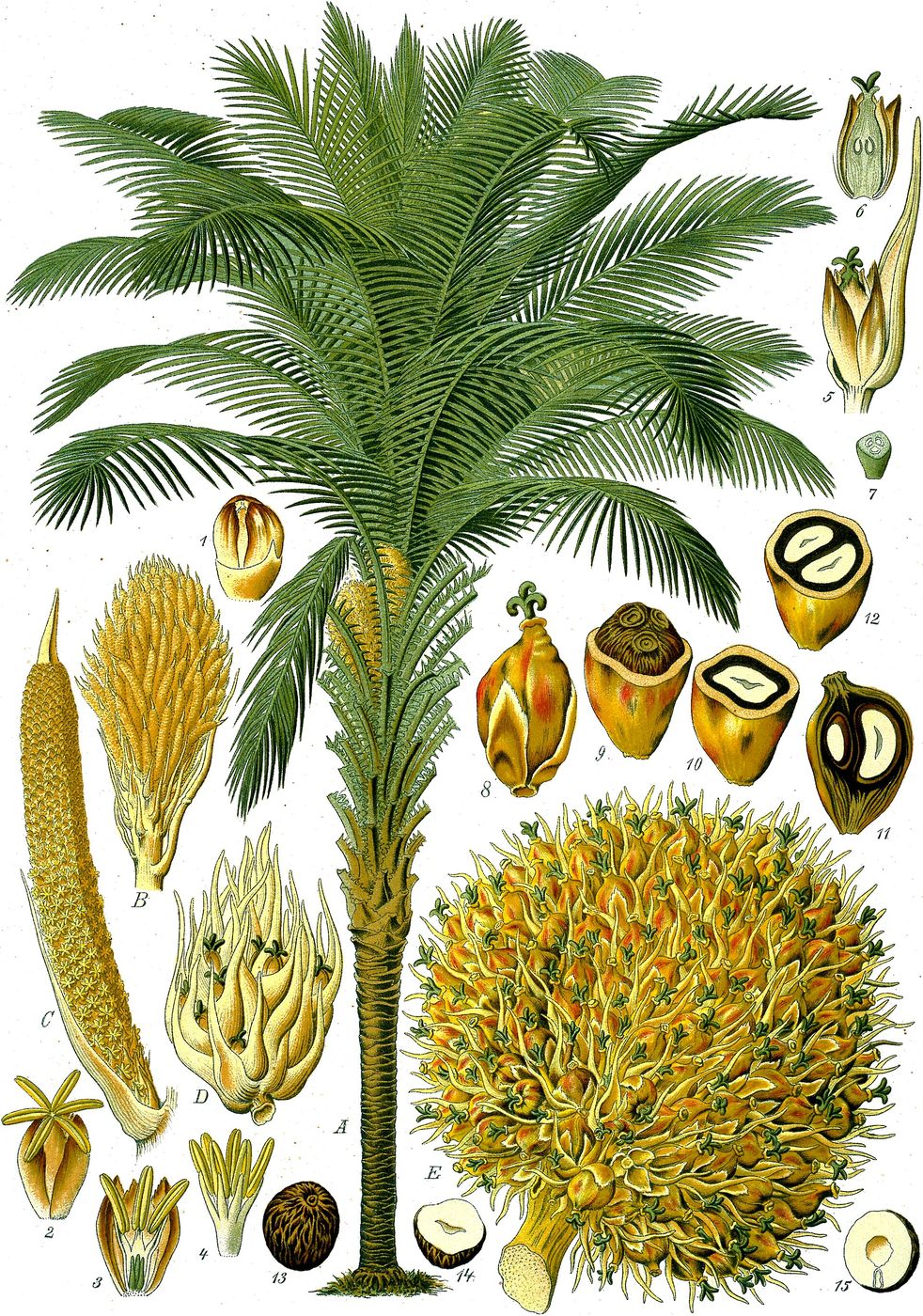
Before palm oil became a factory commodity, it was a village fat. Women boiled and pressed the fruit of Elaeis guineensis for the evening pot. European traders later wanted the oil for soap and machines; the kitchen kept the red, unrefined kind that smells like the fruit.
In the series it is West African — five recipes — and it is not the same bottle as Brazilian dendê, though the tree is. A Ghanaian or Nigerian stew that asks for red palm oil wants that specific sweetness and body. The pale, deodorized fat used in packaged food is a different ingredient with a different politics. We mean the red one.
In the kitchen
Warm it until it thins and smells like squash and violet. Then add onion, chile, and the rest of the stew. It will color everything. That is the point.
Buy oil that is red or deep orange, not beige. If the only palm oil in the shop is industrial and scentless, cook with groundnut oil and say you made a compromise.
Healers and the table
West African households treated red palm oil as a strength food, rich in the same carotenes that color it. That is diet, not a label claim.
A ladle in stew is supper. It is not medical advice.
Traditional uses are part of the story of this spice. They are not medical advice.