
Pantry · Spices
Sesame seed
A tiny seed that toasts into a whole aroma: bread, bagels, goma, and the crunch on a Korean banchan.
The journey
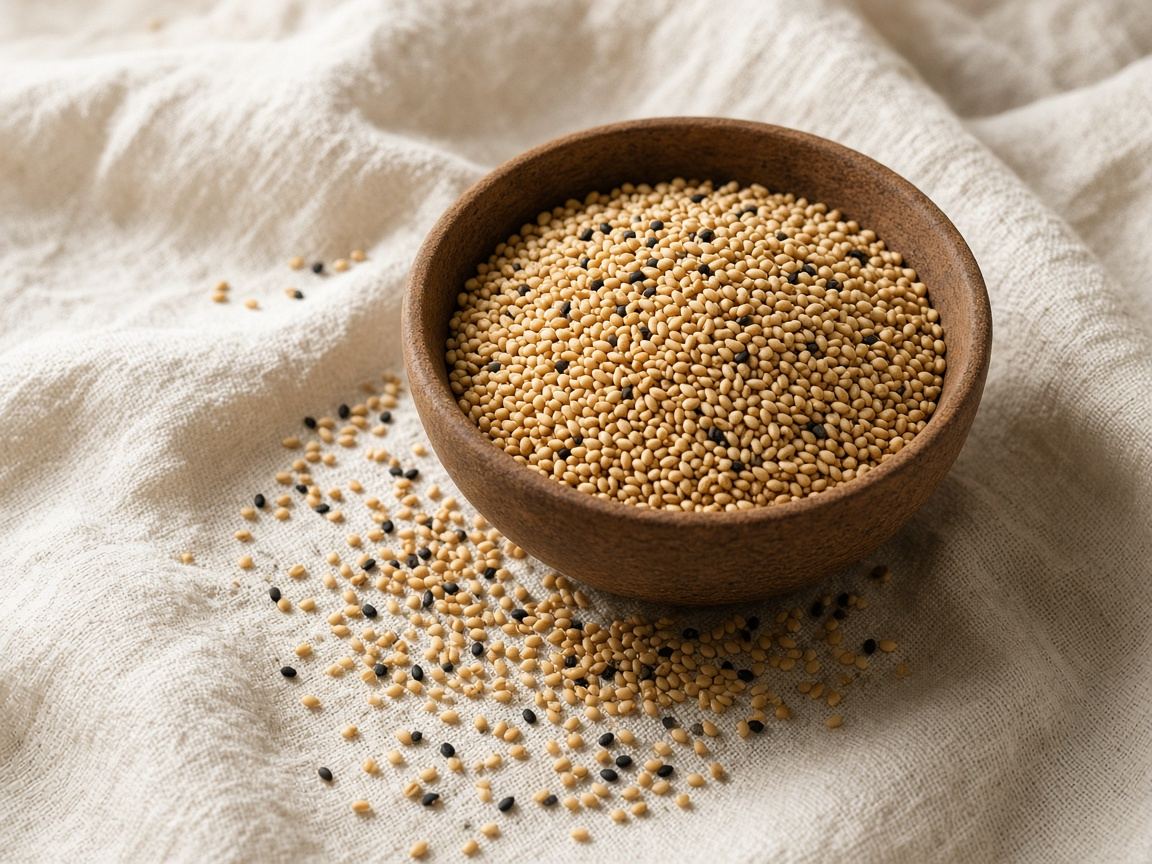
Sesame is one of the oldest oilseeds we still eat whole. The books use the seed in seventy-four recipes — toasted over rice, rolled on bread, ground toward tahini. The oil has its own page. This one is the seed you can hear when you chew.
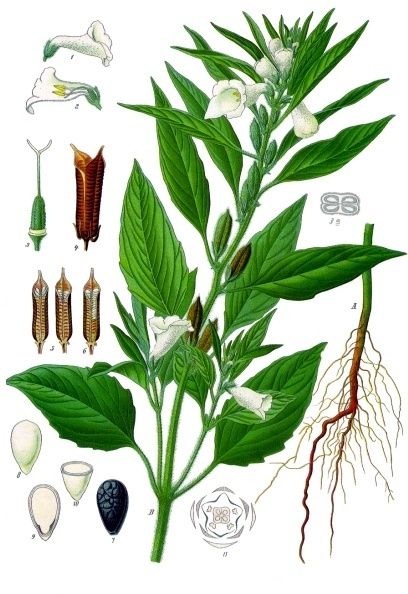
White sesame is hulled and mild. Black sesame is louder and a little bitter. Both are the same plant dressed differently.
In the kitchen
Toast in a dry pan until they jump and smell like popcorn and nuts. They burn in a blink. Scatter at the end so they stay crisp.
A spoon of toasted sesame on noodles is already a garnish with a point. Tahini is what happens when you do not stop grinding.
Healers and the table
East Asian and Levantine home kitchens treated sesame as strengthening food — a seed you eat, not a capsule. Halva and goma-ae are that idea on a plate.
Sesame on bread is lunch. It is not medical advice.
Traditional uses are part of the story of this spice. They are not medical advice.