
Pantry · Spices
Sumac
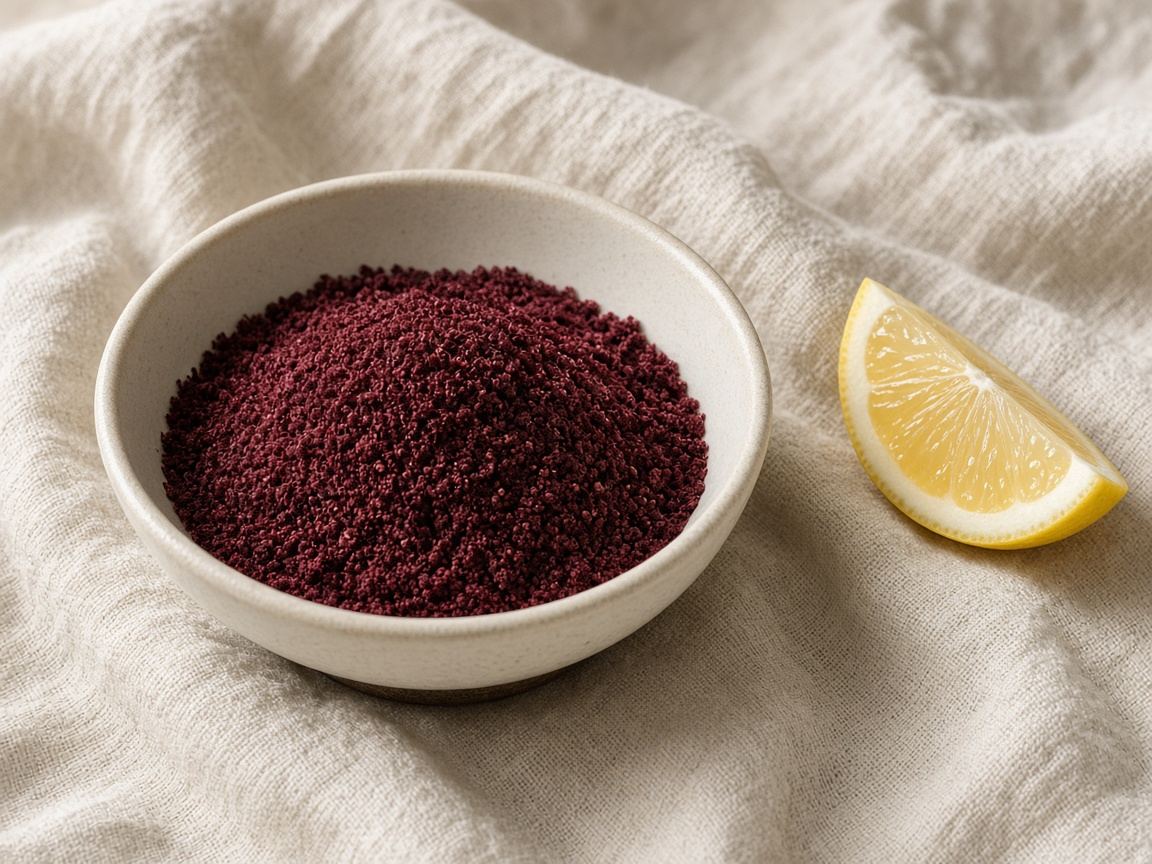
A sour red dust: lemon without juice, the finish on onions, grilled meat, and a fattoush that wants tartness.
The journey
Before cheap lemons, Levantine cooks had sumac. The dried berries grind into a burgundy powder that tastes like citrus and tea. Za'atar often carries it. Onions tossed with sumac are already a salad.
Eleven recipes in the Lebanese, Middle Eastern, Persian, and Turkish volumes name it. That is not a garnish trend. It is how those kitchens sour a plate when the lemon is for something else.
In the kitchen
Add it at the end. Heat dulls it. Dust grilled chicken, fold into onions, or stir into yogurt. If it tastes only dusty, the jar is old or it is the ornamental sumac you should not eat.
Buy deep red, almost purple. Brown sumac is tired.
Healers and the table
Levantine home kitchens used sumac as a souring food and a cooling sprinkle in hot weather. The tartness is the point.
Sumac on onions is lunch. It is not a treatment.
Traditional uses are part of the story of this spice. They are not medical advice.