
Pantry · Herbs
Thyme
The small leaf that survives a long simmer: bouquet garni's backbone and the scent of a French Sunday pot.
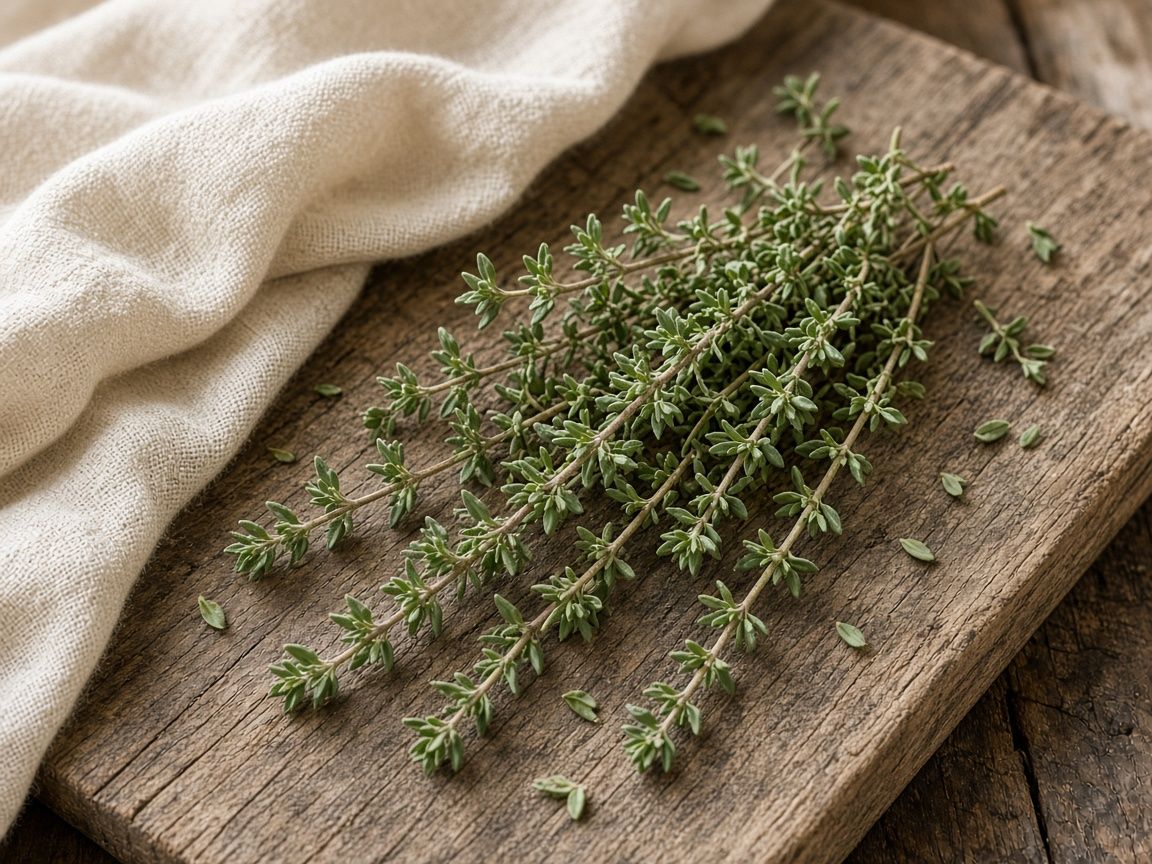
The journey
Thyme grew on dry Mediterranean slopes before it grew in kitchen gardens. Egyptians used it in embalming. Greeks burned it. Romans put it in cheese and liquor. Medieval Europe trusted it as a courage herb and a meat herb — the two jobs were not far apart when meat was a risk.
French cooking made it official: thyme, bay, and parsley tied as bouquet garni. In the books it appears in 12 kitchens, from Caribbean stews to Moroccan tagines to West African pots that borrowed the French bundle.
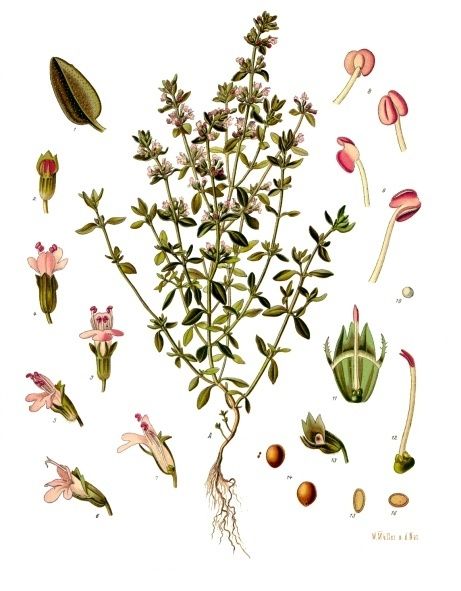
In the kitchen
Woody stems can go in the pot and come out later. Leaves can be stripped and chopped. Dried thyme is respectable if it still smells like the hill, not like dust.
It wants fat, onion, and time. A pinch in beans or chicken stock is how a house starts to smell like lunch.
Healers and the table
Thyme tea for a cough is old European household medicine. Thymol is why dentists still recognize the smell. The culinary pinch is the safe daily use.
Thyme in a stew is food. Thyme oil is not a home remedy to improvise.
Traditional uses are part of the story of this spice. They are not medical advice.