
Pantry · Special mixes
Zaatar
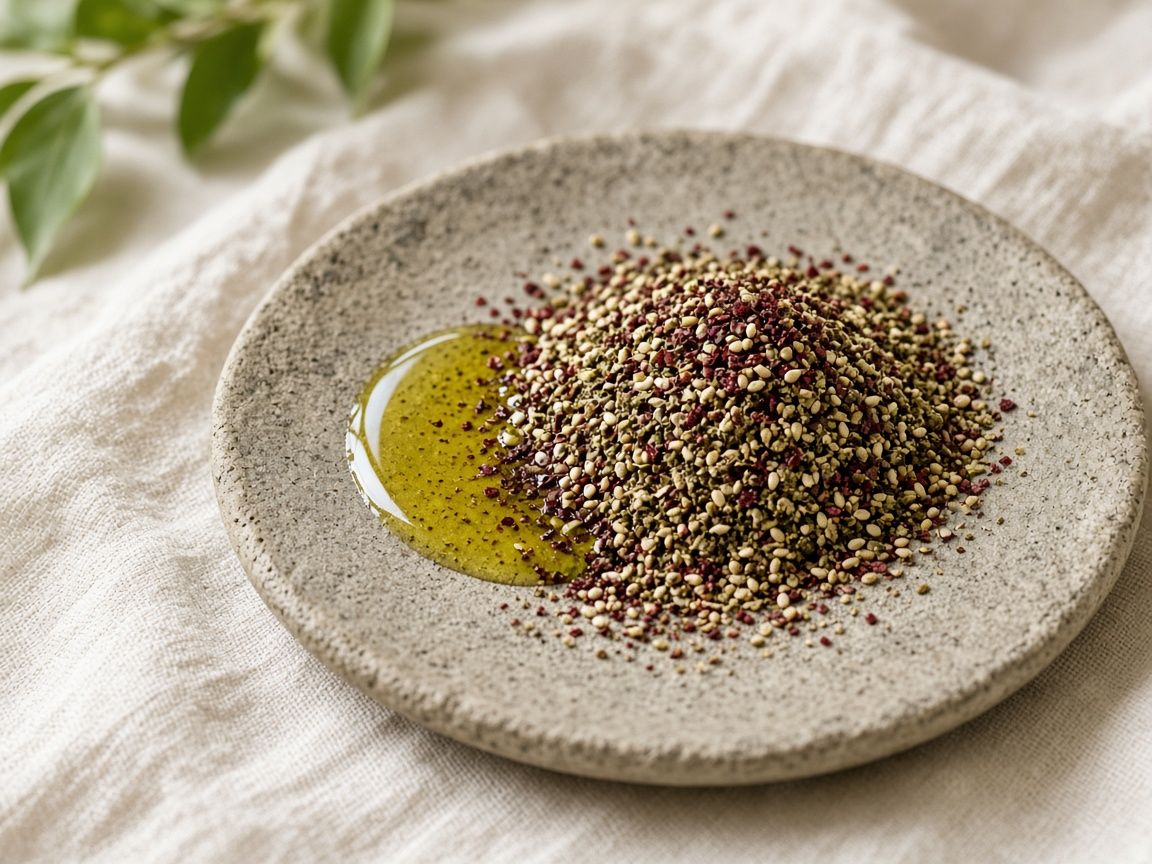
Breakfast on a flatbread: the green, sour, sesame mix that Levantine tables put out the way other houses put out butter.
The journey
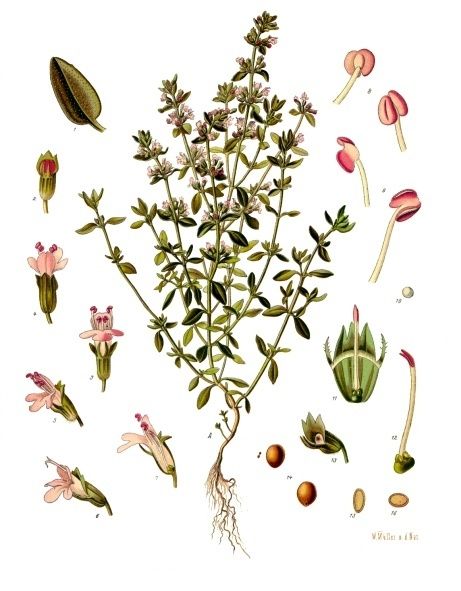
Zaatar is both a wild herb and a blend. The plant — often Origanum syriacum or a local thyme — is dried and rubbed with tart sumac and sesame. Villages argue about the exact green. What they share is the habit: oil, bread, and the mix, eaten with tea or olives before the day starts.
Ottoman and later Levantine kitchens carried it from Palestine, Lebanon, and Syria into the wider Middle East. In the books it is Lebanese and Middle Eastern — three recipes that treat it as a finishing dust, not a hidden spice.
In the kitchen
Stir it into olive oil and paint it on dough before baking, or dust it over labneh, roasted vegetables, and grilled chicken. Heat makes the sesame louder. Sumac keeps it bright.
Do not cook zaatar for a long time in a stew. It is a table mix. It wants to be tasted as itself.
Healers and the table
Levantine grandmothers gave zaatar to students before exams and to children against winter colds — thyme as a chest herb, sumac as a sour tonic. The evidence is folk memory, repeated over bread.
A man'ousheh is breakfast. Enjoy it that way.
Traditional uses are part of the story of this spice. They are not medical advice.