
Home Cook Together. Celebrate Life.

KoreanAuthentic Cuisine

Bossam

Serves 4 to 6 meat

Bossam

Bossam, a beloved Korean dish, finds its roots in the practice of boiling pork belly to tender perfection. Traditionally prepared for shared meals, this home-cooked version reflects the informal artistry of Korean family kitchens, where salt is measured by intuition and fat is embraced. It's a dish that brings people together without ceremony, celebrated on any day that calls for warmth and simplicity.

The experience of Bossam lies in its delightful contrast of flavors and textures. The rich, succulent pork is balanced by the fresh crunch of cabbage leaves and the bold, savory kick of ssamjang. Each bite is a harmonious blend, enhanced by the salty tang of saeujeot and the aromatic hint of garlic. This is a dish meant to be savored slowly, wrapped with care in every leaf.

Ingredients

  • 800 gpork belly
  • ssamjangto wrap
  • cabbage leavesto wrap
  • saeujeot — to serve
  • garlic — to serve
  • to tastefine sea salt

Method

  1. Begin by seasoning 800 g of pork belly generously with fine sea salt. Rub the salt into the meat thoroughly, ensuring even coverage on all sides. This step enhances the flavor and helps to tenderize the pork during cooking.
  2. Heat a large, heavy-bottomed pot over medium-high heat and add a small amount of oil. Once the oil is shimmering, place the pork belly in the pot, skin side down. Allow it to brown deeply, turning occasionally to ensure all sides develop a rich, golden crust. This browning process adds depth of flavor to the dish.
  3. Once the pork belly is well-browned, reduce the heat to low. Add enough water to the pot to just cover the meat. Add a few cloves of garlic and a small amount of saeujeot for additional flavor. Cover the pot with a lid and let the pork braise gently. The pork is done when it is fork-tender and the fat has become translucent, which usually takes about 1 to 1.5 hours.
  4. Remove the pork belly from the pot and let it rest for a few minutes on a cutting board. This resting period allows the juices to redistribute within the meat, ensuring a moist and flavorful result.
  5. Slice the rested pork belly into thin pieces, approximately 1/4 inch thick. Arrange the slices on a serving platter, ready to be wrapped in cabbage leaves.
  6. Serve the sliced pork belly with fresh cabbage leaves and ssamjang. Encourage diners to wrap the pork in the cabbage leaves with a dab of ssamjang. Taste the pork and adjust with more fine sea salt if necessary. Enjoy this dish with rice or as part of a larger meal.

You may need

From the ComidaTime pantry and cookware — the jars and hearths this kitchen actually cooks with.

Cover of Authentic Korean Cuisine Preview the cookbookBrowse the dishes inside
From the cookbook

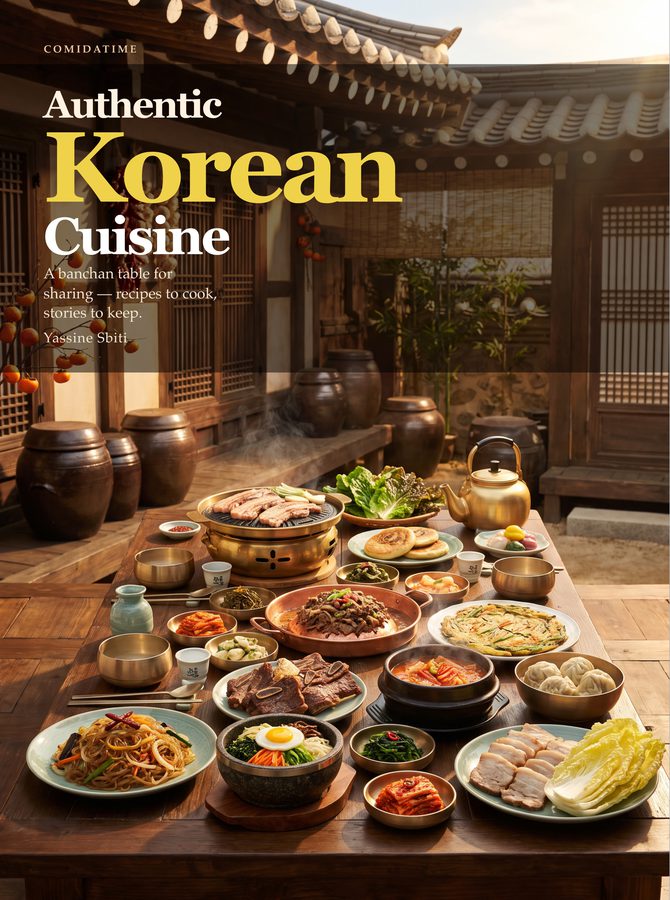
Authentic Korean Cuisine

This recipe is from Authentic Korean Cuisine by Yassine Sbiti — the Korean volume in the ComidaTime International Cuisines series.