
Home Cook Together. Celebrate Life.

GermanAuthentic Cuisine

Gänsebraten

Serves 4 to 6 Entree chicken, Poultry, Christmas

Gänsebraten

Gänsebraten, a centerpiece of St. Martin's Day and Christmas feasts, finds its roots in German family kitchens where tradition and simplicity reign. The dish captures the essence of holiday warmth, with a goose prepared in the time-honored way — seasoned with care and cooked to golden perfection. This recipe reflects the home-style approach that has graced tables for generations, without the need for elaborate embellishments.

A properly cooked Gänsebraten offers a harmonious blend of flavors: the rich, succulent meat of the goose complemented by the sweetness of apples and the earthiness of chestnuts. A hint of marjoram adds a subtle aromatic touch, while the stock ensures the meat remains moist and flavorful. Seasoned with coarse sea salt, each bite promises both comfort and indulgence, inviting second helpings without hesitation.
Ingredients

  • 1goose — about 4 kg
  • 3apples
  • 200 gchestnuts — cooked
  • 1 tspmarjoram
  • 200 mlstock
  • to tastecoarse sea salt

Method

  1. Preheat your oven to 180°C (356°F). Begin by patting the goose dry with paper towels to remove excess moisture, which helps achieve a crispy skin. Generously season the entire goose with coarse sea salt, ensuring you reach all areas, including the cavity. Heat a large roasting pan over medium-high heat and add a few tablespoons of clarified butter. Once the butter is hot, place the goose breast-side down and brown the skin until it reaches a deep golden color, about 5-7 minutes on each side. This step enhances flavor and texture.
  2. While the goose is browning, prepare the aromatics. Core and quarter the apples, leaving the skin on for added flavor and texture. Peel and roughly chop the chestnuts. Once the goose is browned, remove it from the pan and set it aside momentarily. Add the apples and chestnuts to the same pan, stirring them in the rendered fat until they begin to soften and release their aromas, about 3-4 minutes.
  3. Return the goose to the roasting pan, breast-side up, on top of the apples and chestnuts. Pour 200 ml of stock into the pan, ensuring it covers the base but does not touch the skin of the goose, which should remain exposed to the heat for crisping. Sprinkle 1 teaspoon of marjoram over the goose and aromatics. Cover the pan loosely with foil or a lid, allowing some steam to escape, and transfer it to the preheated oven.
  4. Roast the goose for approximately 2 to 2.5 hours, basting occasionally with the pan juices to keep the meat moist and flavorful. The goose is done when the juices run clear when pierced with a skewer, and the skin is crisp and deep golden brown. If necessary, uncover the pan during the last 30 minutes of roasting to allow the sauce to reduce and the skin to crisp further.
  5. Once the goose is cooked to perfection, remove it from the oven and let it rest for at least 15 minutes. This resting period allows the juices to redistribute throughout the meat, ensuring a juicy and tender result. Taste the sauce in the pan and adjust the seasoning with additional sea salt if needed. Carve the goose and serve it with the apples, chestnuts, and the reduced sauce, accompanied by potatoes or Spaetzle for a traditional German feast.
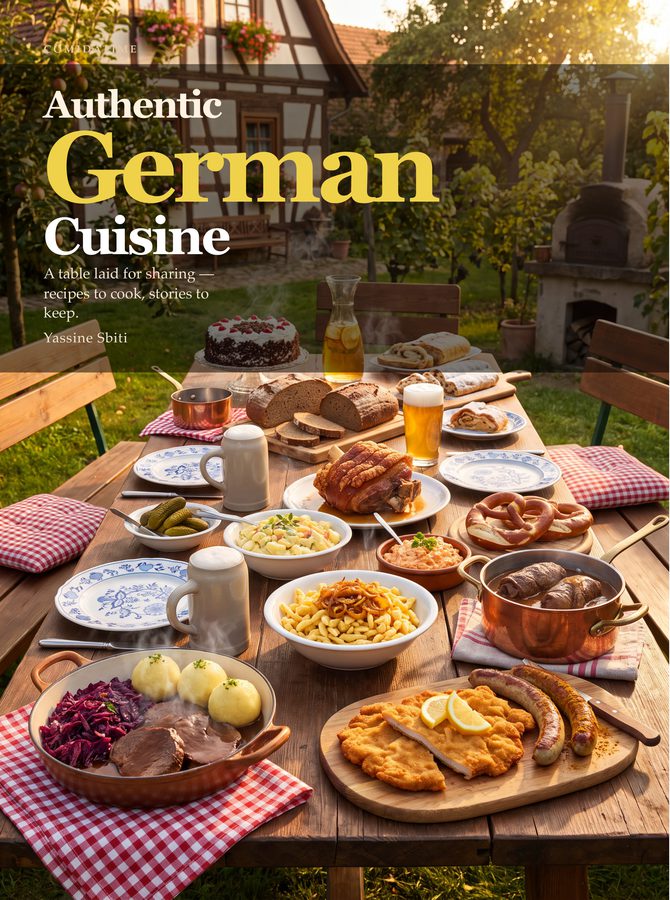
Cover of Authentic German Cuisine
From the cookbook

Authentic German Cuisine

This recipe is from Authentic German Cuisine by Yassine Sbiti — the German volume in the ComidaTime International Cuisines series.