
Home Cook Together. Celebrate Life.

GermanAuthentic Cuisine

Hasenbraten

Serves 4 to 6 Entree meat

Hasenbraten

Hasenbraten, a cherished dish from the forests of Bavaria and Thuringia, is a staple of German home cooking. Traditionally prepared using the tender saddle and legs of a hare, it draws on the natural bounty of the region. With ingredients like red wine and juniper berries, it's often reserved for special occasions, yet remains unpretentious in its execution. This recipe reflects how a German family cook would prepare it, without fanfare but with genuine care.

The flavors are a harmonious blend of earthiness and warmth, as the red wine and vinegar meld into a rich, tangy sauce. A hint of juniper and bay leaves infuses the dish with a subtle woodsy aroma, transporting you to the heart of a dense German forest. The cream adds a slight, velvety finish, balancing the dish perfectly. Seasoned to taste, each bite is a comforting reminder of home, with no apologies needed for a second helping.
Ingredients

  • 1hare saddle and legs — jointed
  • 200 mlred wine
  • 100 mlred wine vinegar
  • 2onions
  • 4juniper berries
  • 2bay leaves
  • 2 tbspclarified butter
  • 100 mlcream
  • to tastefine sea salt and black pepper

Method

  1. Begin by seasoning the hare saddle and legs generously with fine sea salt and freshly ground black pepper. Crush the juniper berries slightly to release their aroma and add them along with the bay leaves. Let the meat marinate in the refrigerator for at least 2 hours to allow the flavors to penetrate deeply.
  2. Once marinated, remove the hare from the refrigerator and pat it dry with paper towels to ensure a good sear. Heat 2 tablespoons of clarified butter in a large, heavy-bottomed skillet over medium-high heat. Brown the hare pieces in batches, ensuring each piece develops a deep, golden-brown crust on all sides. This step is crucial for building flavor, so take your time and avoid overcrowding the pan.
  3. After browning, transfer the hare pieces to a large Dutch oven or a deep roasting pan. In the same skillet, add the sliced onions and sauté until they are soft and translucent, absorbing the flavorful browned bits left in the pan.
  4. Pour 200 ml of red wine and 100 ml of red wine vinegar into the skillet with the onions, scraping up any remaining fond from the bottom of the pan. Bring this mixture to a simmer, then pour it over the hare in the Dutch oven.
  5. Cover the Dutch oven with a tight-fitting lid and place it in a preheated oven at 180°C (350°F). Braise the hare for about 1.5 to 2 hours, or until the meat is fork-tender and easily pulls away from the bone. The aroma should be rich and inviting, with the meat taking on a deep, wine-infused color.
  6. Once the hare is tender, remove it from the oven and carefully skim off any excess fat from the surface of the braising liquid. Stir in 100 ml of cream to enrich the sauce, and taste for seasoning, adjusting with more salt and pepper if necessary.
  7. Serve the Hasenbraten hot, accompanied by traditional sides like potatoes, Spätzle, or crusty bread to soak up the flavorful sauce. Enjoy the dish as it is meant to be savored, with the spirit of Bavarian and Thuringian home cooking.
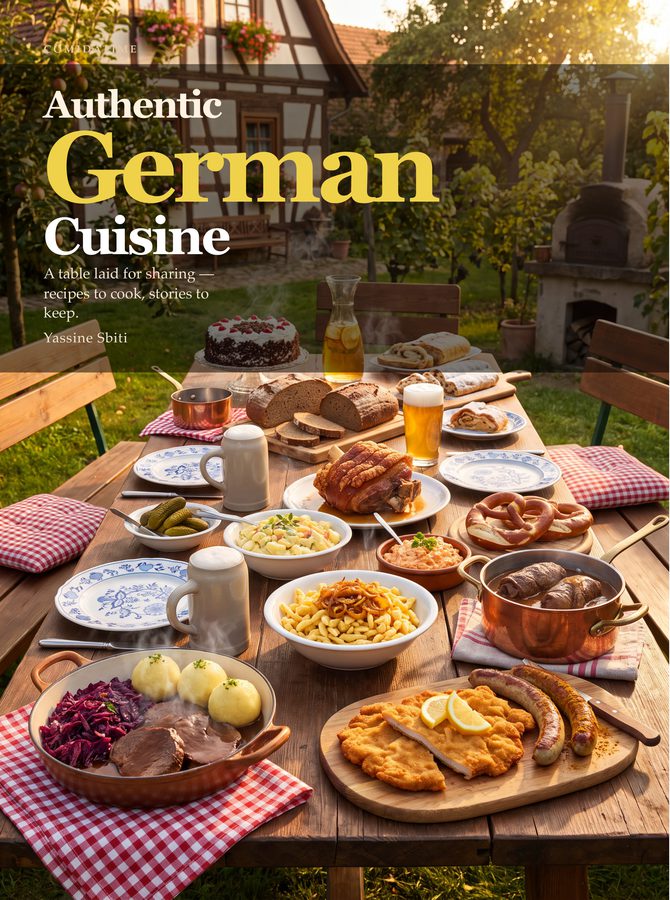
Cover of Authentic German Cuisine
From the cookbook

Authentic German Cuisine

This recipe is from Authentic German Cuisine by Yassine Sbiti — the German volume in the ComidaTime International Cuisines series.