Home Cook Together. Celebrate Life.

KoreanAuthentic Cuisine

Musaengchae

Serves 4 to 6 vegan

Musaengchae

Musaengchae, a staple in Korean households, is a type of banchan—those delightful side dishes that accompany every Korean meal. Traditionally, it's prepared with a generous hand of salt and fat, embodying the essence of home cooking where each element is measured by intuition rather than precision. This dish is commonly found on the table during family meals, where its bright flavors provide a refreshing contrast to richer dishes.

This radish salad is a symphony of textures and flavors, combining the crisp bite of Korean radish with the fiery heat of gochugaru, balanced by the sweetness of sugar and the tang of vinegar. It delivers a punchy, invigorating taste that enlivens the palate, making it an indispensable companion to a variety of Korean mains.
Ingredients

  • 1Korean radish
  • 1 tbspgochugaru
  • 1 tspgarlic
  • 1 tspsugar
  • 1 tspvinegar
  • to tastefine sea salt

Method

  1. Start by thoroughly washing 1 Korean radish under cold running water to remove any dirt. Peel the radish using a vegetable peeler, then cut it into thin matchstick-sized pieces. Aim for uniform thickness to ensure even seasoning and texture throughout the dish.
  2. In a large mixing bowl, combine the radish matchsticks with 1 tablespoon of gochugaru, 1 teaspoon of minced garlic, and 1 teaspoon of sugar. Mix these ingredients well to coat the radish evenly. The gochugaru will give the radish a vibrant red color, indicating it's well mixed.
  3. Add 1 teaspoon of vinegar to the bowl. This will provide a tangy flavor that balances the sweetness of the sugar and the heat of the gochugaru. Sprinkle fine sea salt to taste, starting with a small pinch and adjusting as needed. The salt should enhance the flavors without overpowering them.
  4. Gently toss the radish mixture using your hands or a pair of tongs. Be careful to keep the radish pieces intact while ensuring each piece is evenly coated with the seasoning. The radish should feel slightly softened but still retain a crisp texture.
  5. Serve the Musaengchae immediately, arranging it on a serving plate. The dish is best enjoyed fresh, with the radish still crisp and the flavors bright. Pair it with bread or as part of a banchan spread to complement its spicy and tangy notes.

You may need

From the ComidaTime pantry and cookware — the jars and hearths this kitchen actually cooks with.

Cover of Authentic Korean Cuisine Preview the cookbookBrowse the dishes inside
From the cookbook

Authentic Korean Cuisine

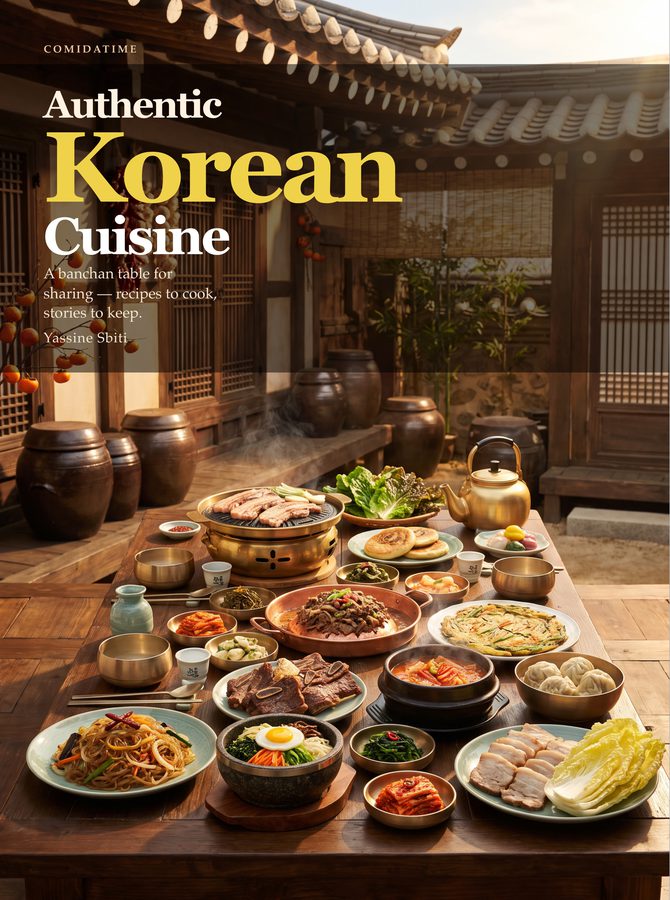
This recipe is from Authentic Korean Cuisine by Yassine Sbiti — the Korean volume in the ComidaTime International Cuisines series.