Home Cook Together. Celebrate Life.

KoreanAuthentic Cuisine

Jjin Mandu

Serves 4 to 6 meat, Lunar New Year

Jjin Mandu

Jjin Mandu, a beloved Korean steamed dumpling, is a staple in many homes, especially during festive seasons like Lunar New Year. These dumplings are prepared with care, each one rolled and filled with a seasoned mixture, before being gently steamed to perfection. Unlike their fried cousins, Jjin Mandu are soft and tender, allowing the flavors to meld together beautifully.

The taste of Jjin Mandu is a delightful blend of savory pork, fragrant chives, and a hint of sesame oil, balanced with a touch of fine sea salt. Served with a soy vinegar dip, each bite is a harmonious mix of textures and flavors, inviting you to savor the joy of sharing a meal with loved ones.
Ingredients

  • 16pork mandu
  • soy vinegarto dip
  • 1 handfulchives
  • 1 tspsesame oil
  • to tastefine sea salt

Method

  1. Begin by preparing your steamer. Fill the bottom compartment with water, ensuring it doesn't touch the steamer basket when placed inside. Set it aside for now, as you'll need it ready for steaming the mandu later.
  2. Rinse the chives thoroughly under cold water and pat them dry with a clean kitchen towel. Finely chop the chives into small pieces, as these will be used to garnish the mandu and add a fresh, herbal note to the dish.
  3. In a small bowl, combine the chopped chives with 1 teaspoon of sesame oil. Mix well to coat the chives evenly with the oil, which will help release their flavor and aroma. Set this mixture aside for garnishing later.
  4. Arrange the 16 pork mandu in a single layer inside the steamer basket, ensuring they do not touch each other to allow for even cooking. If necessary, steam in batches to avoid overcrowding.
  5. Place the steamer basket over the prepared pot of water and cover with a lid. Turn the heat to high and bring the water to a vigorous boil. Once boiling, reduce the heat to medium-high to maintain a steady flow of steam.
  6. Steam the mandu until they are fully cooked through. You'll know they are done when the wrappers become translucent and slightly glossy, and the filling feels firm to the touch when gently pressed. This should take about 10-12 minutes, but rely on the visual and tactile cues rather than time.
  7. Carefully remove the steamer basket from the pot, using oven mitts to protect your hands from the steam. Transfer the steamed mandu to a serving platter.
  8. Sprinkle the mandu with a pinch of fine sea salt to enhance their flavor, being mindful not to over-salt. Drizzle the chive and sesame oil mixture over the top, allowing the warmth of the mandu to release the aroma of the chives.
  9. Serve the Jjin Mandu immediately with soy vinegar on the side for dipping. This dish is best enjoyed hot, with the contrast of the savory filling and the tangy dipping sauce.

You may need

From the ComidaTime pantry and cookware — the jars and hearths this kitchen actually cooks with.

Cover of Authentic Korean Cuisine Preview the cookbookBrowse the dishes inside
From the cookbook

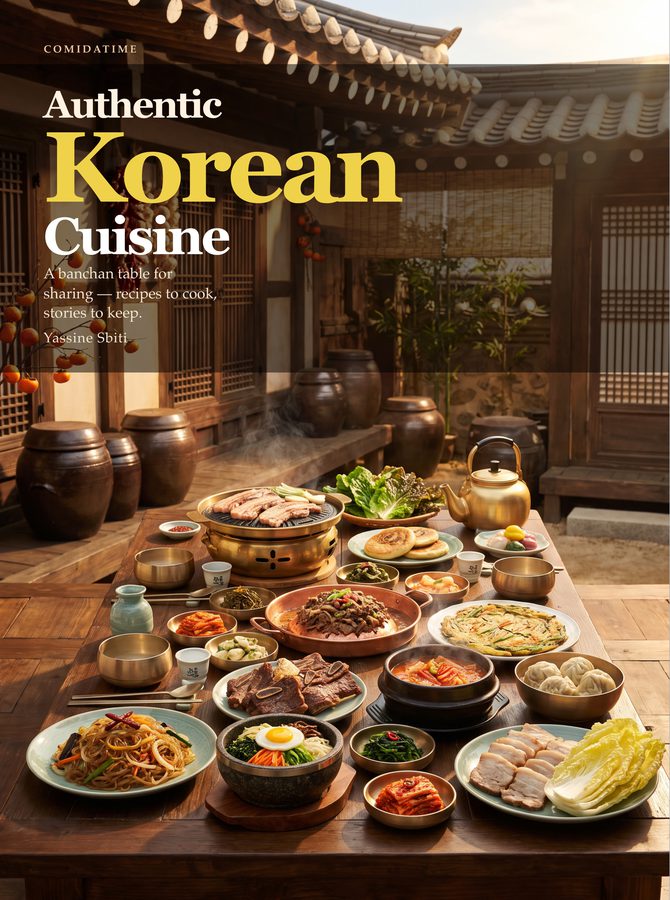
Authentic Korean Cuisine

This recipe is from Authentic Korean Cuisine by Yassine Sbiti — the Korean volume in the ComidaTime International Cuisines series.