Home Cook Together. Celebrate Life.

MoroccanAuthentic Cuisine

Sage Tea (Atay b'Salmia)

Serves 4 Beverage vegetarian, Beverages

Sage Tea (Atay b'Salmia)

Sage tea, or Atay b'Salmia, is a comforting staple in many Moroccan homes, particularly in mountain regions where sage grows abundantly. Unlike the more commonly known mint tea, this version replaces mint with sage, offering a soothing digestive aid often enjoyed after a hearty tagine. Its presence at the table signifies a moment of relaxation and reflection, especially cherished in cooler climates.

This tea promises a resinous aroma, distinct from the typical herbal infusions. When prepared correctly, it yields a slightly smoky, earthy flavor from the Chinese gunpowder green tea, beautifully balanced by the sweetness of sugar and the herbal depth of fresh sage. It's a warm, fragrant end to a rich meal, inviting a gentle close to the dining experience.
Ingredients

  • 1 tbspChinese gunpowder green tea
  • 1 small bunchfresh sage — or 1 tbsp dried
  • 2–4 tbspsugar — to taste
  • 1 L (4 cups)boiling water

Method

  1. Begin by placing 1 tablespoon of Chinese gunpowder green tea into a small teapot or heatproof pitcher. Pour a small splash of boiling water over the tea leaves, just enough to cover them. Swirl the water around gently to rinse the tea, then carefully discard this rinse water. This step helps to remove any bitterness and dust from the tea leaves, ensuring a smoother flavor.
  2. Next, pour 1 liter (4 cups) of boiling water into the teapot with the rinsed tea leaves. Place the teapot over low heat and allow the tea to steep for 2 minutes. This gentle heat helps to extract the flavors without over-brewing, which can make the tea taste harsh.
  3. After 2 minutes, add a small bunch of fresh sage into the pot. Also, add 2 to 4 tablespoons of sugar, depending on your preferred level of sweetness. Stir gently to dissolve the sugar and to ensure the sage is submerged, allowing the flavors to meld.
  4. Continue to steep the tea for another minute, keeping a close eye on the color and aroma. The tea should develop a light amber hue and a resinous, slightly earthy fragrance from the sage.
  5. Once steeped, carefully pour the tea from a height into small glasses. This traditional pouring method helps to aerate the tea, enhancing its aroma and creating a slight froth on the surface.
  6. Serve the tea hot, as the sage can turn bitter if it sits too long. Enjoy the tea immediately, savoring its unique blend of flavors as a perfect digestive after a rich meal.
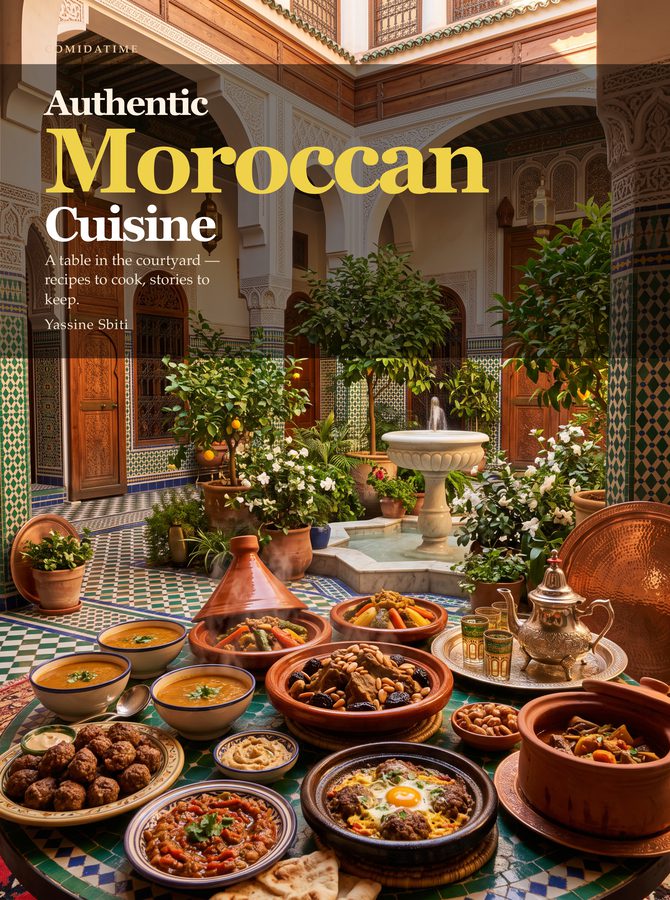
Cover of Authentic Moroccan Cuisine Preview the cookbookBrowse the dishes inside
From the cookbook

Authentic Moroccan Cuisine

This recipe is from Authentic Moroccan Cuisine by Yassine Sbiti — the Moroccan volume in the ComidaTime International Cuisines series.