
Home Cook Together. Celebrate Life.

PortugueseAuthentic Cuisine

Pão Alentejano

Serves 4 to 6 Bread vegetarian, Breads & Pastry

Pão Alentejano

Pão Alentejano hails from the sun-drenched plains of Alentejo, a region known for its robust flavors and warm hospitality. Traditionally, this bread finds its place on the table as a staple, a reliable companion to hearty soups and stews. The Alentejo cooks embrace simplicity, using ingredients like strong bread flour and a generous splash of good olive oil, crafting a loaf that's as straightforward as it is satisfying.

Expect a crisp crust that gives way to a tender, chewy crumb, its flavor deepened by a lively sourdough starter. The bread's character is further developed by the subtle salinity of fine sea salt, with semolina lending a gentle texture. Enjoy it warm, tearing off hunks to mop up rich sauces or simply savor it alone, letting the essence of Alentejo fill each bite.
Ingredients

  • 1 kgstrong bread flour
  • 250 gsourdough starter — refreshed the night before
  • 650 mlwarm water
  • 20 gfine sea salt
  • 2 tbspsemolina — for dusting

Method

  1. In a large mixing bowl, combine 1 kg of strong bread flour with 250 g of sourdough starter. Gradually add 650 ml of warm water, mixing with your hand or a wooden spoon until a shaggy dough forms. Sprinkle 20 g of fine sea salt over the dough and knead it by hand in the bowl for about 5 minutes until the salt is incorporated.
  2. Transfer the dough onto a lightly floured surface. Knead it by pushing the dough away from you with the heel of your hand, then folding it back over itself. Continue kneading for about 10-15 minutes until the dough is smooth and elastic. It should spring back when you press it lightly with a finger.
  3. Place the dough back into the bowl and cover it with a damp cloth or plastic wrap. Let it rise in a warm, draft-free area until it has doubled in size. This can take several hours, depending on the temperature and the strength of your starter. The dough should feel airy and light when gently pressed.
  4. Once risen, gently turn the dough out onto a lightly floured surface. Shape it into a round loaf by folding the edges into the center, maintaining a light touch to preserve the air bubbles. Pinch the seams together and place the loaf seam-side down on a baking sheet dusted with 2 tbsp of semolina.
  5. Preheat your oven to its highest setting, usually around 250°C (482°F). Place a baking stone or an inverted baking sheet in the oven to heat up. Once the oven is hot, carefully transfer the loaf onto the preheated surface. Bake for 30-40 minutes until the crust is a deep golden brown and the loaf sounds hollow when tapped on the bottom.
  6. Remove the bread from the oven and place it on a wire rack to cool. Allow it to cool for at least 30 minutes to let the crumb set properly. Once slightly cooled, tear the bread into pieces and serve it warm with good olive oil, butter, or cheese, as is traditional in the Alentejo.
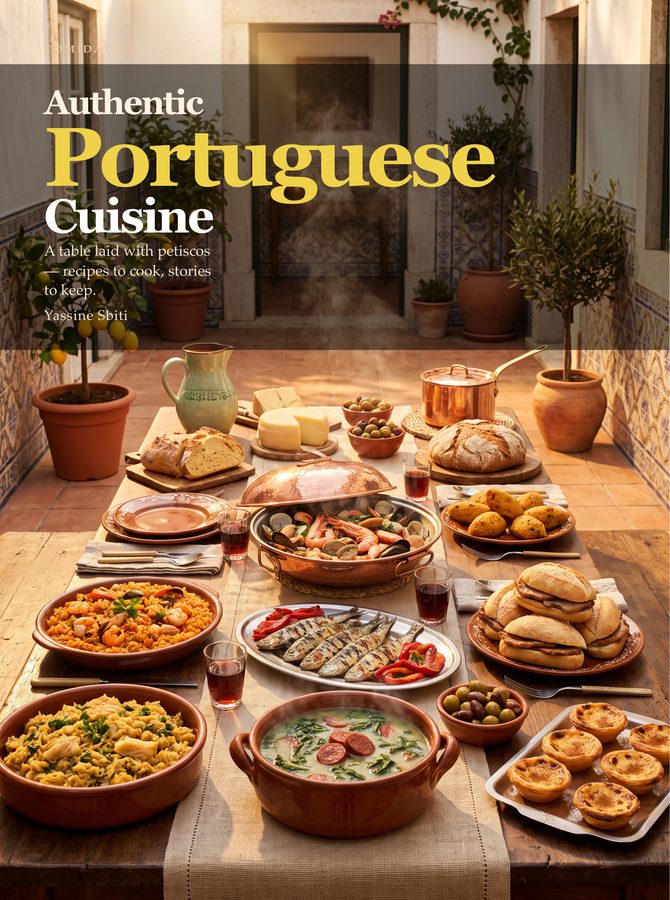
Cover of Authentic Portuguese Cuisine
From the cookbook

Authentic Portuguese Cuisine

This recipe is from Authentic Portuguese Cuisine by Yassine Sbiti — the Portuguese volume in the ComidaTime International Cuisines series.