
Home Cook Together. Celebrate Life.

GermanAuthentic Cuisine

Roggenbrot

Serves 4 to 6 Bread vegetarian, Breads & Pastry

Roggenbrot

Roggenbrot hails from the kitchens of northern Germany, where it is a staple at any time of day. In this version, the bread is crafted with a nod to tradition, using ingredients that have been passed down through generations without the need for embellishment. Butter or clarified butter is used liberally, and the salt is measured by intuition rather than precision, reflecting a home cook's touch. This is the bread you find on the table, unassuming yet essential, with no apologies needed for reaching for a second slice.

The taste of Roggenbrot is distinctly hearty, with the robust flavor of rye flour coming to the fore, balanced by the tang of a well-tended sourdough starter. The caraway seeds add a hint of spice, creating a complex yet comforting profile. The texture is dense and satisfying, each bite a reminder of its rustic origins. Enjoy it simply with a pat of butter or alongside a slice of cheese, and let its unpretentious charm speak for itself.
Ingredients

  • 400 grye flour
  • 100 gbread flour
  • 350 mlwater
  • 150 gsourdough starter
  • 1 tspcaraway seeds
  • to tastefine sea salt

Method

  1. In a large mixing bowl, combine 400 g rye flour, 100 g bread flour, and 1 tsp caraway seeds. Add 150 g sourdough starter and 350 ml water. Mix the ingredients together using your hands or a sturdy wooden spoon until a shaggy dough forms. Sprinkle fine sea salt to taste over the dough, then knead it on a lightly floured surface for about 10 minutes until it becomes smooth and elastic. The dough should feel slightly tacky but not sticky.
  2. Place the kneaded dough back into the mixing bowl and cover it with a damp cloth. Allow it to rise in a warm, draft-free area until it has visibly grown in size, about 1.5 to 2 times its original volume. This can take several hours depending on the temperature of your kitchen. The dough should feel airy and light when gently pressed.
  3. Once the dough has risen, gently turn it out onto a lightly floured surface. Shape it into a round or oval loaf by folding the edges into the center and then flipping it over. Be careful not to deflate the dough too much. Let the shaped loaf rest for about 30 minutes to allow it to relax and expand slightly.
  4. Preheat your oven to 230°C (446°F) and place a baking stone or an inverted baking sheet inside to heat up. Fill a shallow baking dish with water and place it on the bottom rack of the oven to create steam, which will help develop a crisp crust.
  5. Carefully transfer the loaf onto a piece of parchment paper and then onto the preheated baking stone or sheet. Bake for about 30 to 40 minutes until the crust is deeply browned and sounds hollow when tapped on the bottom. The aroma should be nutty and slightly sweet, indicating that the bread is fully baked.
  6. Remove the Roggenbrot from the oven and transfer it to a wire rack to cool completely. This cooling step is crucial as it allows the crumb to set and prevents it from becoming gummy. The bread should feel firm and the crust should remain crisp as it cools.
  7. Once cooled, slice the Roggenbrot and serve it with butter, cheese, or cold cuts. Enjoy the hearty, tangy flavor that is characteristic of traditional northern German rye bread.
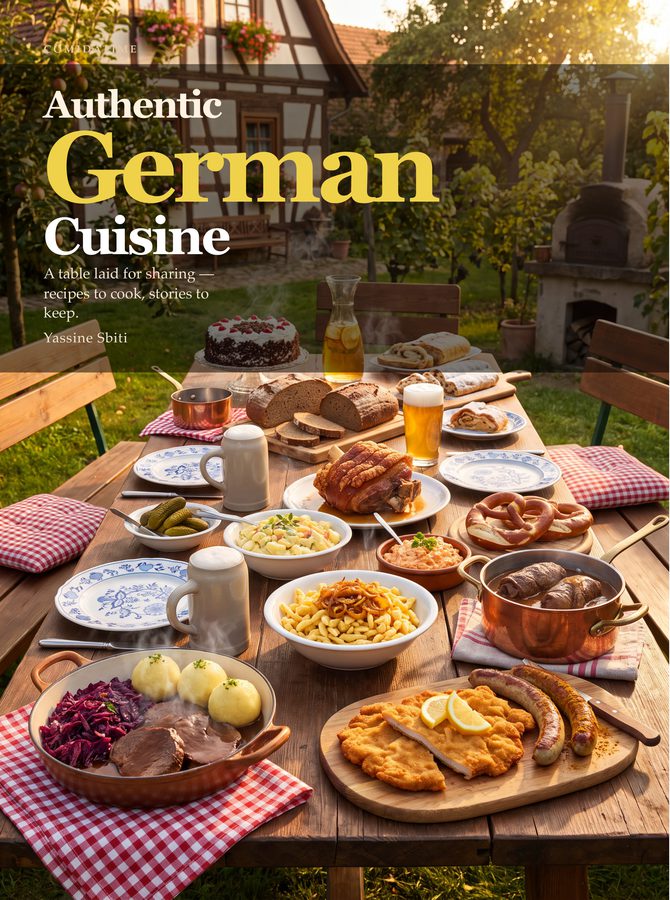
Cover of Authentic German Cuisine
From the cookbook

Authentic German Cuisine

This recipe is from Authentic German Cuisine by Yassine Sbiti — the German volume in the ComidaTime International Cuisines series.