
Home Cook Together. Celebrate Life.

KoreanAuthentic Cuisine

Korean Eggplant Stew 2

Serves 4 to 6 Entree vegetarian

Korean Eggplant Stew 2

Korean Eggplant Stew 2 is a beloved home-cooked dish that finds its roots in the daily rhythms of Korean family life. This version is passed down through generations, capturing the essence of how a Korean family cook would prepare it for a shared meal. With salt judged by hand and a generous use of fat, this stew is a staple on the table, embodying the straightforward yet comforting nature of home cooking.

The stew offers a tender embrace of eggplants, tomatoes, and onions, all brought together by the warmth of olive oil and the aromatic depth of garlic. The simplicity of its ingredients allows for a harmonious blend of flavors, with each bite offering a gentle balance of savory and sweet. Seasoned with fine sea salt and black pepper to taste, it invites diners to savor its rich, homey taste.
Ingredients

  • 2eggplants
  • 2tomatoes
  • 1onion
  • 80 mlolive oil
  • 3 clovesgarlic
  • to tastefine sea salt and black pepper

Method

  1. Start by washing and drying 2 eggplants and 2 tomatoes. Cut the eggplants into bite-sized pieces, about 1-inch cubes, and the tomatoes into small wedges. Peel and thinly slice 1 onion. Crush and mince 3 cloves of garlic. Season the eggplant pieces lightly with fine sea salt and let them sit for about 10 minutes to draw out some moisture, which will help them absorb flavors better during cooking.
  2. In a large, heavy-bottomed pot or deep skillet, heat 80 ml of olive oil over medium heat. Add the sliced onion and cook, stirring occasionally, until the onion becomes translucent and soft, about 5 to 7 minutes. This slow cooking will help develop the sweetness of the onion, which is essential for the stew's base flavor.
  3. Add the minced garlic to the pot and stir for about 1 minute, until the garlic becomes fragrant. Be careful not to let it brown, as this can impart a bitter taste. Then, add the seasoned eggplant pieces to the pot, stirring to coat them evenly with the oil and onion mixture.
  4. Cook the eggplant for about 5 minutes, stirring occasionally, until it begins to soften and absorb the flavors from the oil and onions. The eggplant should start to look glossy and slightly translucent around the edges.
  5. Add the tomato wedges to the pot and stir to combine. Allow the mixture to simmer gently, adjusting the heat as necessary, until the tomatoes break down and the eggplant is fully tender. The stew should have a thick, cohesive texture with the eggplant soft enough to easily break apart with a spoon.
  6. Taste the stew and season with fine sea salt and black pepper to your liking. The flavors should be well balanced, with a hint of sweetness from the onions and a rich, savory depth from the eggplant and tomatoes. Serve the stew hot, ideally with rice or crusty bread, and enjoy the comforting flavors typical of a Korean home-cooked meal.
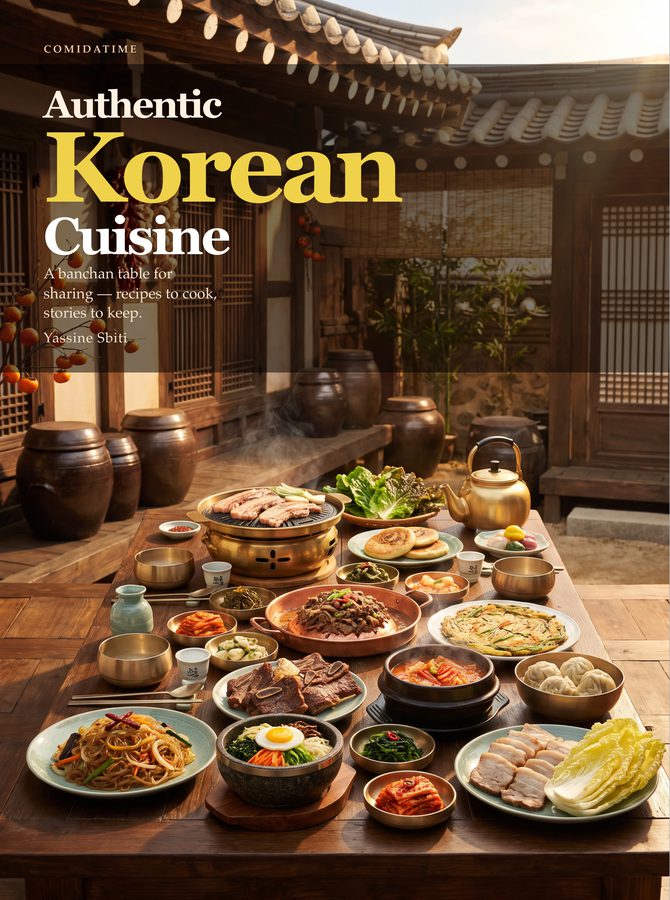
Cover of Authentic Korean Cuisine
From the cookbook

Authentic Korean Cuisine

This recipe is from Authentic Korean Cuisine by Yassine Sbiti — the Korean volume in the ComidaTime International Cuisines series.

Available soon on Amazon…

Explore Korean cuisine