Home Cook Together. Celebrate Life.

KoreanAuthentic Cuisine

Doenjang Jjigae

Serves 4 to 6 vegetarian

Doenjang Jjigae

Doenjang Jjigae, a quintessential Korean home-cooked dish, is a comforting stew that finds its place on everyday dining tables rather than special occasions. Known for its deep, savory flavors, it is a staple in Korean households, where each family adds its own twist to the basic recipe. This version captures the essence of how a Korean family actually prepares it, with salt measured by hand and a generous use of fat.

The stew is robust, with the earthy depth of doenjang (fermented soybean paste) enveloping tender chunks of tofu, zucchini, and potato. The broth is rich and savory, enhanced by the umami from the stock, offering a satisfying warmth with every spoonful. Perfect for sharing, it invites a communal experience, embodying the spirit of Korean home dining.

Ingredients

  • 3 tbspdoenjang
  • 200 gtofu
  • 1zucchini
  • 1potato
  • 400 mlstock
  • to tastefine sea salt

Method

  1. Begin by heating a medium-sized pot over medium heat. Add 3 tablespoons of doenjang to the pot and stir it gently for about a minute. This will help release its deep, savory aroma and slightly caramelize it, creating a rich base for your stew.
  2. Next, pour in 400 ml of stock into the pot, stirring to dissolve the doenjang completely. This will create a flavorful broth that forms the foundation of your jjigae. Make sure the stock is well mixed with the doenjang before moving on to the next step.
  3. Peel and dice the potato into bite-sized pieces, then add them to the pot. Potatoes take longer to cook, so they should go in first. Let them simmer in the broth until they start to soften, which should take a few minutes. You'll notice the edges becoming tender.
  4. While the potatoes are cooking, slice the zucchini into half-moons and add them to the pot. The zucchini will cook faster than the potatoes, so adding them now ensures they become tender without turning mushy. Stir gently to combine.
  5. Cut the tofu into cubes and gently add it to the simmering pot. Tofu is delicate, so be careful not to break it as you stir. Allow the tofu to absorb the flavors of the broth, which will take on a slightly golden hue as it cooks.
  6. Continue to simmer the jjigae until the potatoes are fully cooked through and the zucchini is tender. The broth should be flavorful and slightly thickened by the starch from the potatoes. Taste the stew and add fine sea salt to your liking, enhancing the natural flavors.
  7. Once the vegetables are cooked to the desired tenderness, your Doenjang Jjigae is ready to serve. If desired, finish with a sprinkle of herbs or a drizzle of sesame oil for added depth. Serve hot, sharing it at the table as is traditional in Korean home cooking.

You may need

From the ComidaTime pantry and cookware — the jars and hearths this kitchen actually cooks with.

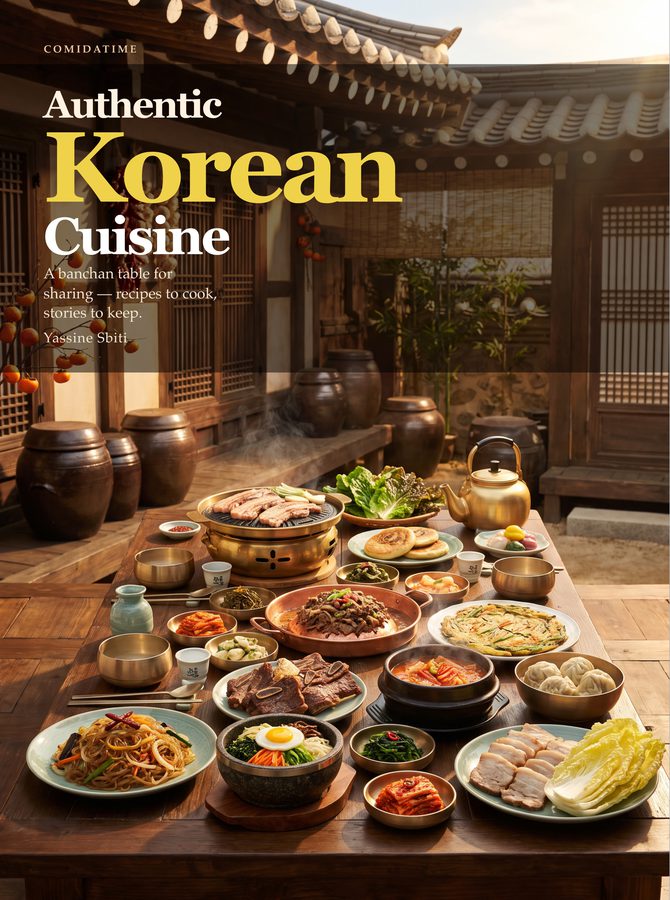
Cover of Authentic Korean Cuisine Preview the cookbookBrowse the dishes inside
From the cookbook

Authentic Korean Cuisine

This recipe is from Authentic Korean Cuisine by Yassine Sbiti — the Korean volume in the ComidaTime International Cuisines series.