Home Cook Together. Celebrate Life.

KoreanAuthentic Cuisine

Mayak Gimbap

Serves 4 to 6 vegetarian

Mayak Gimbap

Mayak Gimbap, a beloved street food from Seoul's bustling Gwangjang Market, translates to "narcotic gimbap" for its addictive taste. In home kitchens, it is a snapshot of Korean cooking: salt measured by instinct, with a generous hand for sesame oil. This version captures the essence of how a Korean family might share it at their table, each roll a compact package of flavor and nostalgia.

With a bite, the nori gives way to a satisfying crunch of pickled radish and the tender bite of spinach and carrot. The rice, seasoned just enough, binds everything together in a harmonious dance of textures. Serve it as a snack, a light meal, or a convivial offering, inviting hands to reach and roll with ease.

Ingredients

  • 400 grice
  • 4 sheetsnori
  • spinachstrips
  • carrotstrips
  • pickled radishstrips
  • to tastefine sea salt

Method

  1. Rinse 400 g of rice under cold water until the water runs clear. This removes excess starch, ensuring the rice is fluffy and not sticky. Cook the rice in a rice cooker or a pot with a tight-fitting lid, using the appropriate amount of water for your rice cooker or pot. Once cooked, let it rest for 10 minutes with the lid on to allow the steam to finish cooking the rice.
  2. While the rice is cooking, prepare the vegetables. Cut the spinach into strips, and do the same with the carrot and pickled radish. For the carrots, blanch them briefly in boiling water for about 30 seconds to soften them slightly, then drain and set aside. This quick blanching enhances the color and makes them easier to roll.
  3. Lay out the nori sheets on a clean, dry surface. Once the rice has rested, season it lightly with fine sea salt to taste, mixing gently with a rice paddle or wooden spoon to avoid mashing the grains. The rice should be seasoned enough to enhance its flavor without overpowering the other ingredients.
  4. Place a nori sheet shiny side down on a bamboo sushi mat. Spread a thin, even layer of seasoned rice over the nori, leaving about 2 cm of space at the top edge. This space is crucial for sealing the roll later.
  5. Arrange the spinach strips, blanched carrot strips, and pickled radish strips horizontally across the center of the rice. Be mindful not to overfill, as this will make rolling difficult.
  6. Using the bamboo mat, start rolling the nori over the filling, applying gentle pressure to keep the roll tight. Continue rolling until the nori sheet is completely wrapped around the rice and filling. The moisture from the rice will help seal the roll.
  7. Repeat the process with the remaining nori sheets and fillings. Once all rolls are completed, use a sharp knife to slice each roll into bite-sized pieces. Clean the knife with a damp cloth between cuts to ensure clean slices.
  8. Arrange the sliced gimbap on a serving platter. Serve immediately, allowing the freshness of the ingredients and the seasoned rice to shine. Enjoy this dish as part of a shared meal, as is traditional in Korean home cooking.

You may need

From the ComidaTime pantry and cookware — the jars and hearths this kitchen actually cooks with.

Cover of Authentic Korean Cuisine Preview the cookbookBrowse the dishes inside
From the cookbook

Authentic Korean Cuisine

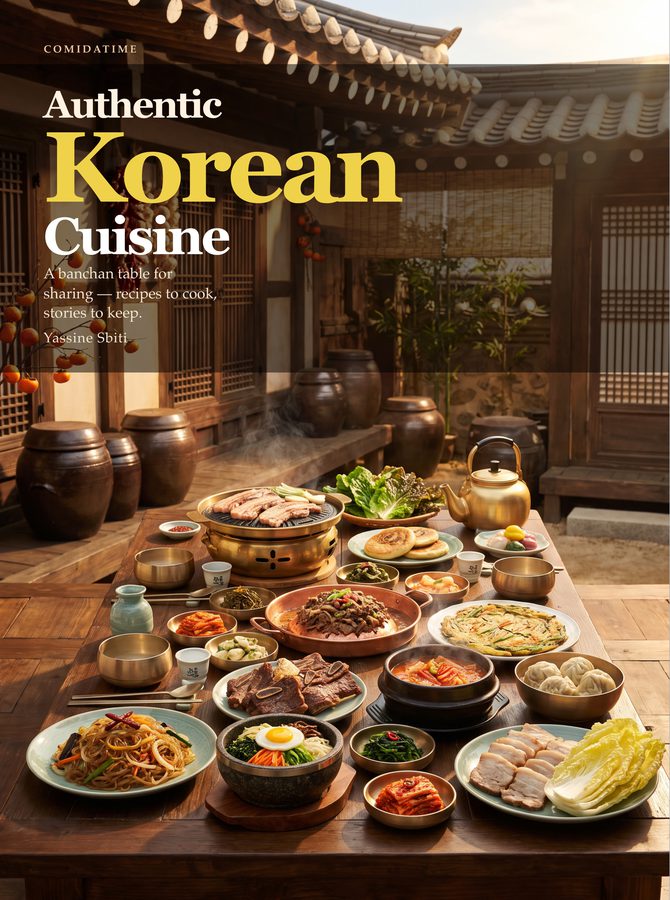
This recipe is from Authentic Korean Cuisine by Yassine Sbiti — the Korean volume in the ComidaTime International Cuisines series.