
Home Cook Together. Celebrate Life.

PortugueseAuthentic Cuisine

Pastel de Chaves

Serves 4 to 6 Pastry meat, Breads & Pastry

Pastel de Chaves

From the small town of Chaves in Trás-os-Montes, Pastel de Chaves is a cherished local specialty, often enjoyed as a comforting snack or light meal. This version captures the essence of traditional Portuguese home cooking, where olive oil flows freely and salt is added with intuition. The recipe is passed down through generations, each cook in Chaves adding their own touch, yet never straying far from its roots.

The pastry should be flaky and golden, encasing a savory filling of tender veal, aromatic onion, and garlic, with a hint of sweet paprika and a splash of dry white wine. A crisp bite gives way to a warm, flavorful interior, seasoned perfectly with fine sea salt and black pepper. Serve hot, letting each bite transport you to the rustic kitchens of Trás-os-Montes.
Ingredients

  • 500 gpuff pastry
  • 400 gveal — finely chopped by hand
  • 1onion — very finely chopped
  • 2 clovesgarlic — minced
  • 100 mldry white wine
  • 2 tbspolive oil
  • 1 tspsweet paprika
  • 1egg — beaten, to glaze
  • to tastefine sea salt and black pepper

Method

  1. Begin by finely dicing the onion and mincing the garlic cloves. This will ensure they cook evenly and infuse the veal with flavor. Cut the veal into small, bite-sized pieces, ensuring they are uniform for even cooking.
  2. In a large skillet, heat 2 tablespoons of olive oil over medium heat. Once the oil shimmers, add the diced onion and cook until it becomes translucent and soft, stirring occasionally. This should take about 5 minutes, and the onions should not brown.
  3. Add the minced garlic to the skillet and cook for another minute until fragrant. Then, add the veal pieces to the pan, seasoning them with a pinch of fine sea salt and black pepper. Stir occasionally until the veal is browned on all sides, which will help seal in the juices.
  4. Pour in 100 ml of dry white wine and sprinkle 1 teaspoon of sweet paprika over the mixture. Stir well to combine, scraping up any browned bits from the bottom of the pan. Let the mixture simmer until the wine reduces by half and the veal is tender, with a rich aroma and deep color.
  5. While the veal mixture is simmering, preheat your oven to 200°C (390°F). Roll out the 500 g of puff pastry on a lightly floured surface to a thickness of about 3 mm. Cut the pastry into circles or rectangles, depending on your preference.
  6. Place a spoonful of the veal mixture onto one half of each pastry piece, leaving a border around the edges. Fold the pastry over to enclose the filling, pressing the edges together firmly to seal. Use a fork to crimp the edges for a decorative finish.
  7. Beat 1 egg in a small bowl and brush it over the tops of the pastries. This will give them a golden, glossy finish once baked. Arrange the pastries on a baking sheet lined with parchment paper, ensuring they are not touching.
  8. Bake the pastries in the preheated oven for 20-25 minutes, or until they are puffed and golden brown. The pastry should be crisp and flaky, and the filling should be hot and aromatic. Serve warm, allowing the flavors to shine through the delicate pastry.
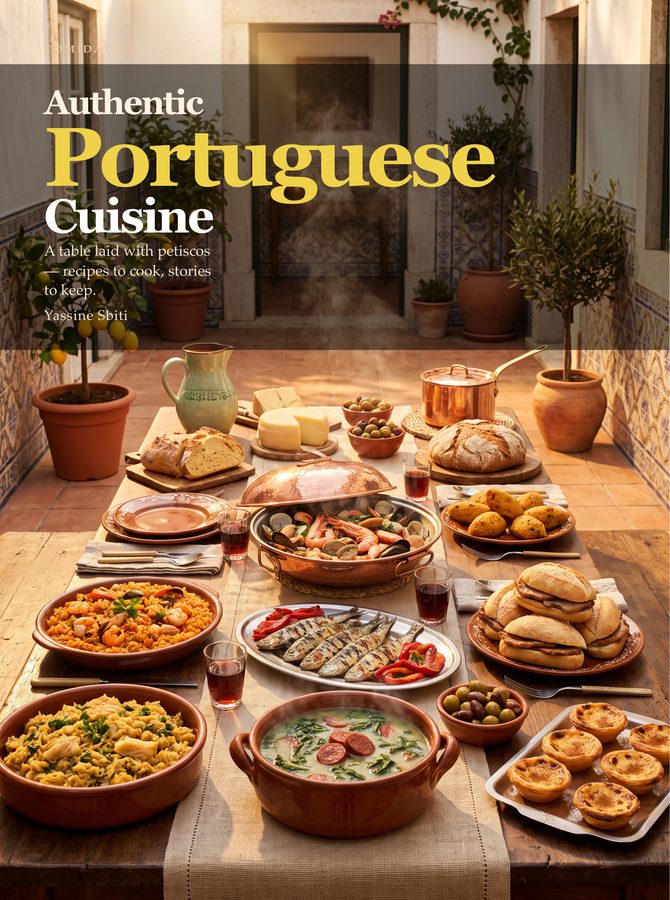
Cover of Authentic Portuguese Cuisine
From the cookbook

Authentic Portuguese Cuisine

This recipe is from Authentic Portuguese Cuisine by Yassine Sbiti — the Portuguese volume in the ComidaTime International Cuisines series.