Home Cook Together. Celebrate Life.

Moroccancookbook

Té de Ajenjo

Serves 4 vegan, gluten-free, vegetarian

Té de Ajenjo

In the chilly months of the northern Moroccan regions and the Rif, Wormwood Tea, or Atay b'Chiba, becomes a comforting staple. This aromatic infusion is cherished for its warming qualities, offering a bitter embrace that contrasts with the crisp winter air. While mint might occasionally make a guest appearance, the true star remains the dried wormwood, lending the tea its distinctive character.

With each sip, expect a dance of bold bitterness and subtle sweetness, rounded by the earthy undertones of Chinese gunpowder green tea. The wormwood's assertive flavor commands attention, making this tea a mindful indulgence best enjoyed slowly, savoring its complex layers and warming essence.
Ingredientes

  • 1 cucharadaté verde chino gunpowder
  • 1 cucharaditaajenjo seco (chiba)
  • unas ramitasmenta fresca — opcional
  • 2–4 cucharadasazúcar — al gusto
  • 1 litro (4 tazas)agua hirviendo

Preparación

  1. Coloque 1 cucharada de té verde chino gunpowder en una tetera pequeña o jarra de vidrio resistente al calor. Enjuague el té vertiendo una pequeña cantidad de agua hirviendo sobre él, girando suavemente, y luego desechando el agua. Este paso ayuda a abrir las hojas de té y eliminar cualquier polvo.
  2. Agregue 1 litro (4 tazas) de agua hirviendo a las hojas de té enjuagadas. Deje que el té repose durante 2 minutos. Esta infusión inicial libera el sabor robusto y ligeramente ahumado característico del té verde gunpowder.
  3. Después de 2 minutos, agregue 1 cucharadita de ajenjo seco (chiba) a la tetera. Si desea incluir menta, añada unas ramitas en este momento. Incorpore de 2 a 4 cucharadas de azúcar, dependiendo de su preferencia por la dulzura. Deje que la mezcla repose por un minuto adicional. El ajenjo impartirá su fuerte aroma amargo, que debe equilibrarse con la dulzura del azúcar.
  4. Para mezclar bien los sabores, vierta el té desde una altura de aproximadamente un pie en otra olla o jarra resistente al calor, y luego de regreso a la olla original. Esto airea el té, mejorando su aroma y asegurando un sabor uniforme. El té debe oler amargo-verde y aromático, no excesivamente medicinal.
  5. Sirva el té en vasos pequeños, típicos del servicio de té marroquí. El té debe beberse lentamente para apreciar sus sabores complejos, con el amargor del ajenjo liderando la experiencia de sabor.

You may need

From the ComidaTime pantry and cookware — the jars and hearths this kitchen actually cooks with.

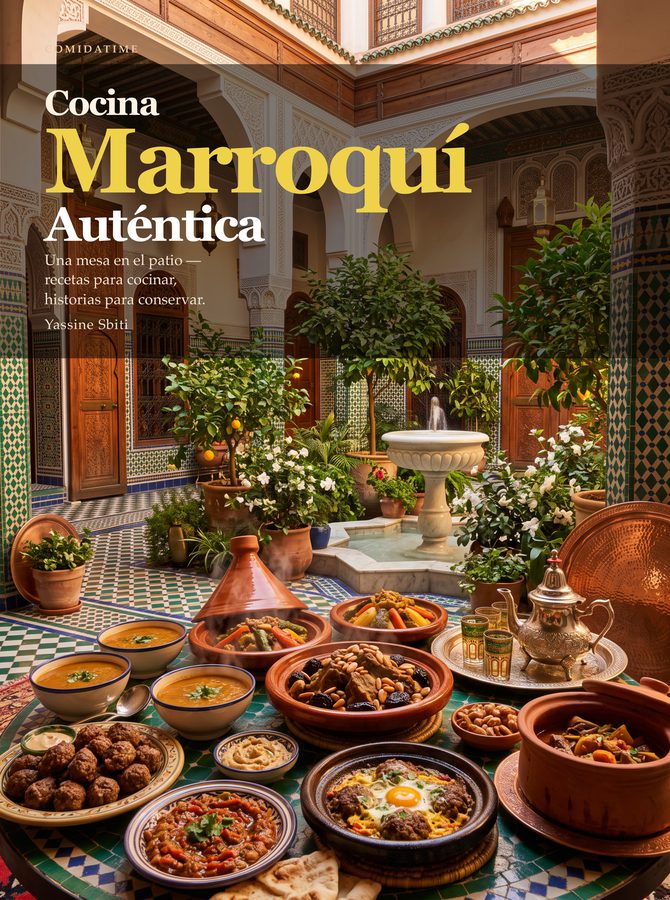
Cover of Cocina Marroquí Auténtica Preview the cookbookBrowse the dishes inside
Del libro

Cocina Marroquí Auténtica

This recipe is from Cocina Marroquí Auténtica by Yassine Sbiti — the Moroccan volume in the ComidaTime International Cuisines series.