
Free recipe guide
How to make Har Gow
Learn what makes Har Gow special, cook the free ComidaTime recipe, then keep cooking from Authentic Chinese Cuisine.
Why cooks start here
Har Gow is cooked the way Cantonese dim sum cooks it — salt judged by hand, fat used generously, and the table set for sharing. This is the home version, written down the way a chinese family cook actually puts it on the table.
Har Gow, a staple of Cantonese dim sum, graces tables with its delicate craftsmanship and rich culinary tradition. Originating from the teahouses of southern China, these translucent shrimp dumplings are a beloved part of morning tea rituals, where they are often enjoyed alongside a variety of small plates. The home version, as recorded here, reflects the intuitive methods of a Chinese family cook, relying on hand-measured salt and a generous use of fat. Biting into a perfectly steamed Har Gow reveals a tender, crystal-like skin that gives way to a filling of succulent shrimp and crunchy bamboo shoots, subtly seasoned with white pepper and sesame oil. The dumplings should be soft yet resilient, offering a satisfying contrast between the silky wrapper and the rich, savory interior. Serve them freshly steamed, allowing their warmth to invite shared enjoyment around the table.
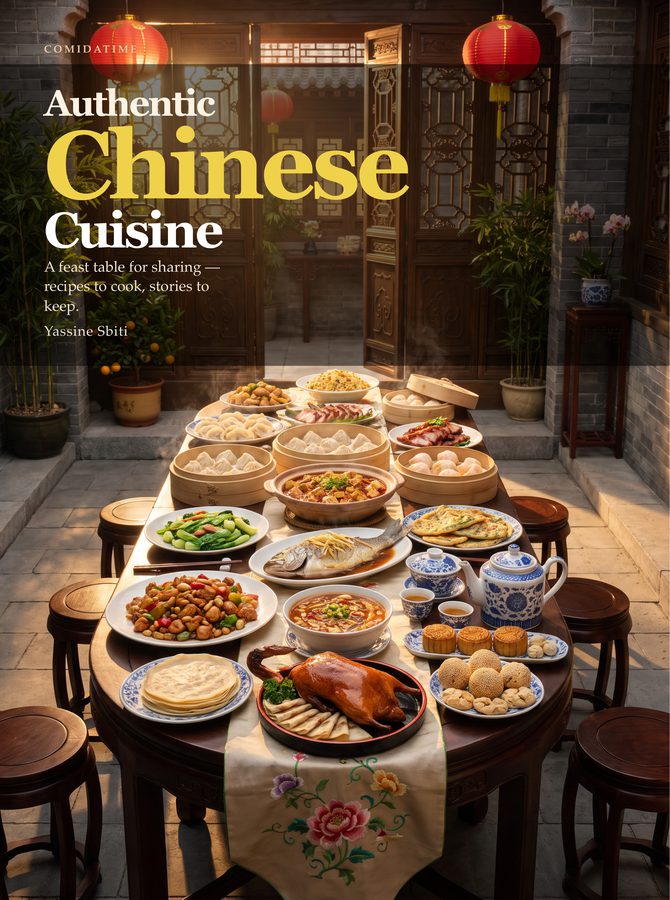
Authentic Chinese Cuisine
Bring the full collection home—authentic recipes, cultural notes, and a beautiful book for your table or as a gift.
The Chinese pantry, pots, and table
The spices, mixes, and hearths that belong to Chinese cooking — then the people around them, and the kitchens still joining the table.
Open the Chinese pantry Open Chinese cookware The Chinese table Host a Chinese night Join the community