
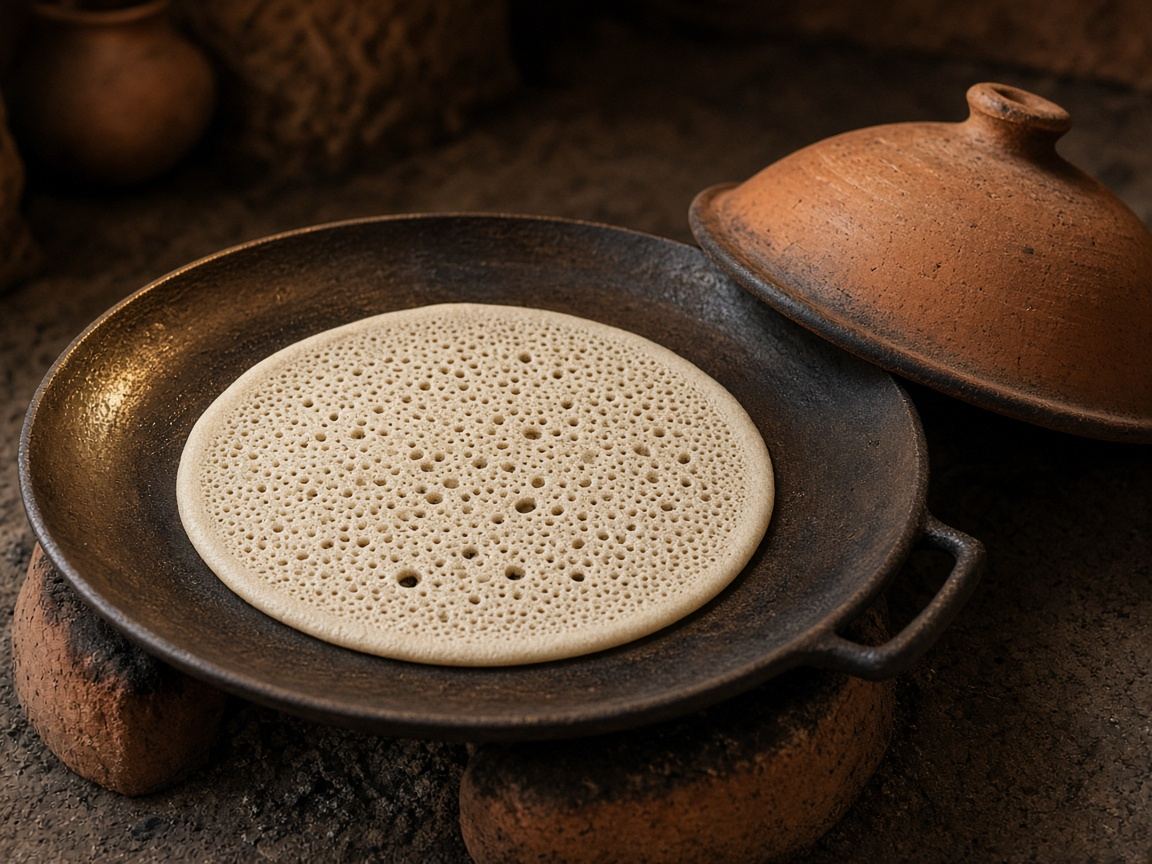
Mitad
The clay or iron griddle that bakes injera under a lid.
An Ethiopian meal is one platter of injera. The stew sits on the bread. There are no forks.
Injera is the plate, the utensil, and the sour against the spice. Doro wat is the feast stew. Tibs is the quicker sauté. Both are eaten from the same logic: right hand, your wedge, no reaching across.
The inherited table is a mesob. The Tuesday table can be a wide tray on a regular table. Coffee from a jebena comes after, not during.
Back to Ethiopian cooking · Host an Ethiopian night · Pantry · Cookware
A woven basket, one communal tray, low stools, the room pulled into a circle.
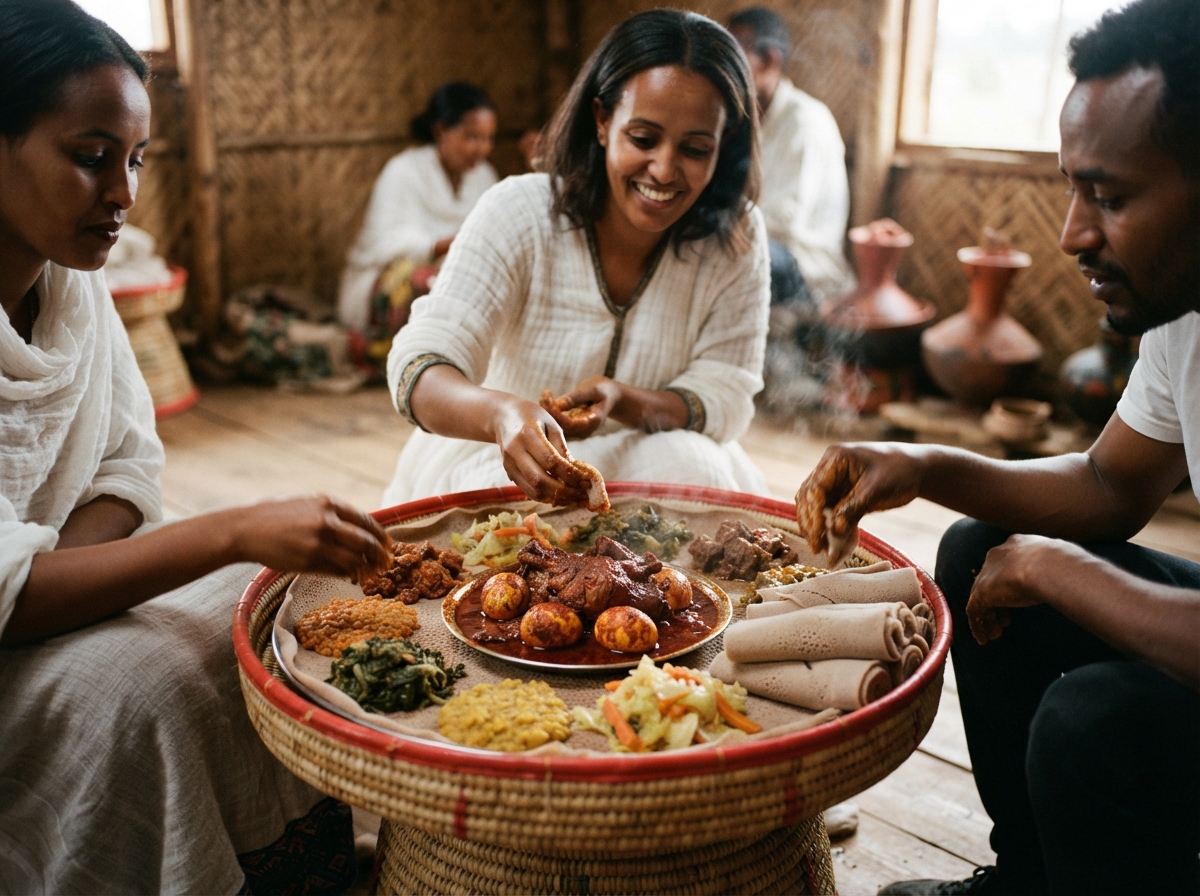
The inherited table is a mesob: a tall wicker stand holding one wide platter. Injera covers it. Doro wat sits in the middle. People sit close. The right hand works a private quadrant.
A pitcher of water for washing comes first. Tej or tella if it is a feast. The jebena of coffee is a second sitting, after the platter is torn down to the last sour edge.
A wide tray on a kitchen table. Still no forks.
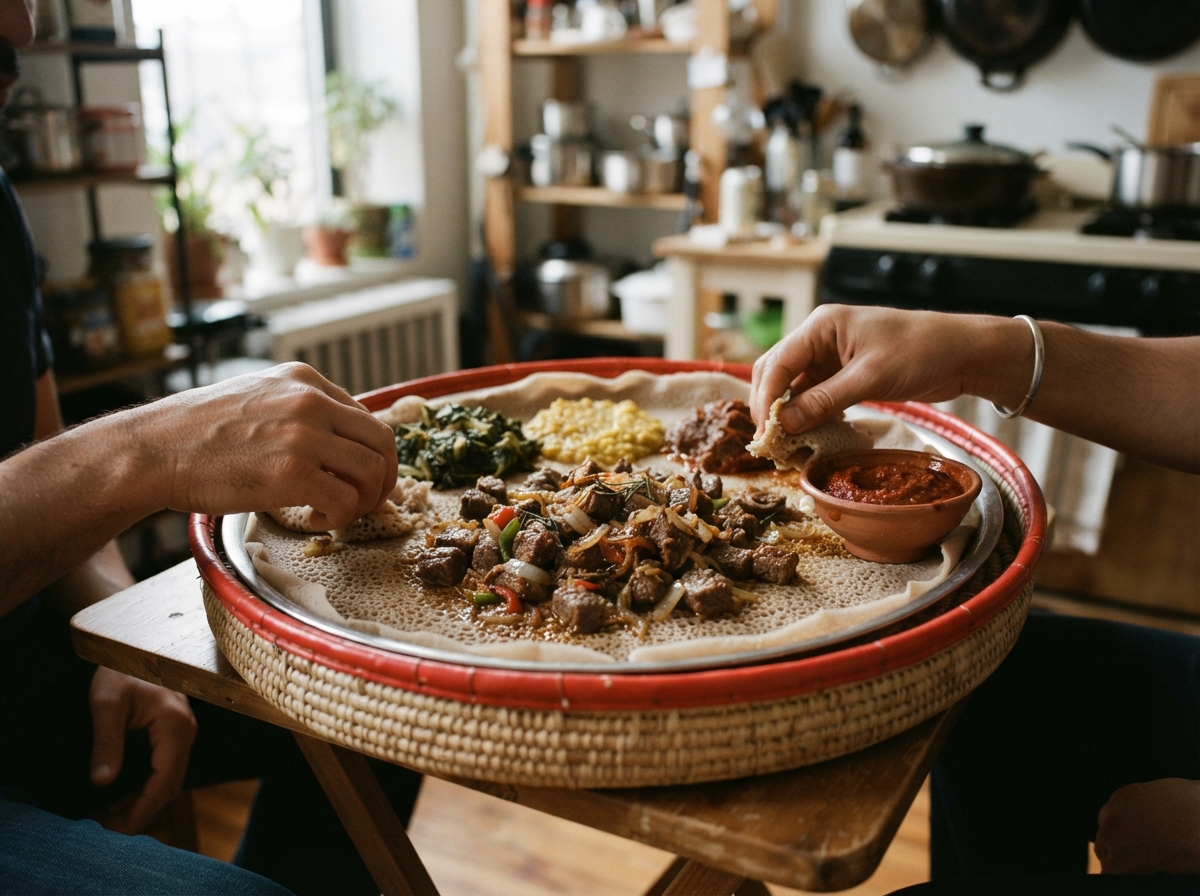
The newer table keeps the communal tray even when the mesob is still on the wish list. A large plate lined with injera, one stew, rolled injera on the side.
Do not plate two composed dinners. Do not add rice. The sour bread is the whole method.
Injera is the plate. Doro wat is the feast. Tibs is the quicker night. Coffee after.
Lay injera flat. Spoon doro wat — chicken, berbere, a stained egg — onto the center. Other wats can ring it: lentils, greens, ayib. Extra injera is rolled at the side. Tear, scoop, eat. No knives. No side of European bread.
Tibs can be its own smaller night: sizzling meat, still on injera, still by hand. Do not serve doro wat with tibs as two Western mains on separate dinner plates.
Wash hands at the table. Wait for the eldest. Gursha — feeding a guest a bite — is hospitality, not a performance.
Objects you can read about here, then find on Amazon — search links, not a single SKU that goes stale.
The clay or iron griddle that bakes injera under a lid.
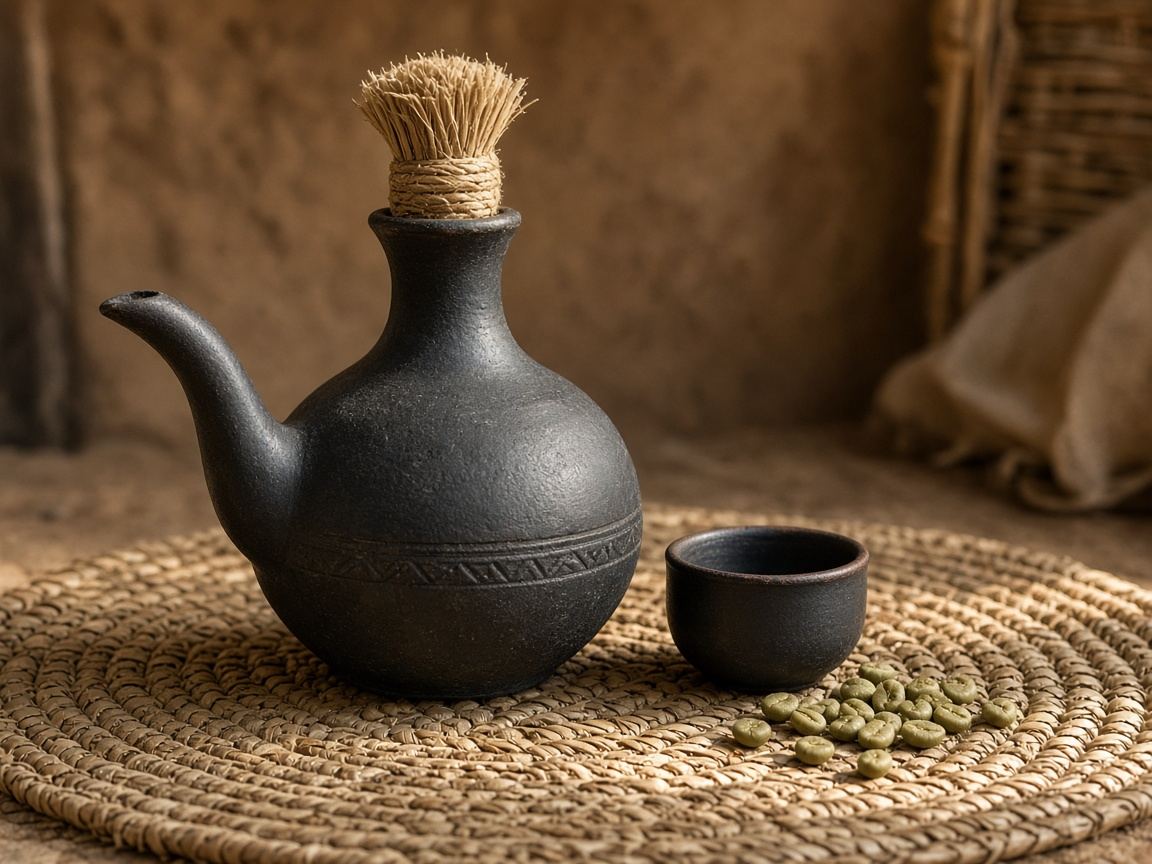
Coffee is a ceremony after the platter, poured from the long-neck pot.
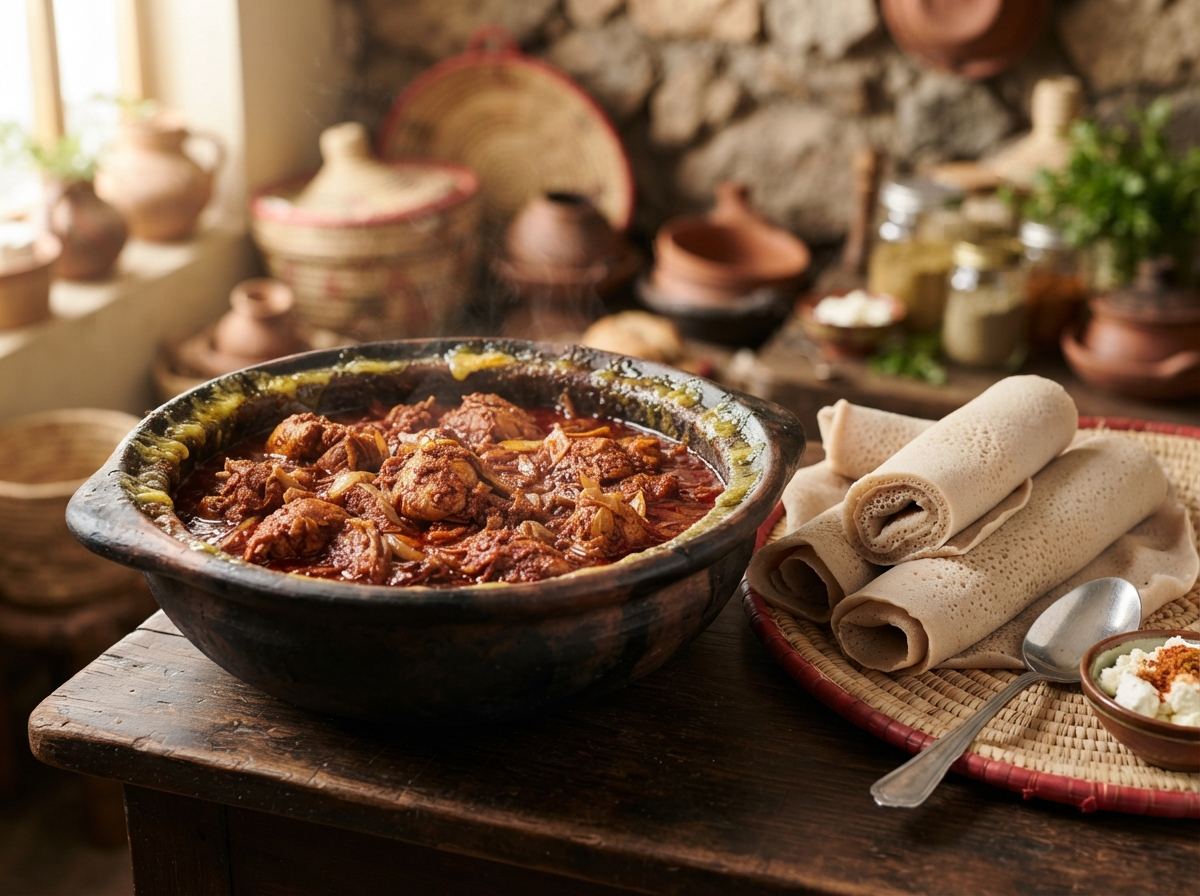
The pot for a long wat.
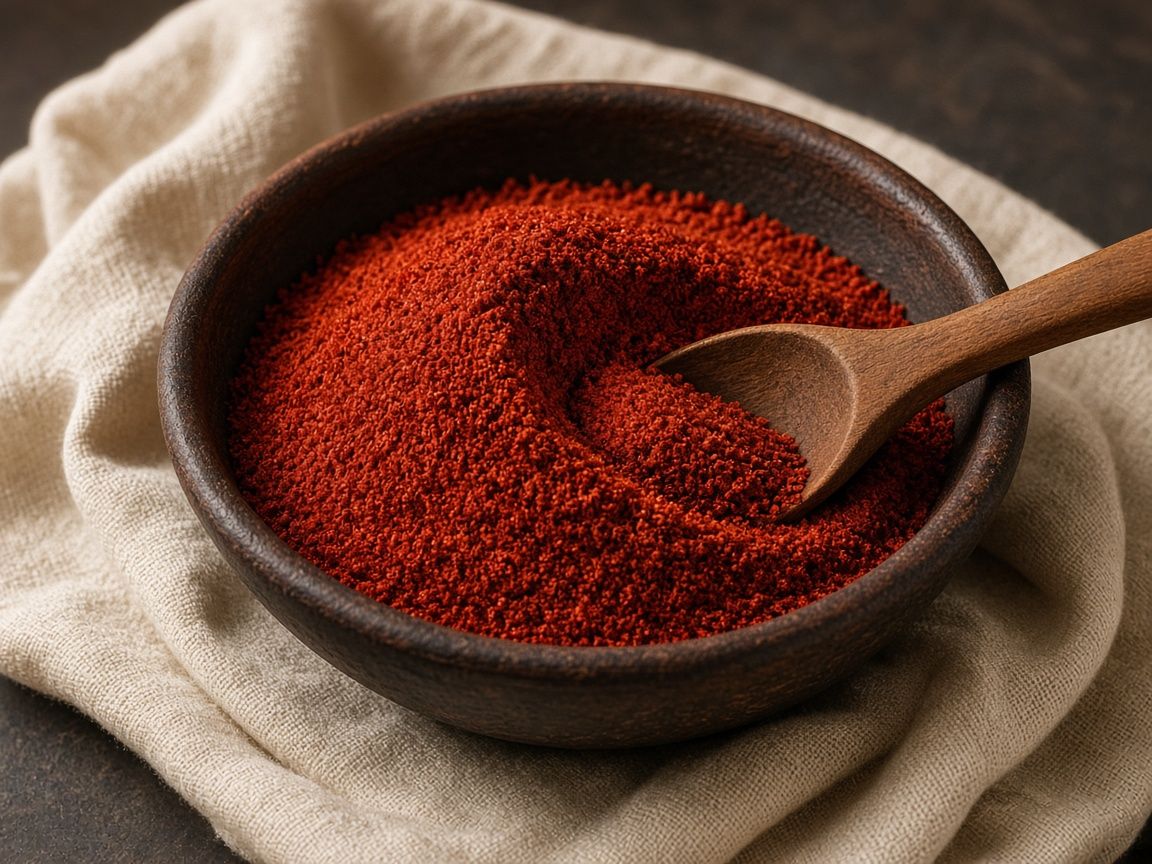
The red blend on the feast stew.
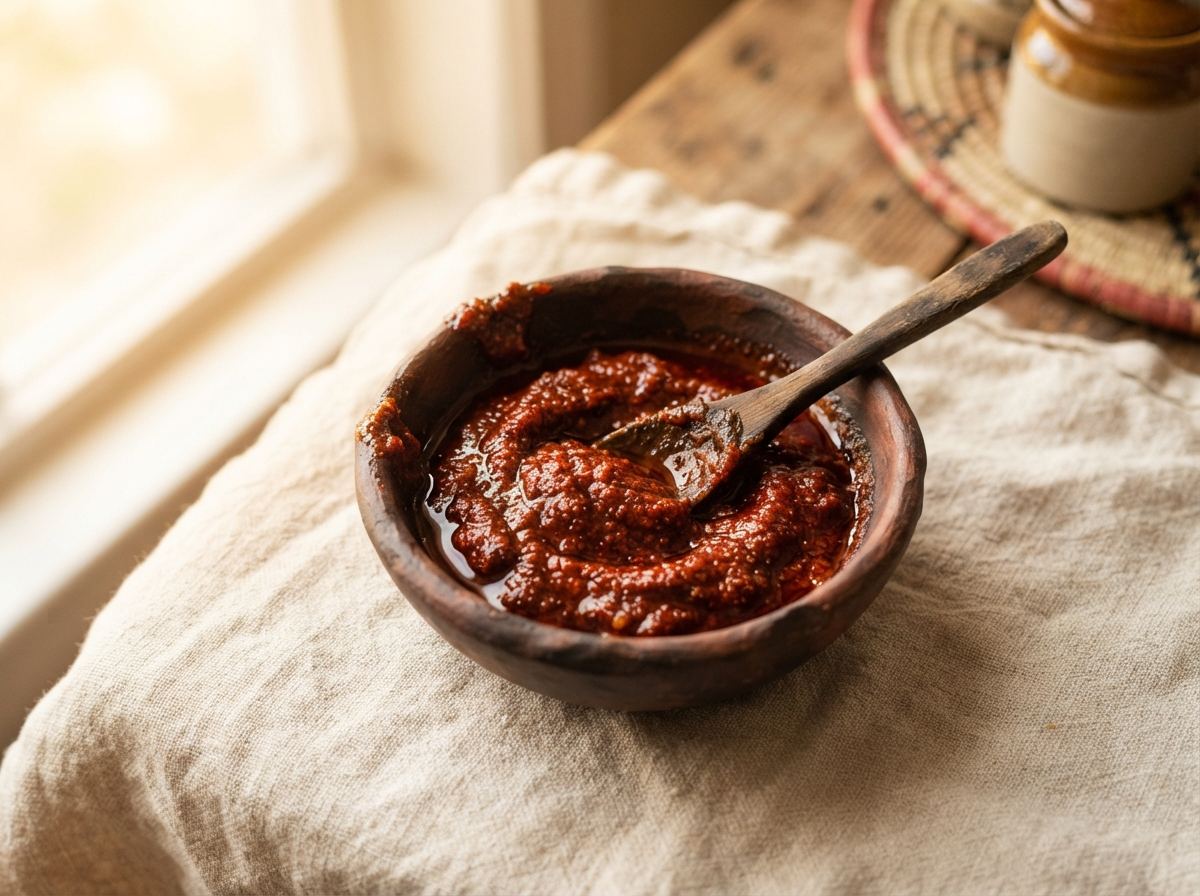
A hot dip for tibs and rolled injera.
The woven table that holds one tray. Low stools optional; the circle is not.
The spices, mixes, and hearths that belong to Ethiopian cooking — then the people around them, and the kitchens still joining the table.
Open the Ethiopian pantry Open Ethiopian cookware The Ethiopian table Host an Ethiopian night Join the community