
Home Cook Together. Celebrate Life.

PortugueseAuthentic Cuisine

Massa de Pimentão

Serves about 1 cup Spice Mix vegan, Spice Mixes

Massa de Pimentão

Massa de Pimentão is a cornerstone of Alentejo's cuisine, infusing its robust flavor into the region’s beloved pork dishes. This vibrant red pepper paste, crafted from salted red peppers, garlic, and olive oil, is the secret behind the succulent marinated pork that graces tables during festive gatherings and everyday meals alike. It's a tradition that brings warmth and depth to dishes like rojões and bifanas, highlighting the simplicity and richness of Portuguese culinary practices.

Massa de Pimentão combines sweet red peppers and pungent garlic with rich olive oil, enhanced by sweet paprika and bay leaf, creating a complex paste that tenderizes and flavors pork, embodying the rustic yet refined taste of Alentejo.
Ingredients

  • 6red peppers — roasted, peeled, and layered with salt overnight
  • 6 clovesgarlic — peeled
  • 3 tbspcoarse sea salt
  • 120 mlextra virgin olive oil
  • 1 tspsweet paprika
  • 1bay leaf

Method

  1. Begin by roasting the 6 red peppers. Preheat your oven to 220°C (428°F). Place the peppers on a baking tray and roast them until their skins are blistered and charred, turning occasionally. This should take about 20-30 minutes. Once done, transfer them to a bowl and cover with a plate or plastic wrap to steam for 10 minutes. This will make peeling easier.
  2. Peel the cooled peppers, removing the skins, stems, and seeds. Tear the peppers into strips and layer them in a bowl with 3 tablespoons of coarse sea salt. Cover the bowl and leave it in the refrigerator overnight. This process will draw out excess moisture and begin the curing process.
  3. The next day, rinse the peppers under cold water to remove the excess salt. Pat them dry with a clean kitchen towel. Place the peppers in a mortar along with 6 cloves of peeled garlic. Pound them together using a pestle until you achieve a coarse paste. The texture should be chunky but well combined.
  4. Gradually add 120 ml of extra virgin olive oil to the pepper-garlic paste. Work it in a little at a time, using the pestle to blend it thoroughly. The paste should become thick and glossy, indicating that the oil has emulsified with the peppers and garlic.
  5. Stir in 1 teaspoon of sweet paprika into the paste. Mix well until the paprika is evenly distributed, giving the paste a rich, deep color. This will enhance the flavor and add a subtle sweetness.
  6. Transfer the paste into a clean jar, pressing it down to eliminate any air pockets. Add 1 bay leaf on top for additional aroma. Cover the surface of the paste with a thin film of olive oil to seal it. Seal the jar with a lid and store it in the refrigerator, where it will keep for up to a month.
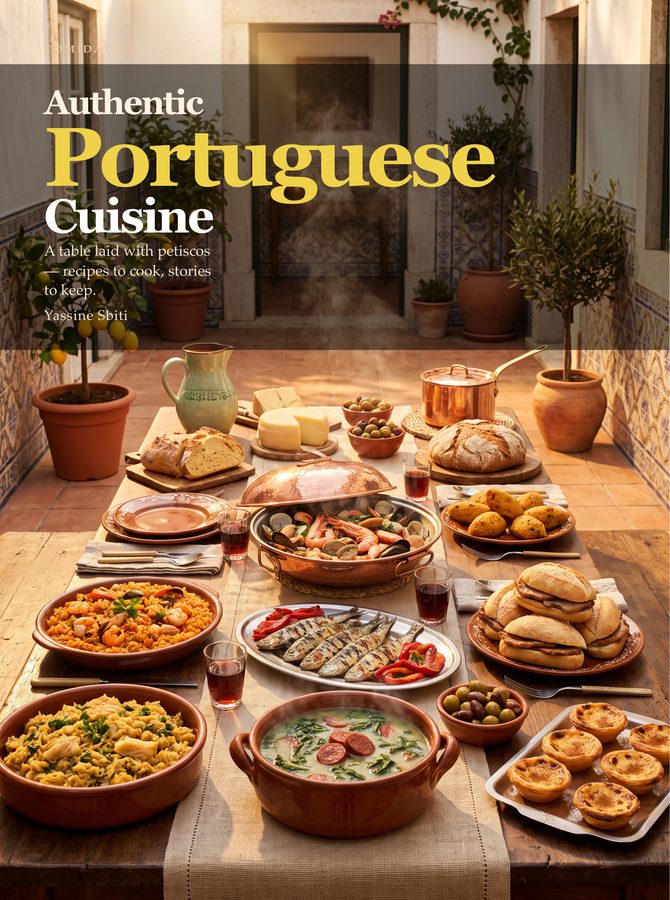
Cover of Authentic Portuguese Cuisine
From the cookbook

Authentic Portuguese Cuisine

This recipe is from Authentic Portuguese Cuisine by Yassine Sbiti — the Portuguese volume in the ComidaTime International Cuisines series.