
Free recipe guide
How to make Kimbap
Learn what makes Kimbap special, cook the free ComidaTime recipe, then keep cooking from Authentic Korean Cuisine.
Why cooks start here
Kimbap is cooked the way picnic rolls cooks it — salt judged by hand, fat used generously, and the table set for sharing. This is the home version, written down the way a korean family cook actually puts it on the table.
Kimbap, a beloved Korean dish, finds its roots in the casual, convivial culture of picnics and family outings. It's a staple that embodies the essence of gathering, prepared with care and shared with laughter. Home cooks craft this dish with seasoned rice and an array of fillings, all rolled snugly in sheets of nori. This version captures the spirit of a Korean family's kitchen, where salt is judged by hand and the table is always set for sharing. The experience of Kimbap is a medley of textures and flavors: the savory bite of beef or tuna, the silky smoothness of an egg omelet, and the tangy crunch of pickled radish. Each roll is a balanced mosaic of taste and texture, meant to be savored in good company. The generous use of fat and precise seasoning make every bite a satisfying delight, inviting another and then another.
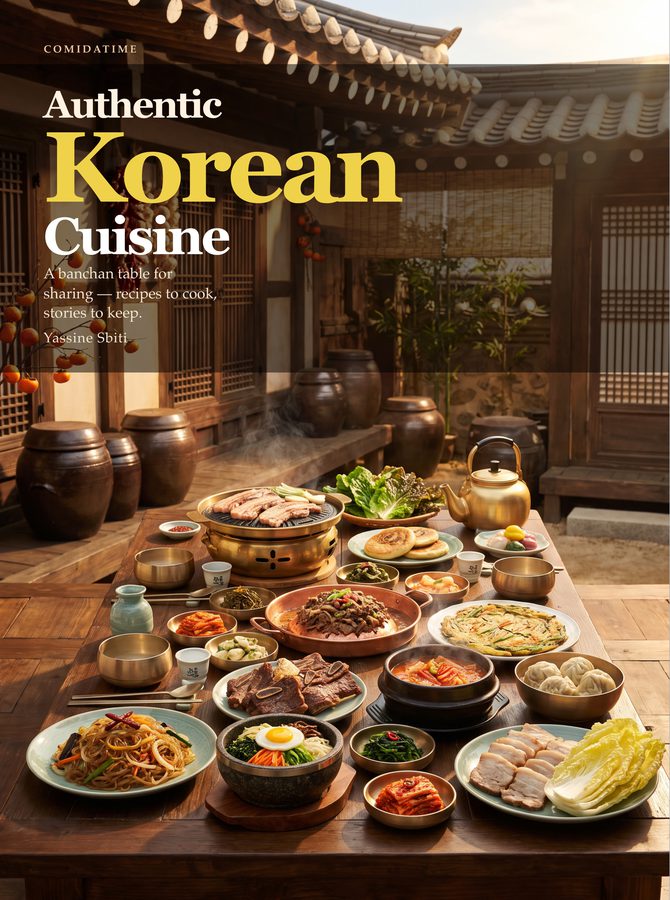
Authentic Korean Cuisine
Bring the full collection home—authentic recipes, cultural notes, and a beautiful book for your table or as a gift.
The Korean pantry, pots, and table
The spices, mixes, and hearths that belong to Korean cooking — then the people around them, and the kitchens still joining the table.
Open the Korean pantry Open Korean cookware The Korean table Host a Korean night Join the community