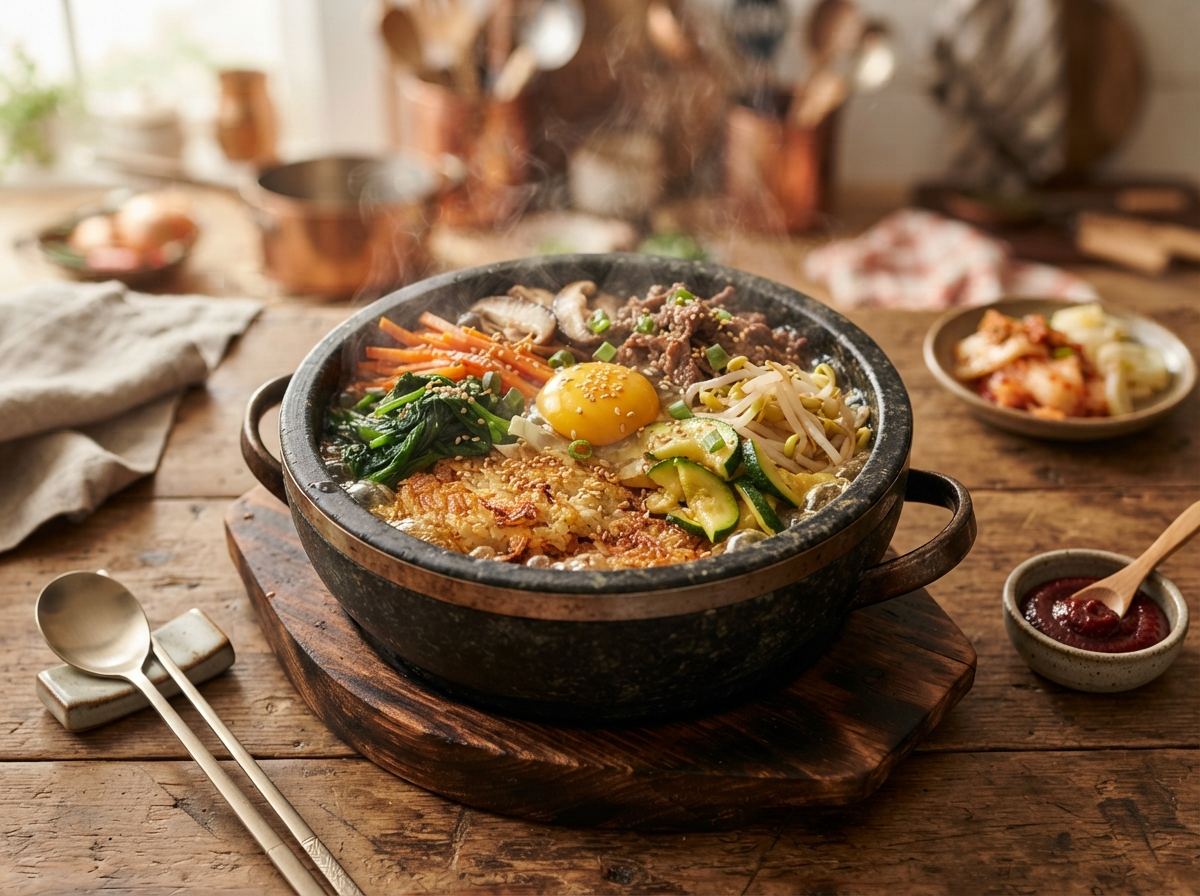
Dolsot
The stone bowl for a sizzling bibimbap lunch.
A Korean meal is rice, soup or stew, and banchan — bulgogi is the grill night, kimchi jjigae is the pot night.
Bulgogi is a ssam table: lettuce, ssamjang, rice, many small sides. Bibimbap is a mixed-rice bowl that can be the whole lunch. Kimchi jjigae is a stew night with rice. Japchae can sit on a feast as a side; it is not a second main on a weeknight.
The inherited table is a grill in the middle and metal chopsticks. The newer table is a ttukbaegi of stew.
Back to Korean cooking · Host a Korean night · Pantry · Cookware
Lettuce, meat, ssamjang, a field of banchan.
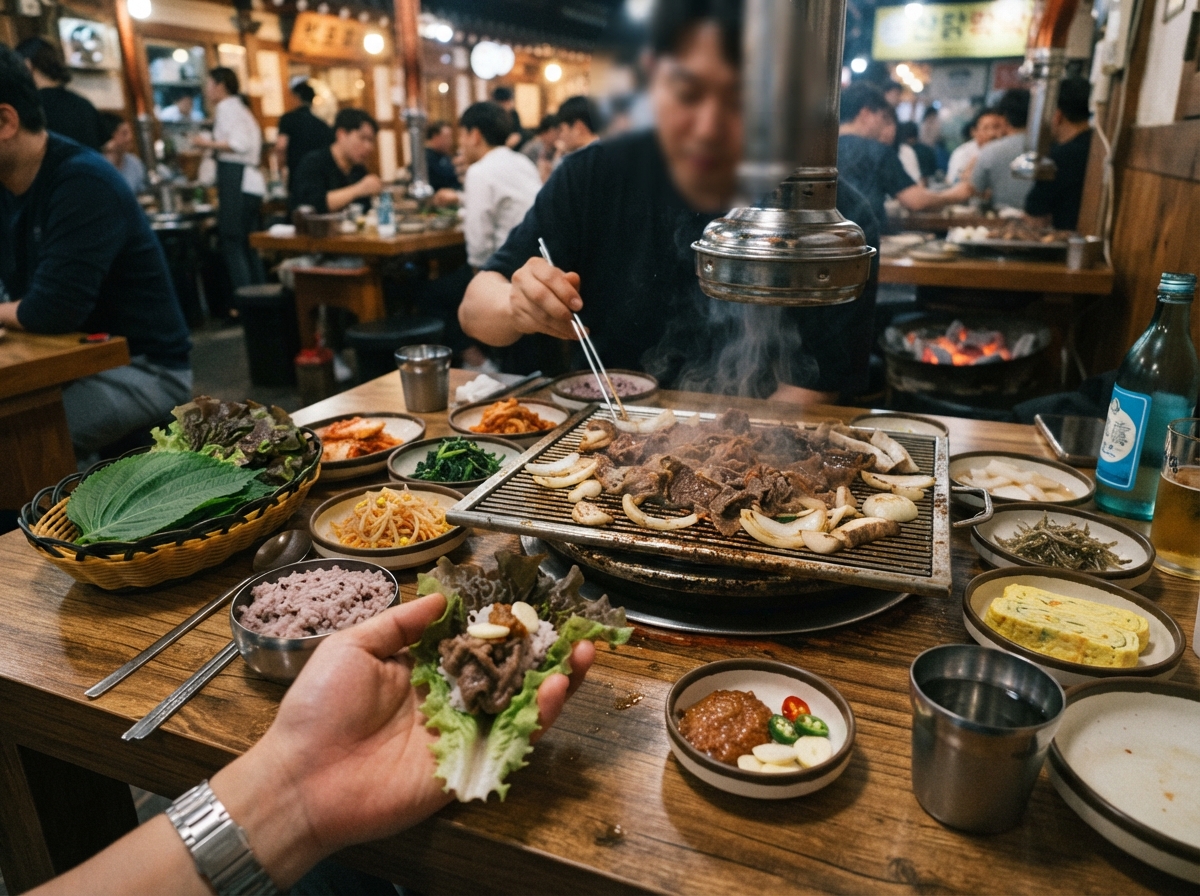
The inherited table is the grill. Bulgogi or a similar meat. Rice. Lettuce wraps. Many small plates. Japchae can appear as a celebration side.
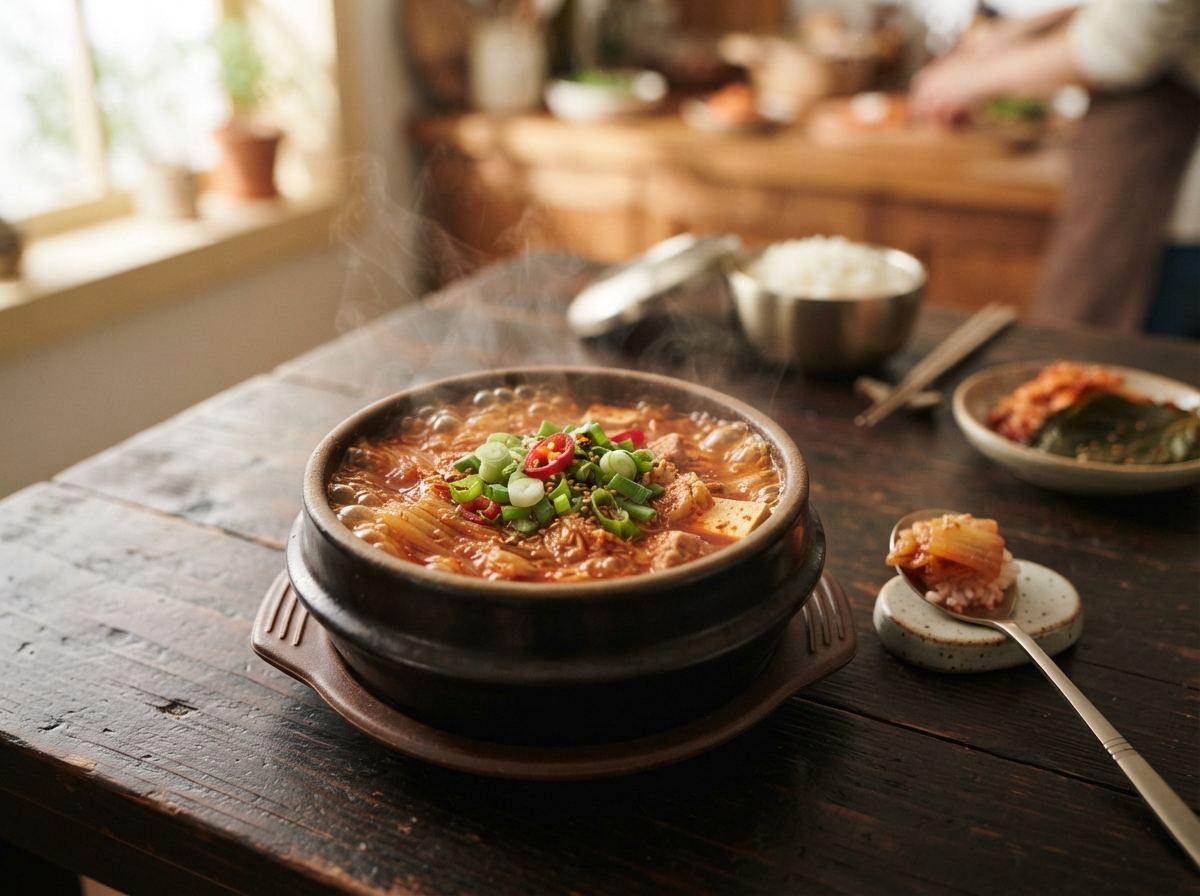
A bubbling ttukbaegi, rice, a few banchan.
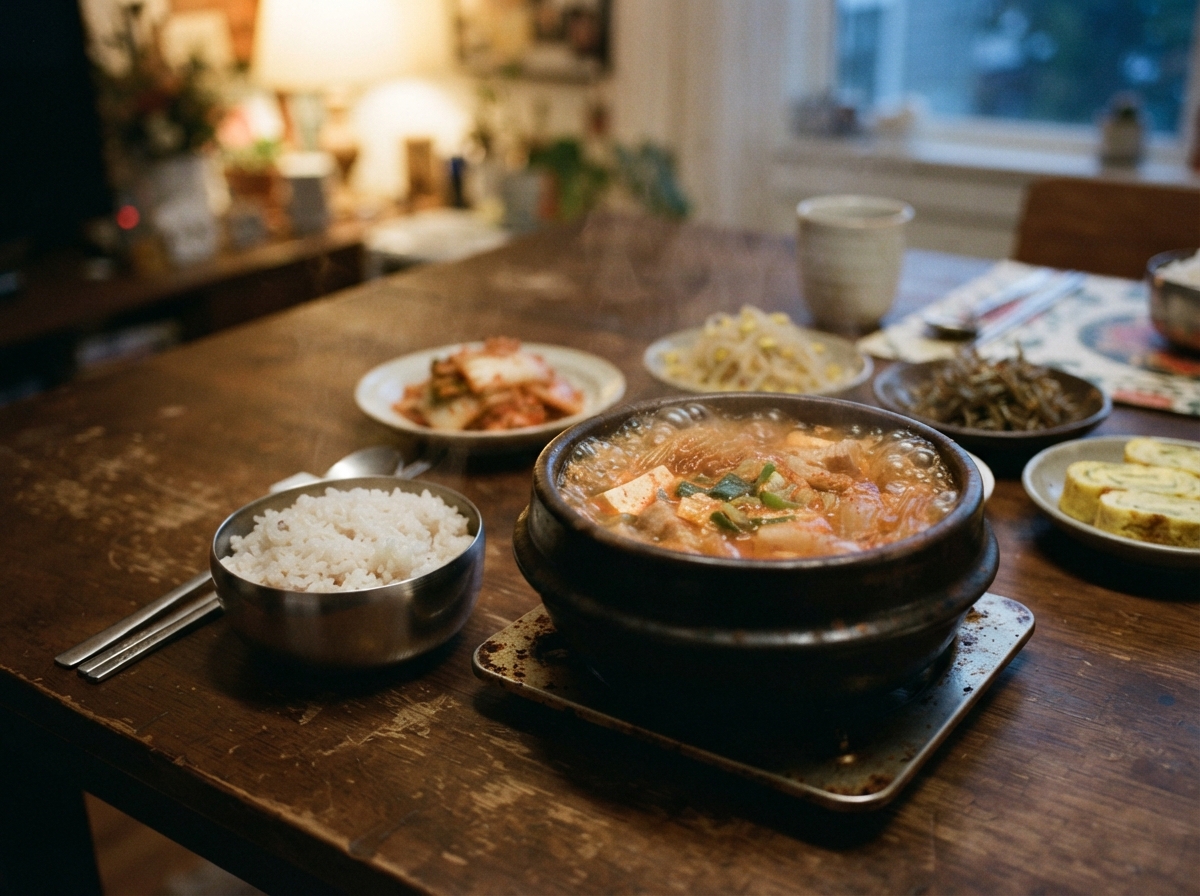
The newer night is kimchi jjigae and rice. The grill is covered. Bibimbap is another lunch.
Grill and wraps, or stew and rice. Banchan on both. One star.
A grill night wants wraps and banchan. A stew night wants rice and banchan. Do not also serve a composed bibimbap as a third starch unless that is the only bowl.
Banchan belong. A second grilled main and a second stew do not.
Objects you can read about here, then find on Amazon — search links, not a single SKU that goes stale.
The spices, mixes, and hearths that belong to Korean cooking — then the people around them, and the kitchens still joining the table.
Open the Korean pantry Open Korean cookware The Korean table Host a Korean night Join the community