Tegame
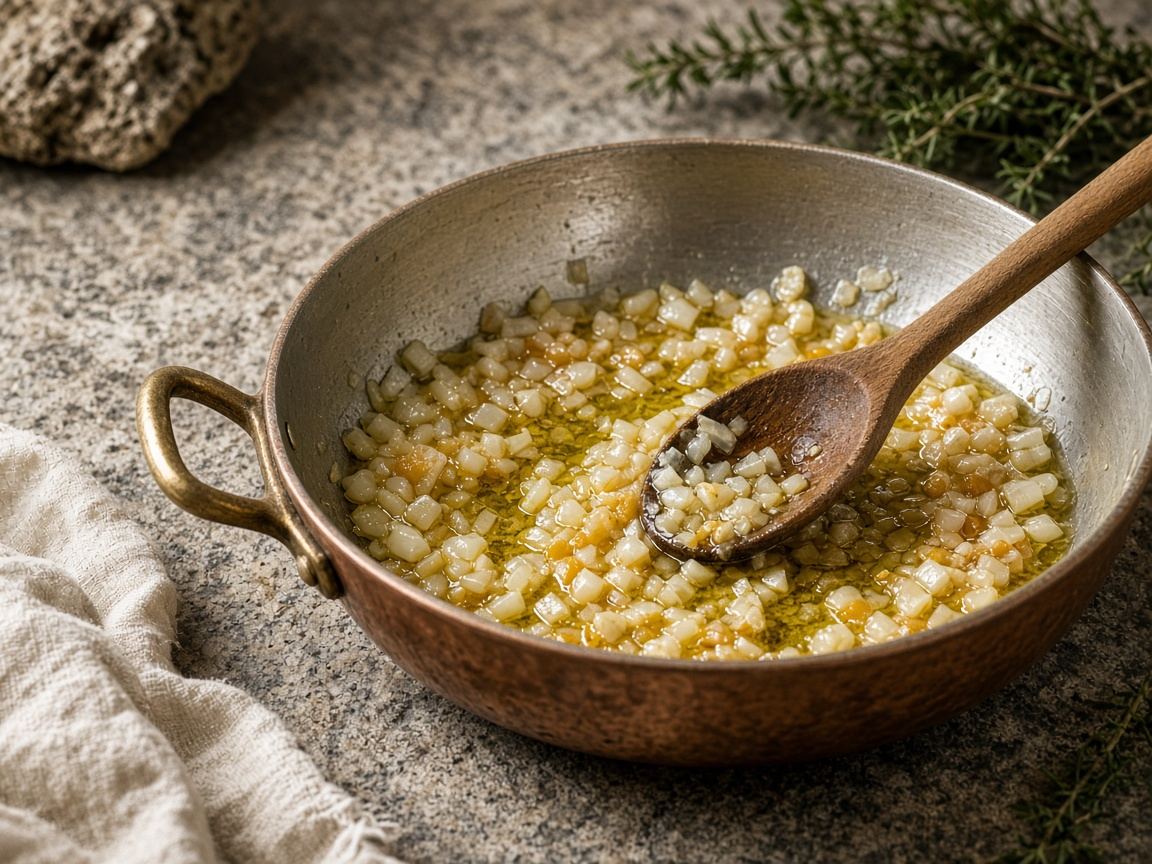
The wide pan that finishes pasta in its sauce.
An Italian meal is a sequence. Lasagne is a primo. Cacio e pepe is another primo. They do not share a plate.
Sunday lasagne in Bologna is the pasta course — maybe a little antipasto before, a roast after if the family is still hungry, salad as a contorno, then fruit. Risotto is a northern primo of its own night. Cacio e pepe is a Roman trattoria evening.
The inherited table is linen and a block of Parmigiano. The Tuesday table is still one pasta, not three.
Back to Italian cooking · Host an Italian night · Pantry · Cookware
A baking dish of lasagne, wine, a little antipasto while people arrive.
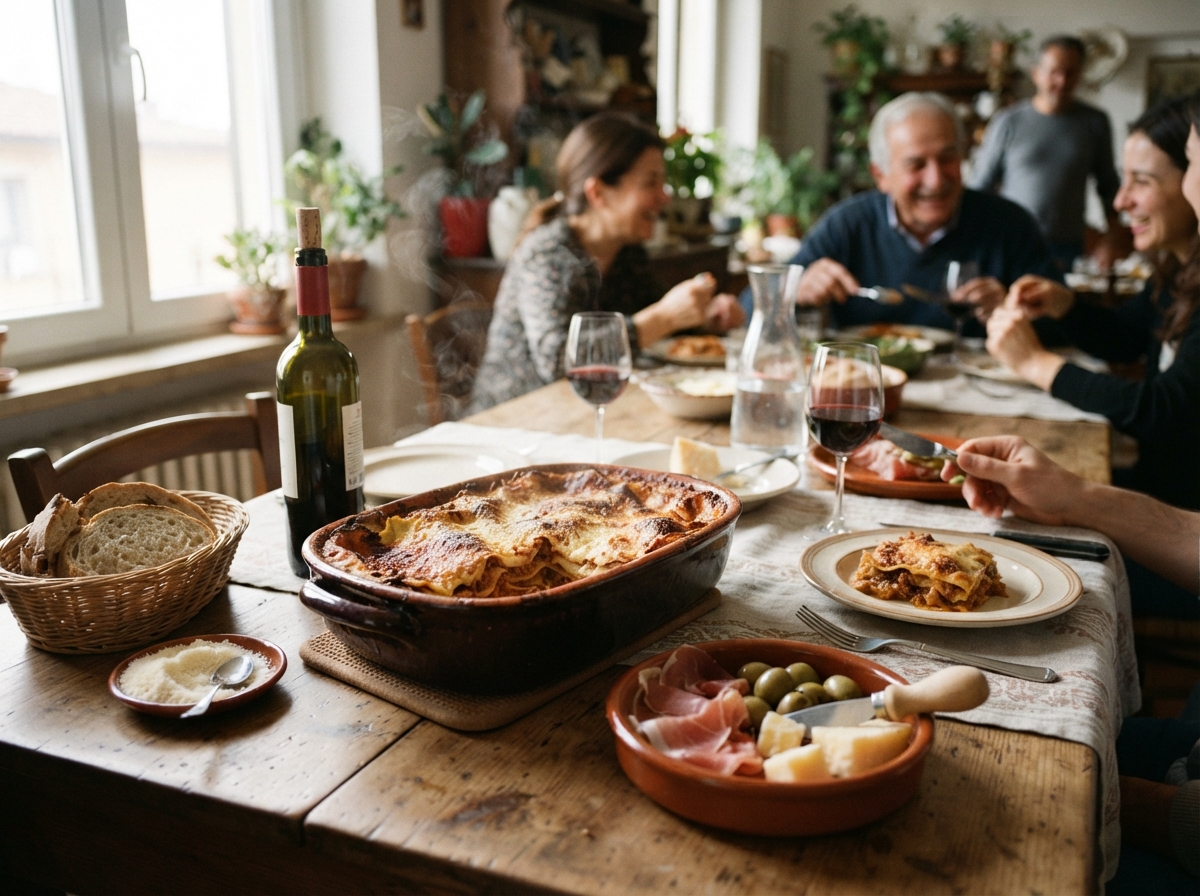
The inherited table takes hours. Antipasto occupies the latecomers. Lasagne arrives as the primo and can be the whole meal. If there is a secondo, it is lighter than the pasta.
Risotto is not waiting in another pot. Cacio e pepe is Rome on a different night.
A bowl of cacio e pepe, a bitter salad, a carafe.
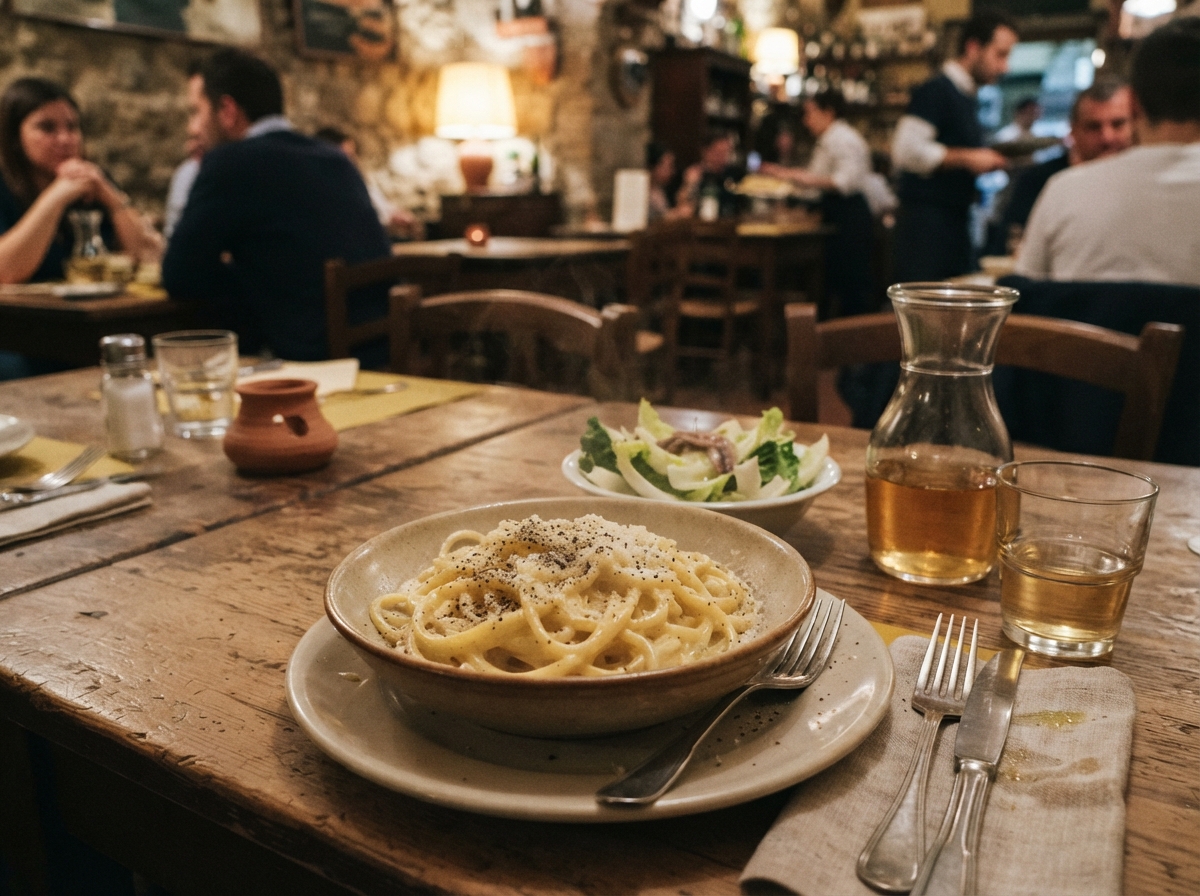
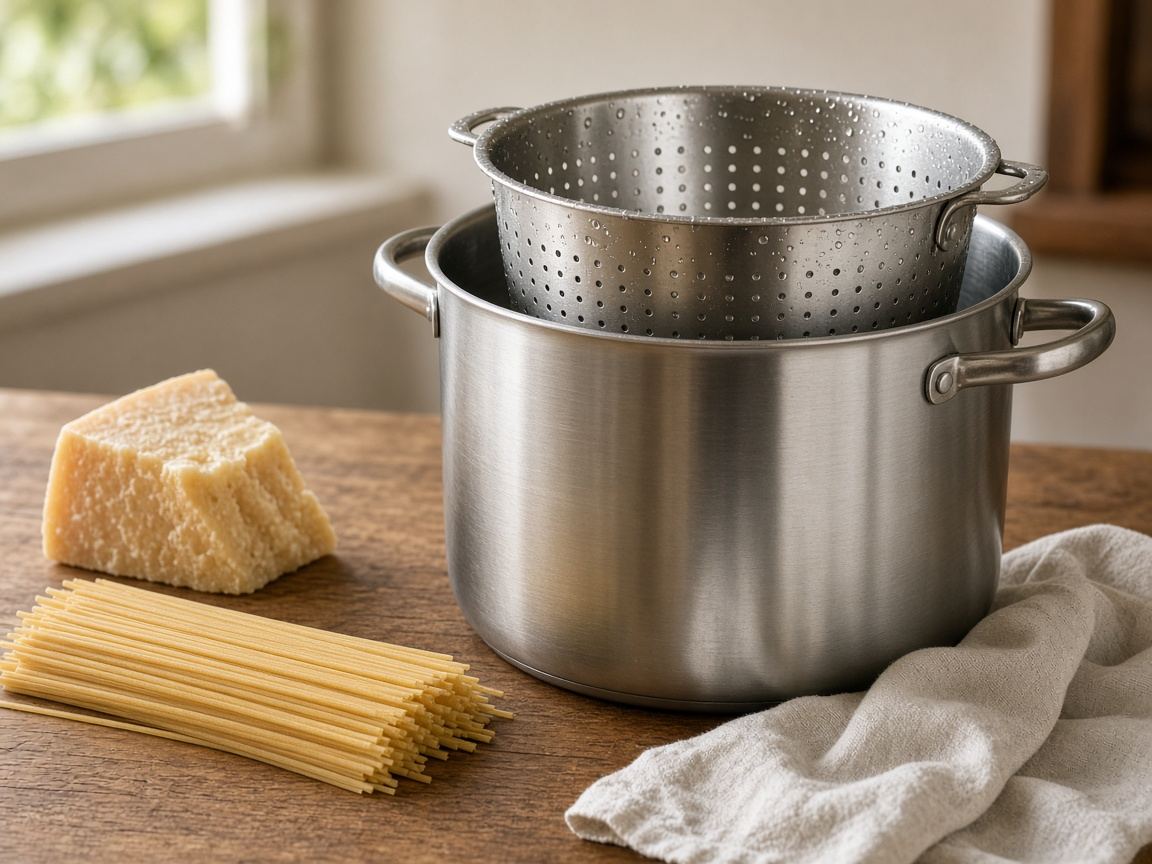
The newer table is one pasta cooked in plenty of water, finished in the pan with cheese and pepper. A handful of greens after. Espresso.
Do not also bake lasagne. Do not serve risotto as a side.
One primo. Bread for the scarpetta. Salad after. No second pasta.
Never serve two primi together. Lasagne, risotto, and cacio e pepe are three different first courses. Pick one.
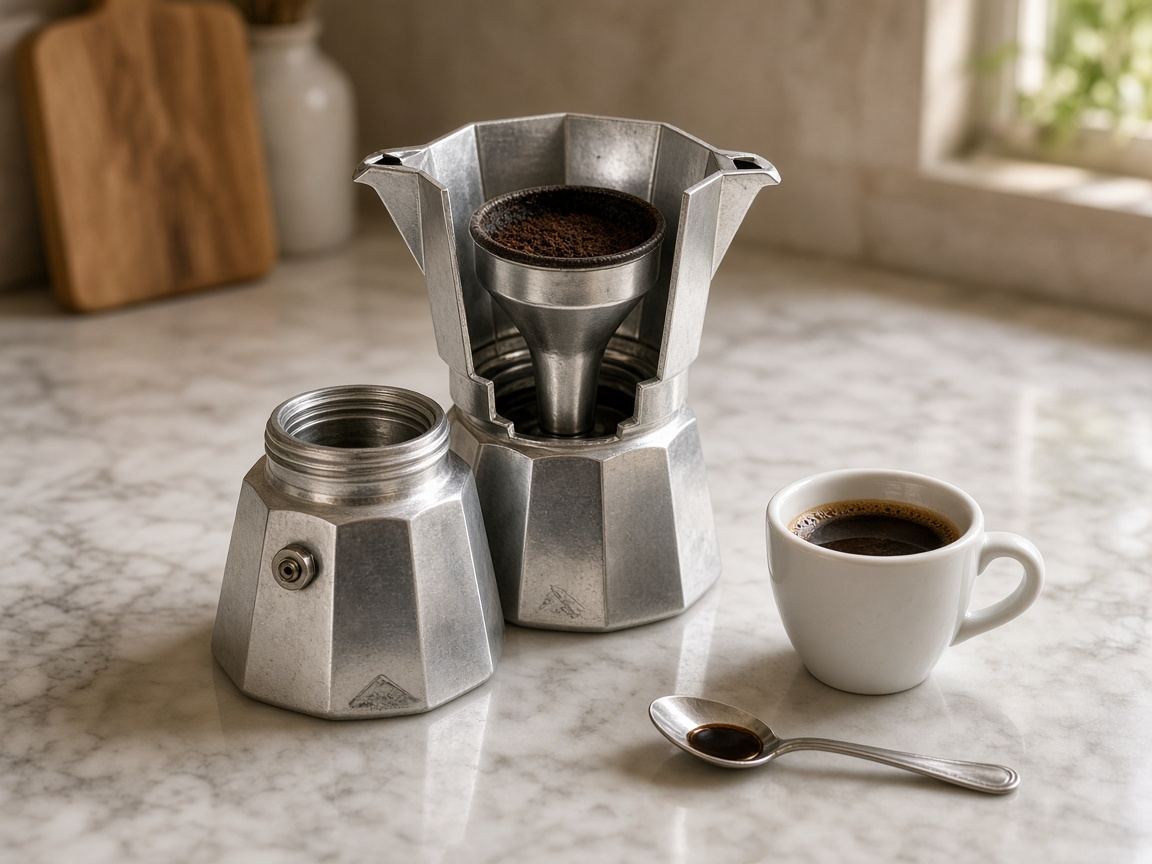
Bread is for the sauce at the end, not a side of garlic bread. Salad comes with the secondo or after, not under the pasta. Cappuccino does not close lunch — espresso does.
Tiramisù is a dolce for a dinner that wants one. It is not plated beside the lasagne as a 'combo.'
Objects you can read about here, then find on Amazon — search links, not a single SKU that goes stale.
The spices, mixes, and hearths that belong to Italian cooking — then the people around them, and the kitchens still joining the table.
Open the Italian pantry Open Italian cookware The Italian table Host an Italian night Join the community