
Free recipe guide
How to make Nabe
Learn what makes Nabe special, cook the free ComidaTime recipe, then keep cooking from Authentic Japanese Cuisine.
Why cooks start here
Nabe is cooked the way home pots cooks it — salt judged by hand, fat used generously, and the table set for sharing. This is the home version, written down the way a japanese family cook actually puts it on the table.
Nabe, a comforting staple in Japanese households, is often enjoyed during the colder months when warmth and heartiness are most welcome. This dish captures the essence of home cooking, where ingredients are added with a practiced hand, and flavors meld into a cohesive whole. It's not a recipe bound by strict measurements, but rather a tradition passed from one family cook to another, each pot unique to its maker. The taste of nabe is a delicate balance of savory dashi, tender chicken, and the subtle sweetness of napa cabbage, all enriched by the creamy texture of tofu. A generous splash of ponzu adds a citrusy brightness. It's a dish meant to be shared, inviting diners to gather around the table and savor each steaming bowlful, seasoned perfectly to personal taste.
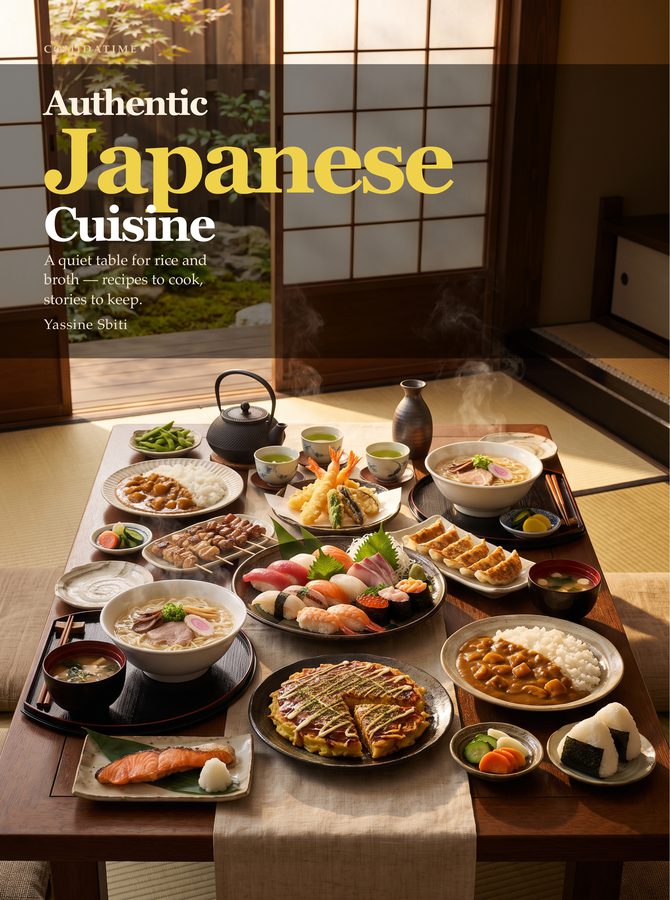
Authentic Japanese Cuisine
Bring the full collection home—authentic recipes, cultural notes, and a beautiful book for your table or as a gift.
The Japanese pantry, pots, and table
The spices, mixes, and hearths that belong to Japanese cooking — then the people around them, and the kitchens still joining the table.
Open the Japanese pantry Open Japanese cookware The Japanese table Host a Japanese night Join the community