
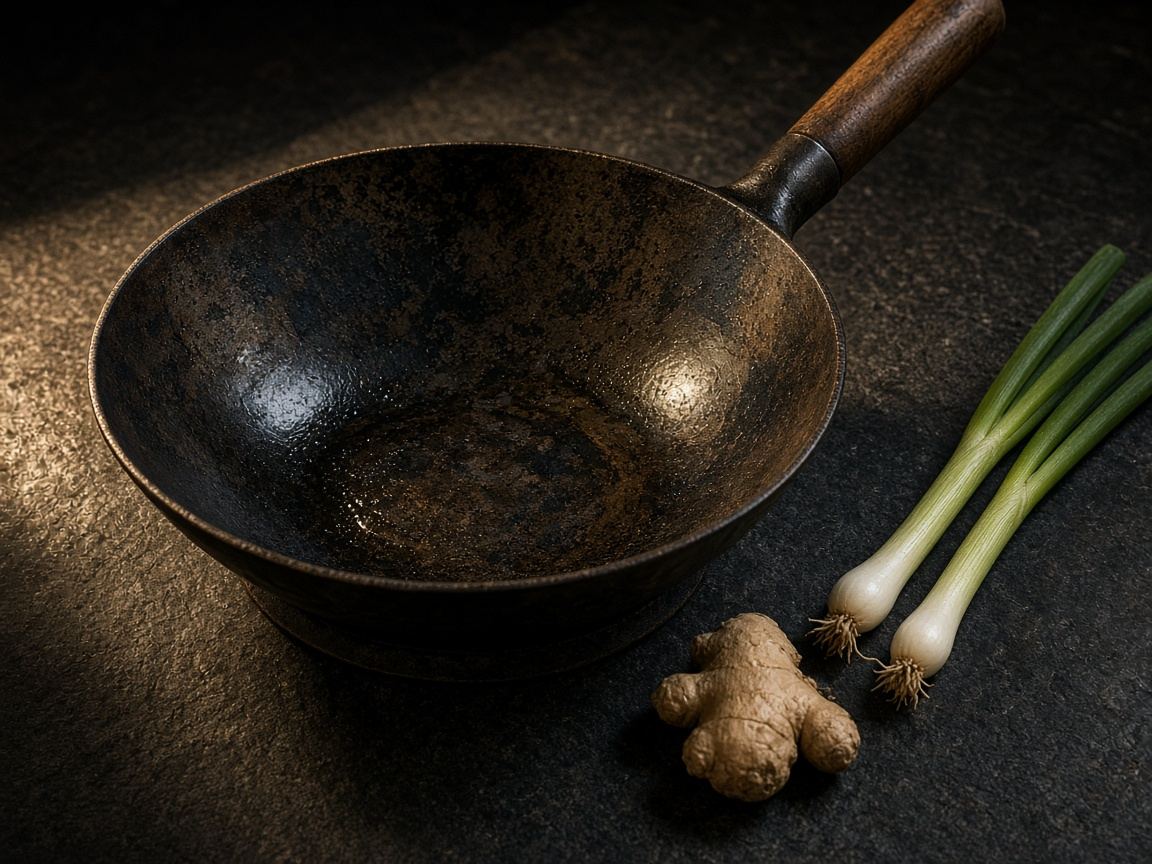
Wok
The everyday hearth.
An Indonesian meal is rendang with rice, or nasi goreng as the leftover night — satay is the stick, gado-gado is a lunch of its own.
Beef rendang is a celebration stew, dry and dark, eaten with rice. Nasi goreng is fried leftover rice with kecap, krupuk, a pickle. Satay is street meat with peanut sauce and lontong or rice. Gado-gado is a peanut-sauce salad lunch.
The inherited table is many dishes around rice on a feast day. The newer table is one wok of fried rice.
Back to Indonesian cooking · Host an Indonesian night · Pantry · Cookware
Dark beef, a mound of rice, sambal on the side.
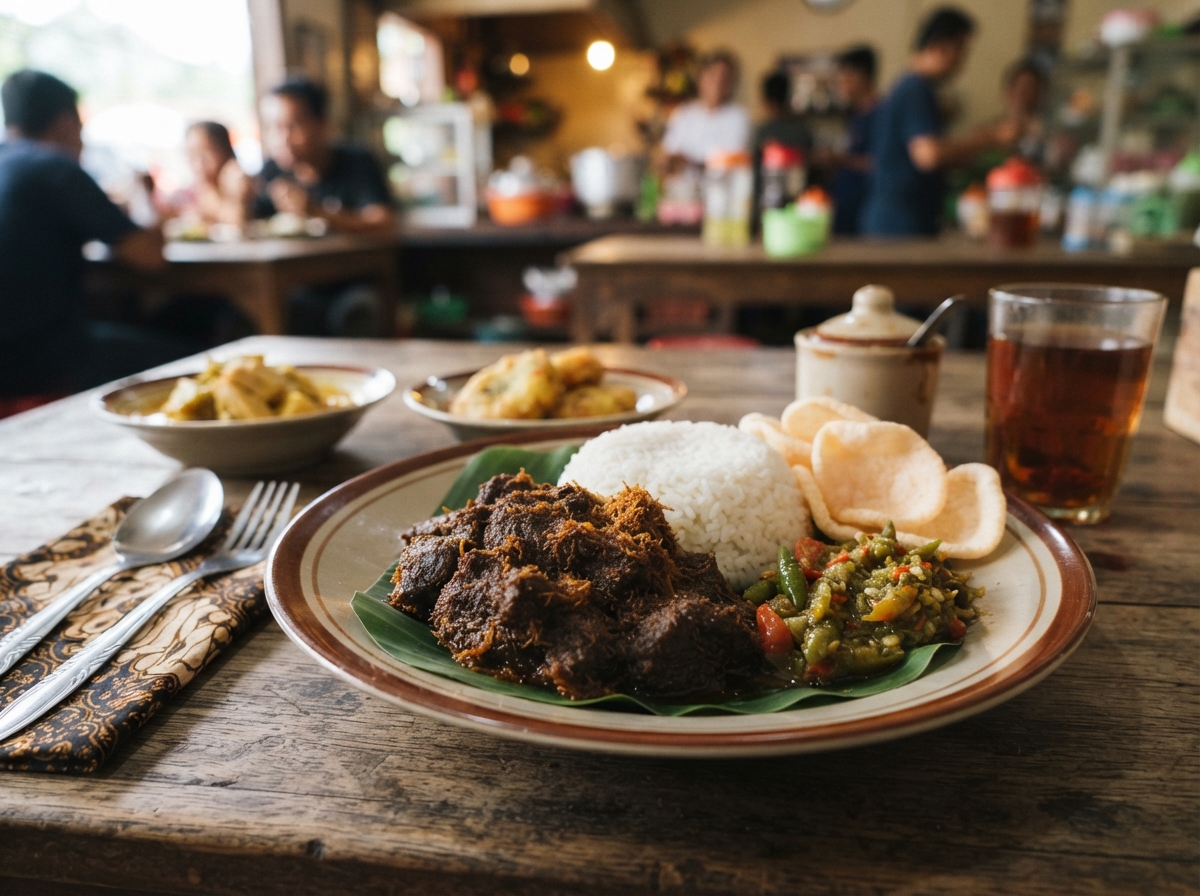
The inherited feast is rendang cooked down until the coconut almost disappears. Rice. Sambal. Other dishes can join on a holiday. Fried rice cannot.
A wok of fried rice, krupuk, acar.
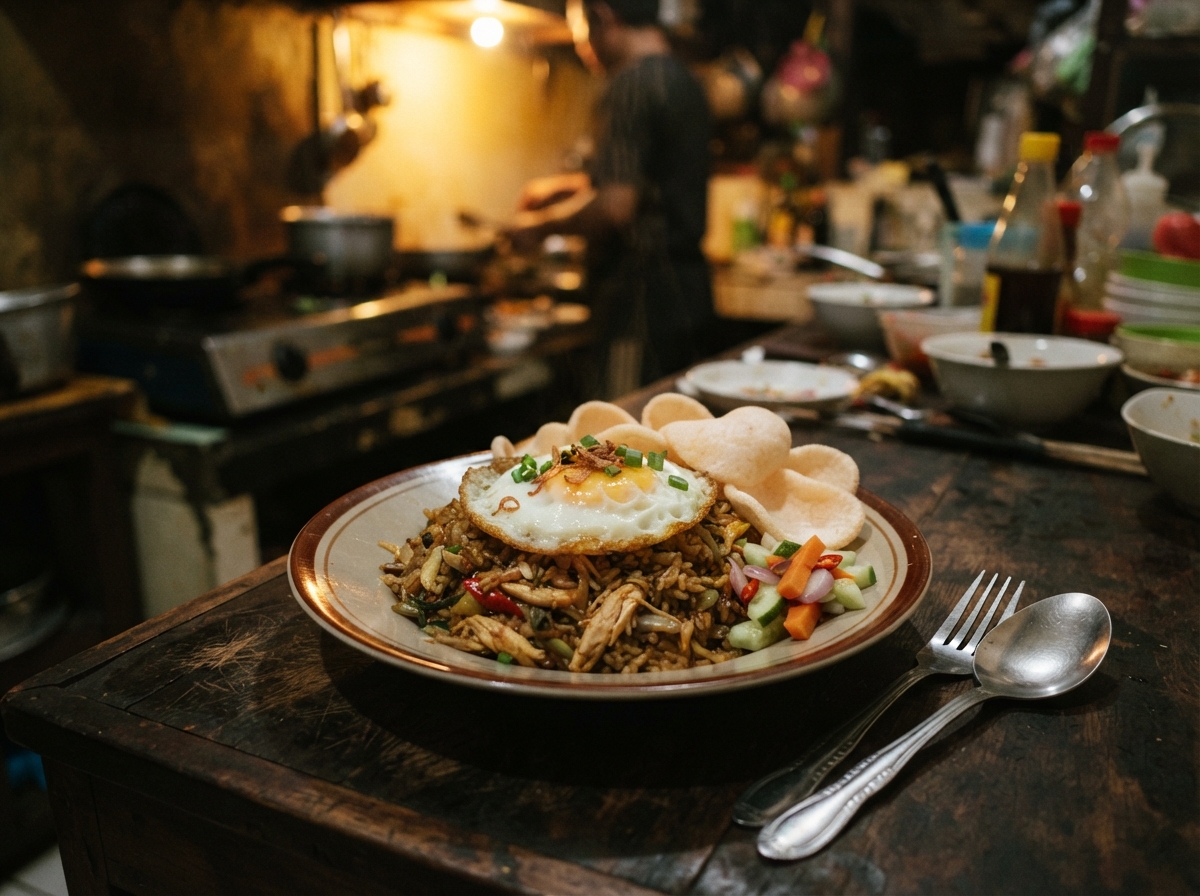
The newer night is leftover rice in a hot wok. A fried egg if you want. Krupuk. Pickle. The rendang pot is for the feast.
Rendang wants rice. Fried rice is another clock. Satay and gado-gado can stand alone.
A Lebaran table can hold rendang and other dishes around rice — that is a feast of many, still with rice as the center. Do not also serve nasi goreng as a second starch.
Nasi goreng is a night or a breakfast of leftovers. Satay can be a snack. Gado-gado is lunch, not a side salad under rendang.
Objects you can read about here, then find on Amazon — search links, not a single SKU that goes stale.
The everyday hearth.
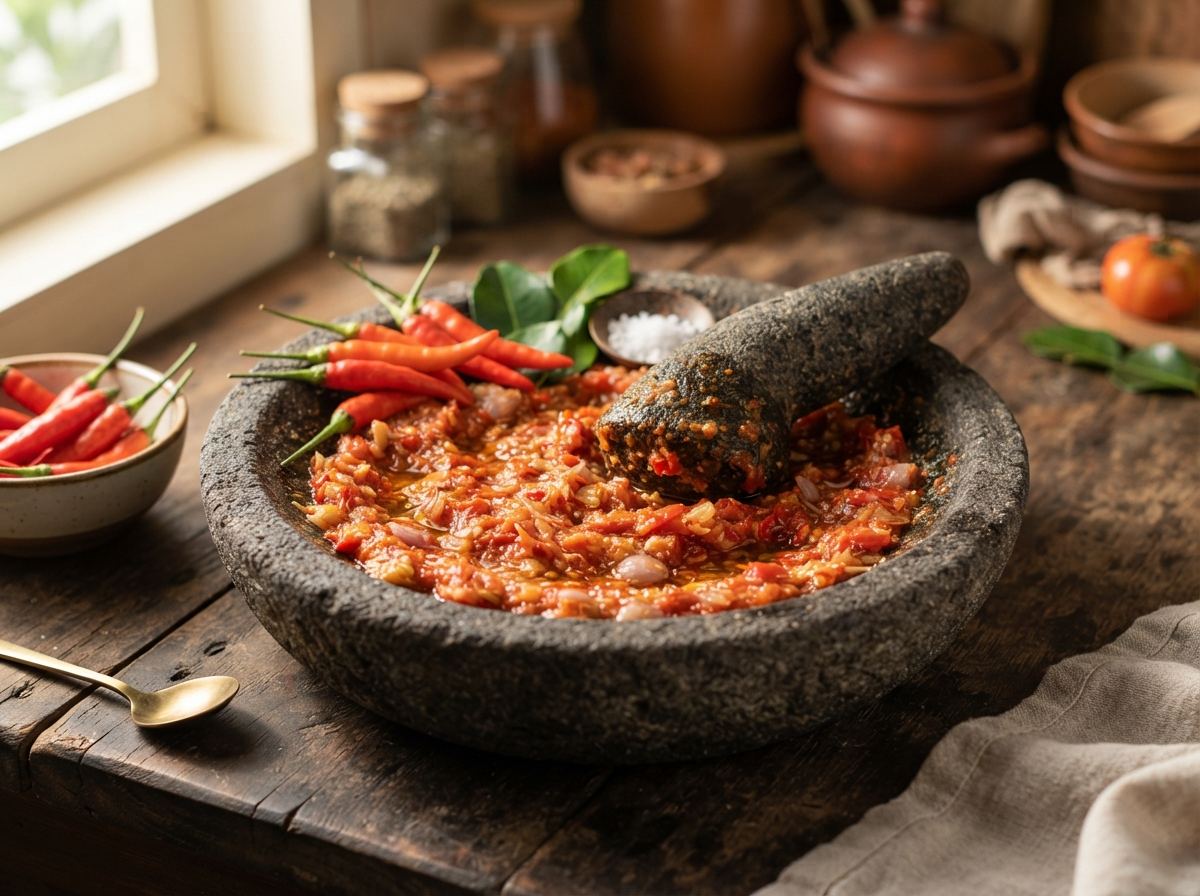
The stone mortar for sambal.
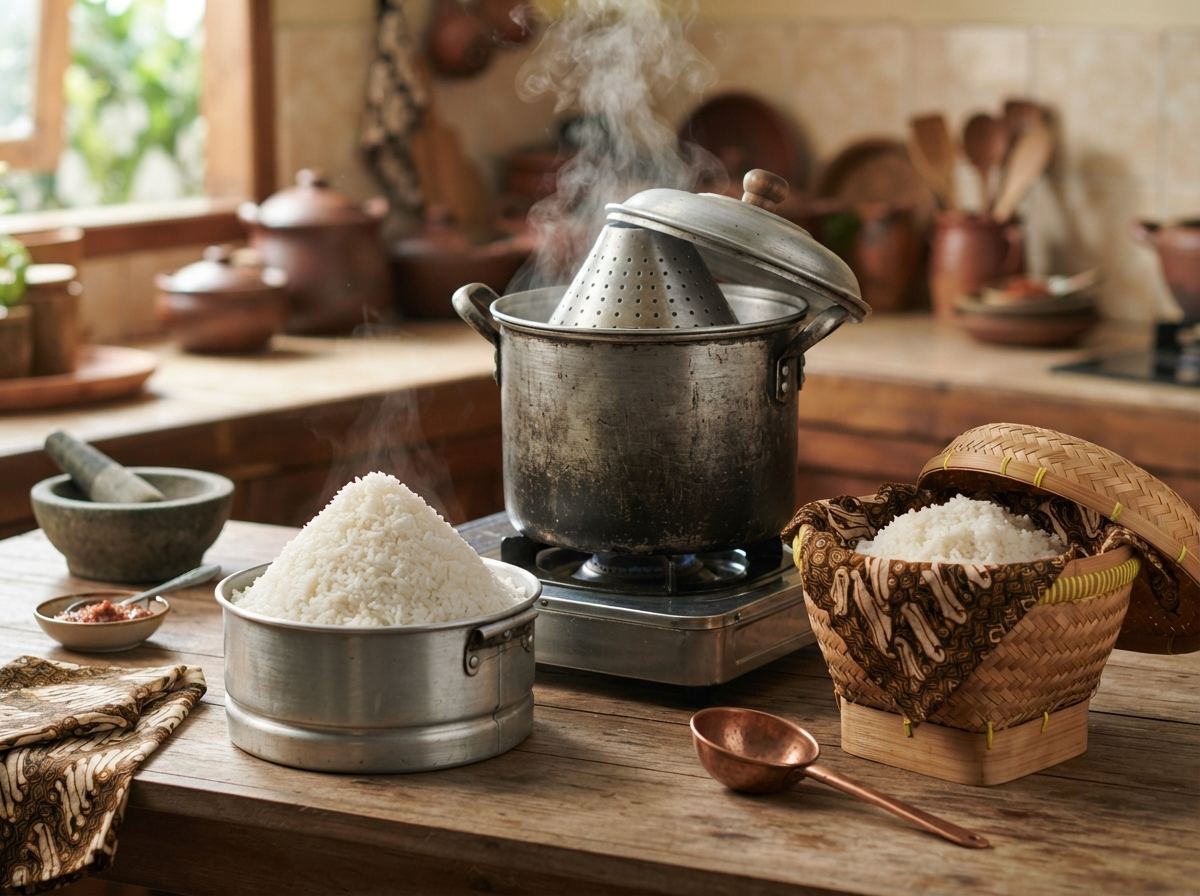
The steamer for rice.

The body of rendang.
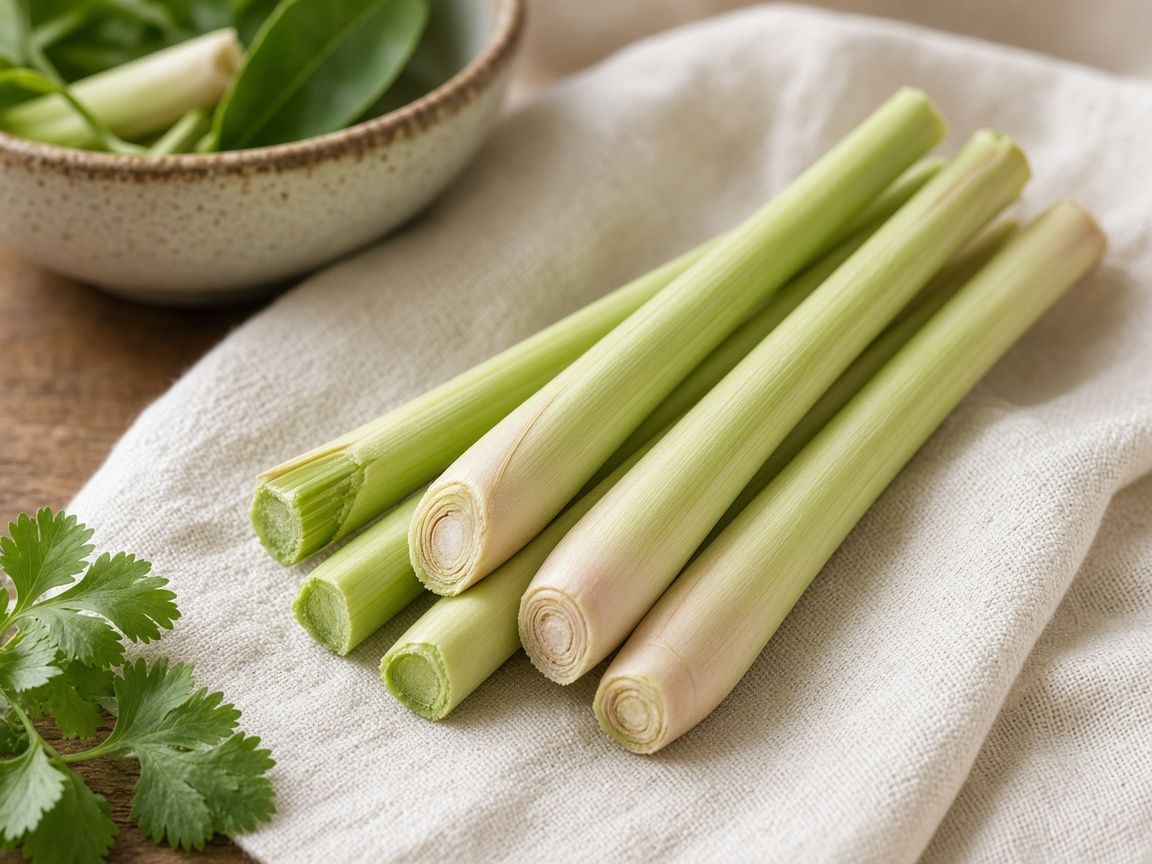
Bruised into the stew.

The sweet in the kecap and the satay sauce.
The spices, mixes, and hearths that belong to Indonesian cooking — then the people around them, and the kitchens still joining the table.
Open the Indonesian pantry Open Indonesian cookware The Indonesian table Host an Indonesian night Join the community