
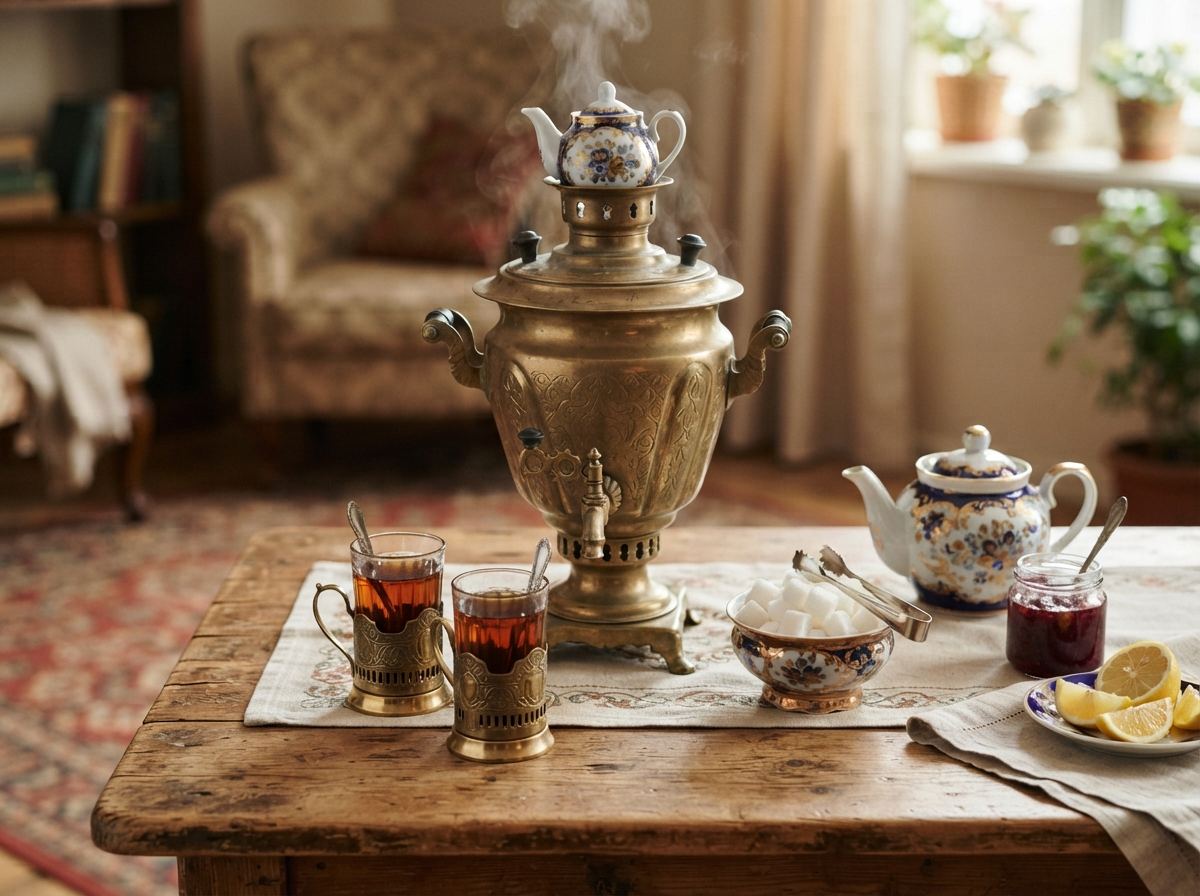
Samovar
Tea after, from the urn.
A Persian meal is one stew on chelow — tahdig is the crust of that rice, not a second dinner. Fesenjan is another night.
Ghormeh sabzi wants steamed rice, mast, sabzi khordan, torshi. The tahdig is the prized bottom of the same pot. Fesenjan is a walnut-pomegranate stew for a celebration, also with rice.
The inherited table is a sofreh of herbs and a pot of rice. The newer table still puts herbs down.
Back to Persian cooking · Host a Persian night · Pantry · Cookware
Ghormeh sabzi, a platter of rice with tahdig, sabzi khordan.
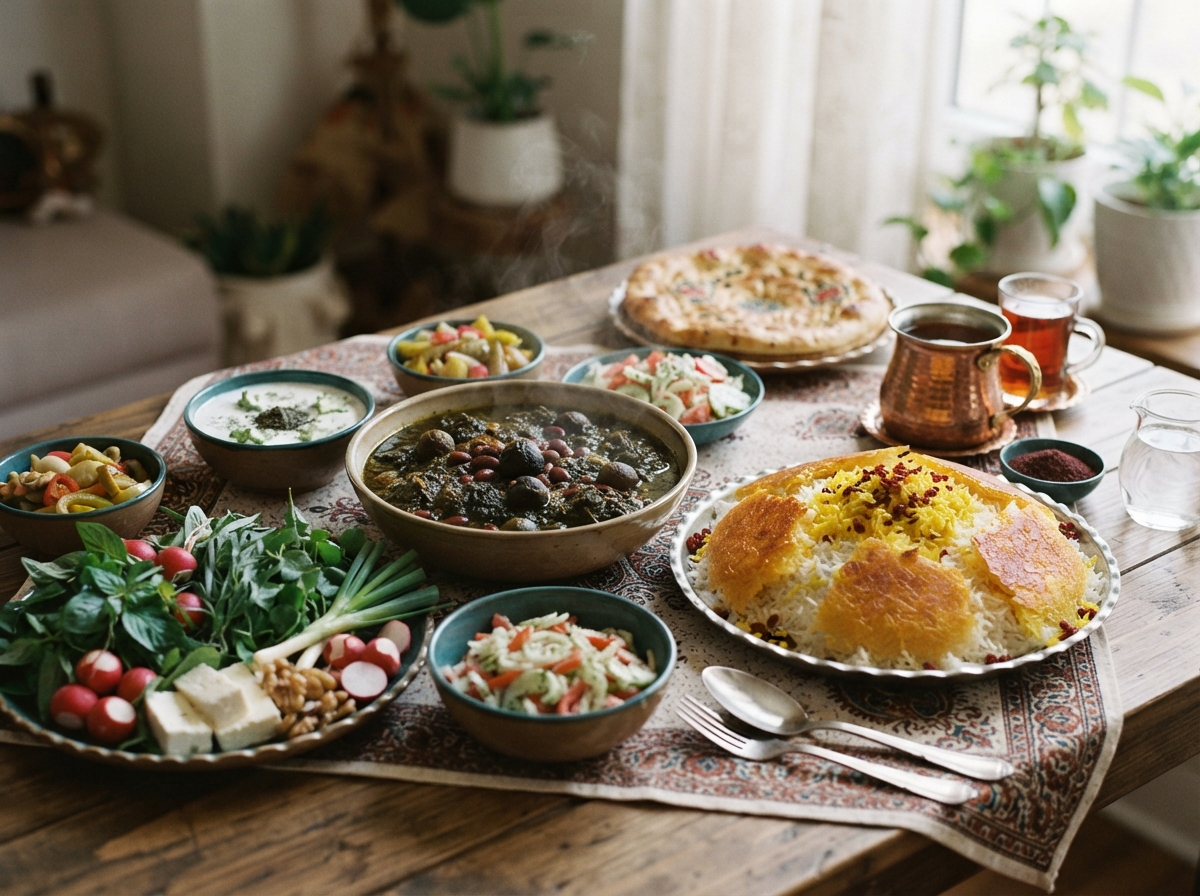
The inherited table is green stew, rice, herbs. The crunchy tahdig is fought over from the same pot.
Dark walnut stew, rice, pomegranate. The herb stew is another week.
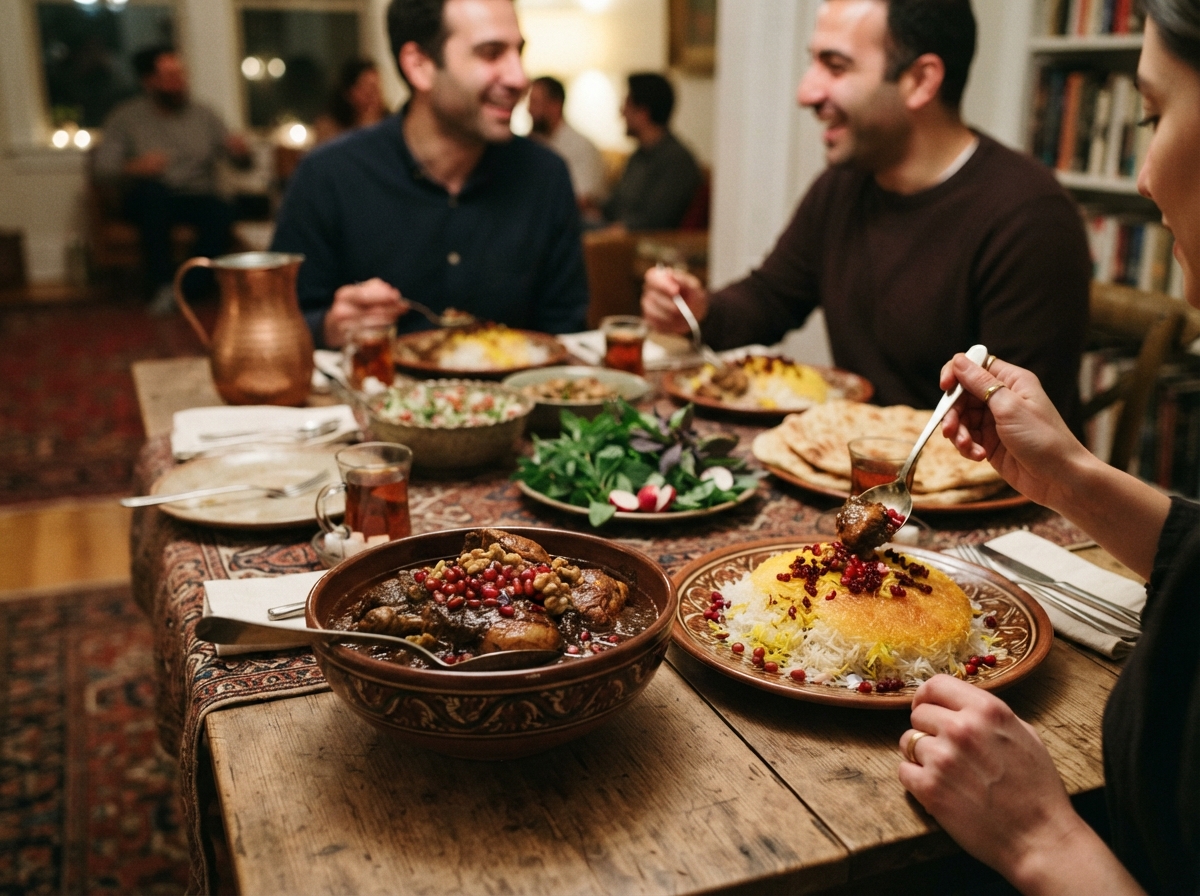
The newer feast can be fesenjan for guests. Still rice. Still herbs. Not a second khoresh.
One khoresh, one pot of rice with tahdig, herbs and yogurt. Not two stews.
Do not serve ghormeh and fesenjan together as two mains. Each stew is a night. Tahdig comes with whichever stew you cooked — it is not a side dish from another cuisine.
Fresh herbs, radish, feta, walnuts: the sabzi khordan platter belongs. Yogurt. Pickle.
Objects you can read about here, then find on Amazon — search links, not a single SKU that goes stale.
Tea after, from the urn.
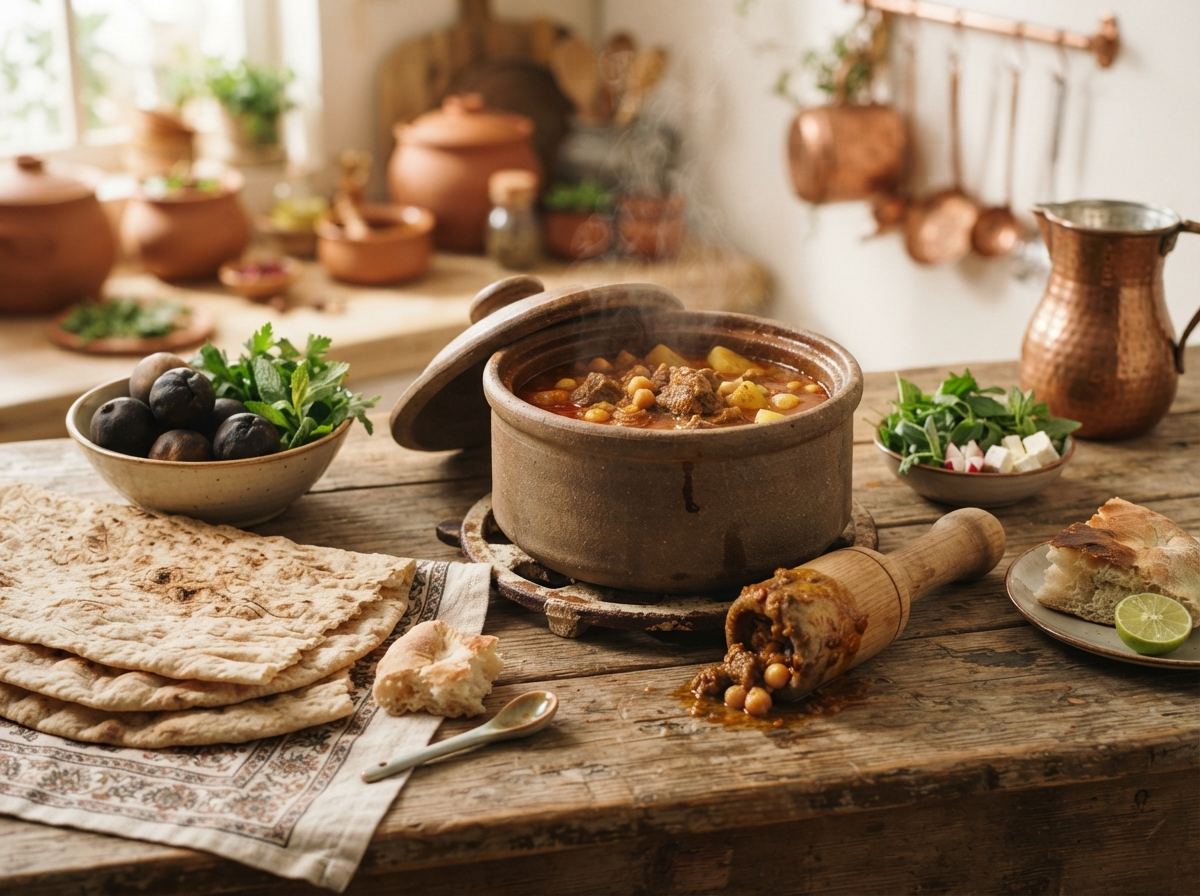
A different stone-pot night.
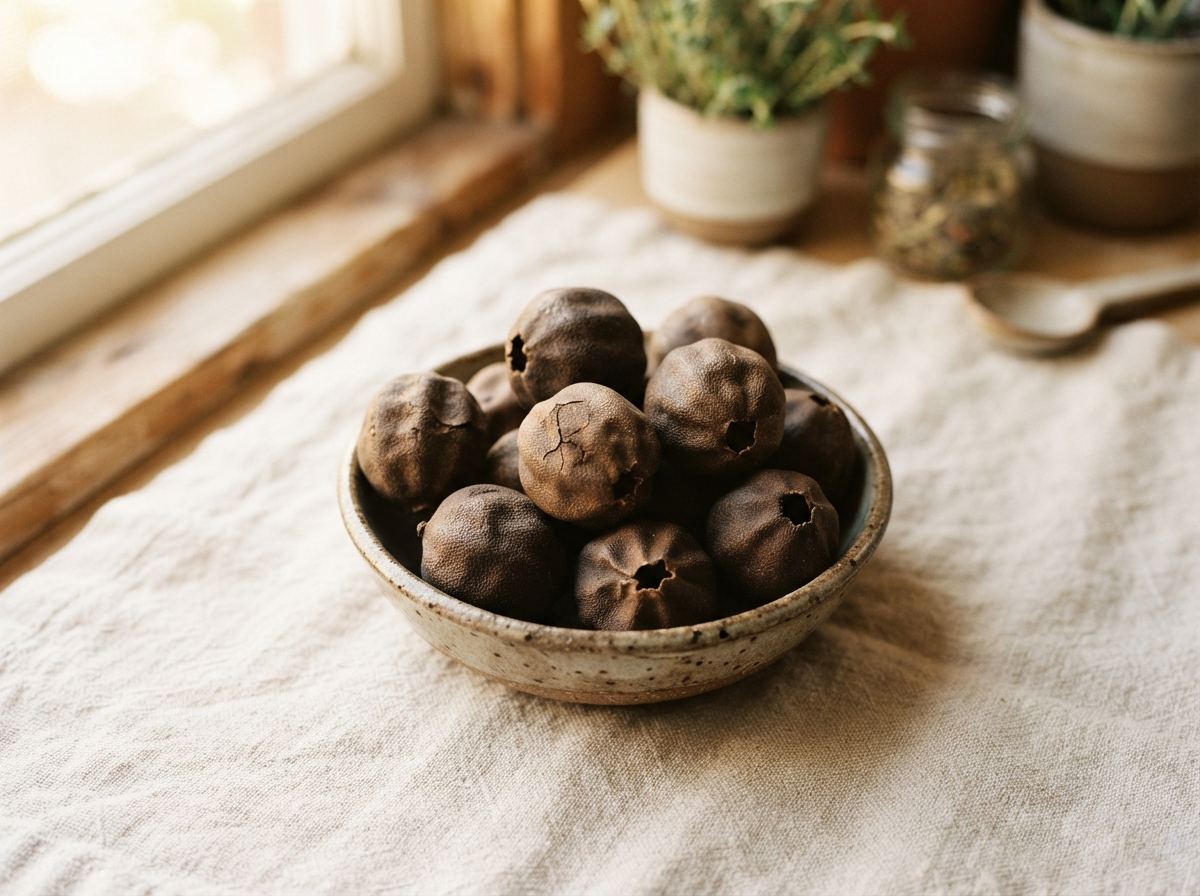
Dried limes in the ghormeh.
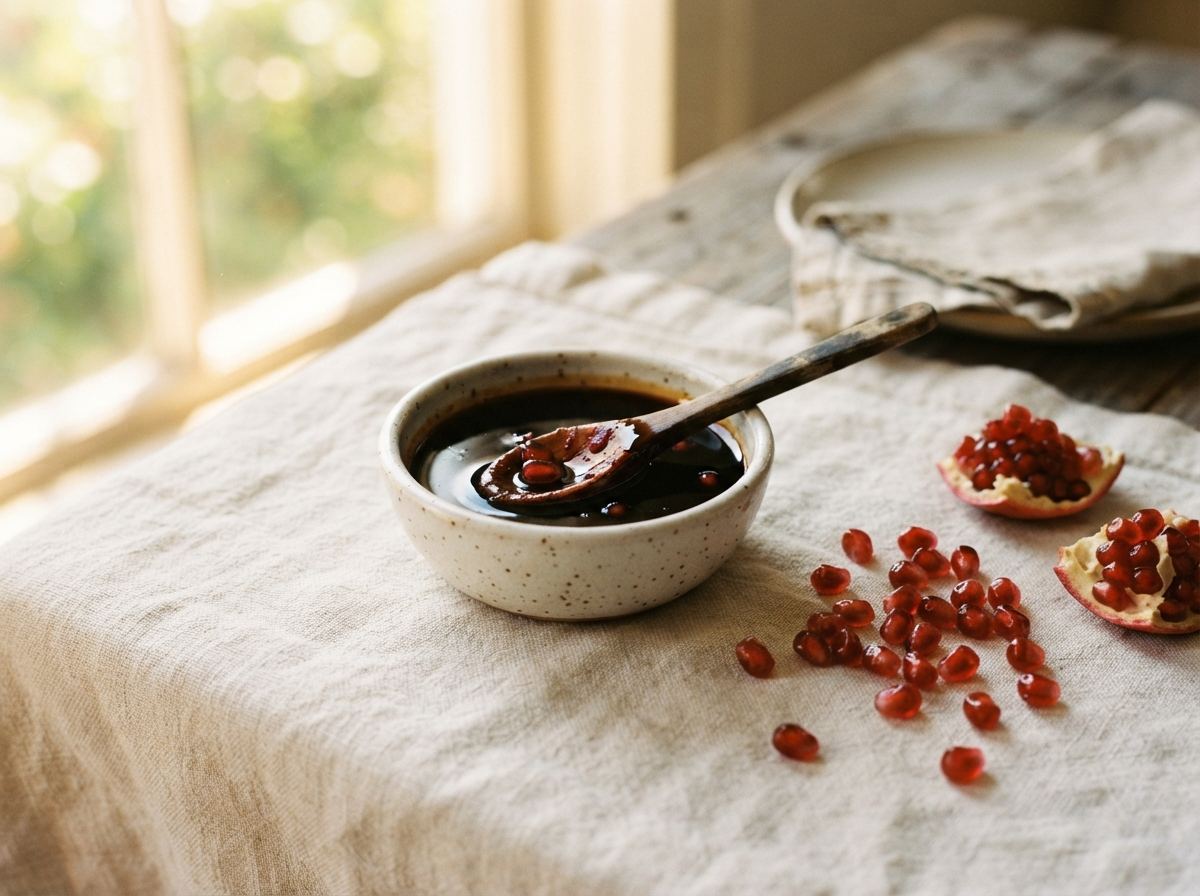
The sour in fesenjan.
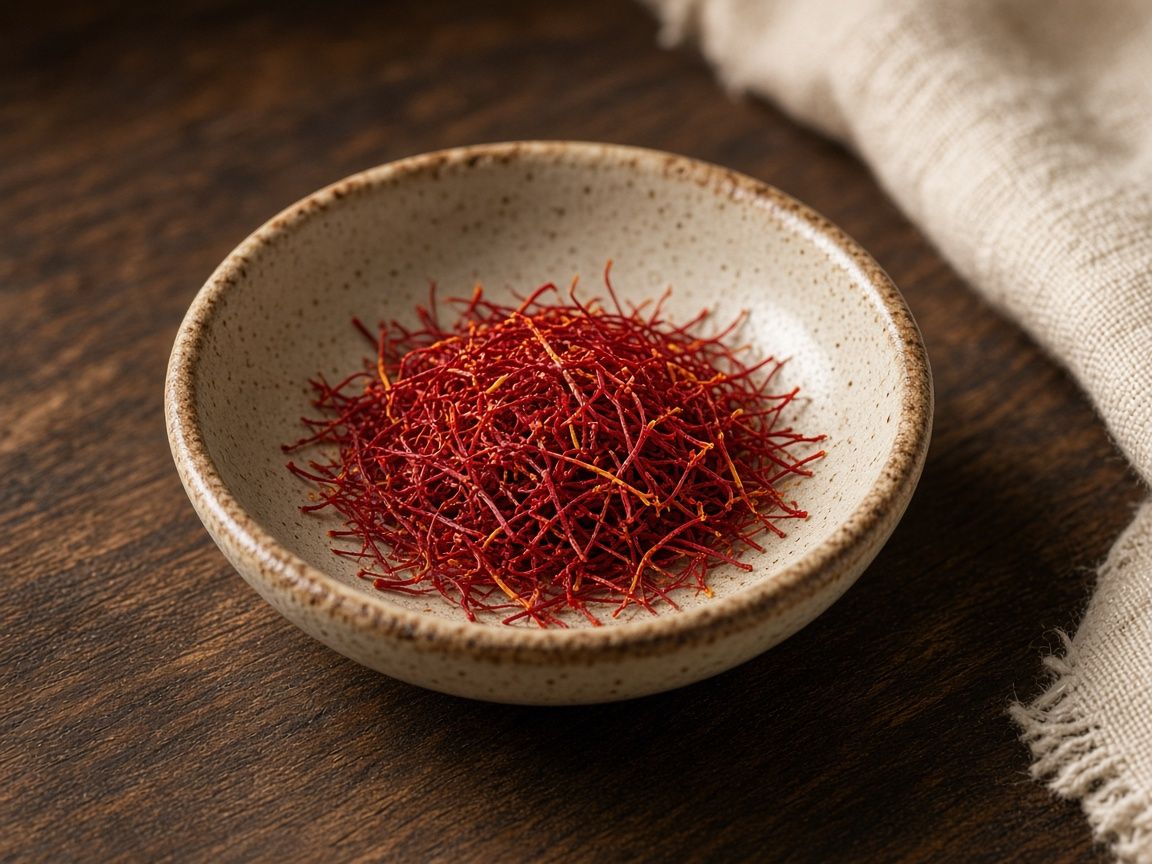
On the rice, a little.
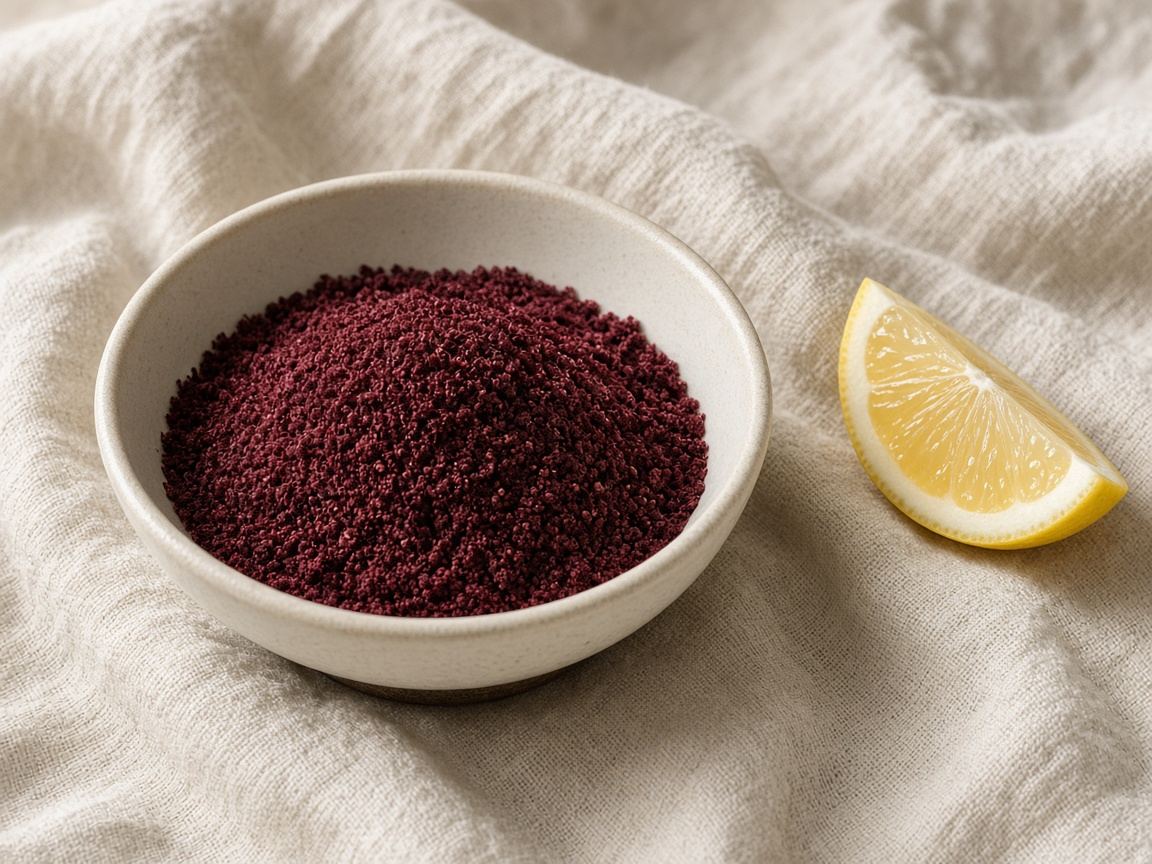
On kebabs of another night.
The spices, mixes, and hearths that belong to Persian cooking — then the people around them, and the kitchens still joining the table.
Open the Persian pantry Open Persian cookware The Persian table Host a Persian night Join the community